Mirjam Henzen
 Most of the time, your body is telling you something is off long before you connect it back to your gut. Tired by 2 p.m. Skin that won’t clear no matter what you put on it. Bloating after meals that used to be fine. A short fuse that doesn’t match your actual life.
These are some of the most common signs of an unhealthy gut — and they’re easy to miss because we tend to chase each one separately. But the gut is the upstream system that quietly drives so many of them. Once you know what to look for, the picture starts to make sense fast.
What Are the Most Common Signs of an Unhealthy Gut?
The shortlist: bloating, fatigue, brain fog, skin issues, food sensitivities, irregular bowel movements, sugar cravings, mood swings, and getting sick more often. These don’t have to all show up at once. Even two or three of them, consistently, is your gut telling you something is asking for attention.
The reason these signs overlap is that your gut affects almost every other system in your body — your immune system (70% of which lives in your gut), your brain (90% of your serotonin is made in your gut), your skin, your hormones, your energy. When the gut is well, those systems run smoothly in the background. When it isn’t, all of them start sending little flares.

The 9 Signs Your Gut Might Be Unhealthy
1. Bloating after most meals. Some bloating is common. But if your stomach feels distended most days, especially after foods that used to be easy, that’s a sign your microbiome isn’t breaking food down the way it should. Stop Bloating on Raw Food walks through the shifts that often turn this around quickly.
2. Fatigue that doesn’t match your sleep. A good 7.5 or 9 hours of sleep and still tired by mid-afternoon? Gut inflammation slows nutrient absorption, leaving you under-fueled even when you’re eating well.
3. Brain fog. Reaching for words. Losing your train of thought. The gut-brain axis is real — when your gut is inflamed, your brain feels it within hours. The Gut-Brain Connection covers the full mechanism.
4. Skin issues that won’t quit. Acne, eczema, dull skin, rashes. The skin is one of the first places gut imbalance shows up because your body uses the skin to clear what the gut can’t.
5. Food sensitivities you didn’t used to have. Foods that used to feel fine suddenly cause bloating, headaches, or congestion. A compromised gut lining lets food particles trigger immune reactions they shouldn’t.
6. Irregular bowel movements. Either direction — constipation or loose stools — is information. Healthy gut function looks like one to two well-formed BMs daily.
7. Sugar cravings that feel out of control. Certain gut bacteria literally feed on sugar and signal for more. When those bacteria dominate, cravings spike.
8. Mood swings, anxiety, low motivation. The serotonin connection again. Mood follows gut health more than most people realize.
9. Catching every cold that goes around. Your gut is the headquarters of your immune system. When it’s struggling, your defenses run thin.
Why These Signs Happen
Most of the time, four things are running underneath. Low microbiome diversity (the same handful of plants on repeat means most of your gut bacteria are starving). Low fiber intake (the average person eats about a third of the minimum their gut actually needs). Chronic low-grade inflammation (from ultra-processed foods, alcohol, poor sleep, stress). And a compromised gut lining (the barrier that’s supposed to keep food on one side and your immune system on the other).
Fiber matters more than most people realize. It feeds the beneficial bacteria, it sweeps the gut lining clean, it regulates blood sugar, and it carries inflammation out of the body. Signs of Fiber Deficiency covers the symptoms specific to running low on it — there’s huge overlap with the list above.
How to Start Healing Your Gut with Raw Foods
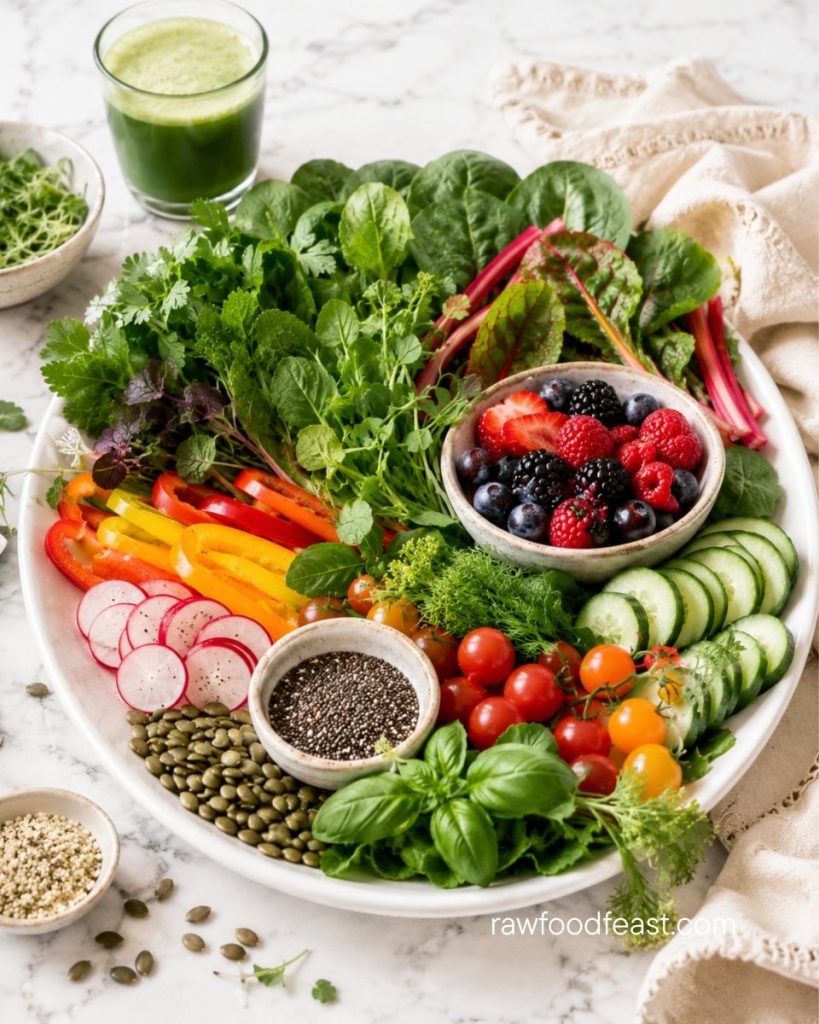
The fastest gut shifts come from three changes, in this order. First, plant variety — aim for 30 different plants a week. Not 30 servings, 30 different plants. Herbs, seeds, and spices all count. Second, more fiber from whole raw foods (40g a day is the target most people fall short of). Third, no ultra-processed foods, no or minimal alcohol, and as little refined added sugar as you can manage.
Imagine waking up tomorrow knowing — for the first time ever — exactly how diverse your gut is being fed, exactly how much fiber you took in yesterday, exactly how hydrated you actually are. That’s what Fiber First does. It’s the fiber tracker for gut health, built around the three numbers that decide whether the 9 signs above are quietly fading or quietly growing: your weekly plant variety (the full 30), your daily fiber, your hydration.
Stop guessing. Start seeing. By week two, most things on the list above start shifting — because for the first time, you’re working with data instead of hope.
For the juice side of the equation, Best Juices for Gut Health covers what to drink daily for the biggest gut shift.
How Long Does It Take to Heal an Unhealthy Gut?
The first shifts often show up within a week — less bloating, slightly better energy, a slightly clearer head. That’s the immediate response to less inflammation and more fiber.
Deeper changes — fewer food sensitivities, more stable mood, real skin improvement — typically arrive between weeks four and eight. That’s the timeline of the microbiome actually shifting and the gut lining repairing. By month three, most people stop thinking of their gut as a problem at all. The microbiome continues to change over years — for a longer view of how this evolves, see 5 Signs Your Gut Microbiome Is Aging.
If you want company on the way, Healthy & Free is the online community built around practical, delicious whole food (un)cooking and juicing. Come join us. You’ll feel it in your energy, your digestion, and your glow.
Is It Time to Pay Attention to Your Gut?
If you recognized yourself in even two or three of the nine signs above, the answer is probably yes. The gut is one of the most responsive systems in the body — feed it differently for a few weeks and it tends to respond fast.
The good news in all of this: you don’t have to overhaul everything. Plant variety, more fiber, less ultra-processed food. Three shifts. The body usually takes it from there.