Mirjam Henzen
 If you’ve been juicing for a while, you’ve probably noticed that different juices land differently in your body. Some settle your stomach and calm everything down. Others light up your energy or clear your skin within days. That’s not random — it’s your gut responding to specific compounds in specific produce. The best juices for gut health are the ones that deliver targeted minerals, prebiotic compounds, and hydration directly to the digestive lining and the bacteria that live there — in a form the body can absorb quickly, with very little digestive effort.
Your gut microbiome — the community of bacteria, fungi, and other microorganisms living in your intestines — influences far more than digestion. It plays a central role in immune function, hormone signaling, skin clarity, energy levels, and even how well you sleep. When that ecosystem is well-fed and hydrated, everything downstream works more smoothly. When it’s depleted or inflamed, the effects show up everywhere: bloating, fatigue, dull skin, sluggish immunity, brain fog. Fresh juice is one of the most efficient ways to support this system daily, because it delivers nutrients in liquid form — already broken down, already bioavailable, ready for your gut lining to use immediately.
This article walks you through the juices that support gut health most effectively, how they work physiologically, when to drink them, and how to build a daily rhythm that keeps your microbiome thriving.
Why Does Juice Support Gut Health So Effectively?
Fresh juice does something that even the best meal can’t do as quickly: it gets minerals, enzymes, and plant compounds to your gut lining without asking your digestive system to do much work at all. When you drink a good juice on an emptier stomach, those nutrients reach your intestinal wall within about 15-20 minutes. Compare that to a solid meal, which can take 2-4 hours before your gut even starts absorbing what’s in it. That speed alone makes juice uniquely useful for gut support.
Here’s why that matters in everyday terms. The cells that line your gut — called epithelial cells — replace themselves every 3-5 days. Your body is constantly rebuilding that lining, and to do it well, it needs a steady flow of minerals like potassium, magnesium, and zinc, along with hydration and anti-inflammatory compounds. When those building blocks show up regularly, the lining stays strong, sealed, and efficient at absorbing nutrients from everything else you eat. When they don’t show up consistently, that’s when things start to feel off — more bloating, more reactivity, less energy from the food you’re eating. Fresh juice is one of the most direct ways to keep that supply steady, because your body barely has to work to absorb it.
There’s also something happening at the bacterial level. Even though juicing removes most of the insoluble fiber (the rough, bulky kind that adds volume to stool), it keeps the soluble fiber and polyphenols — plant compounds that your gut bacteria love. Your bacteria ferment these into short-chain fatty acids, particularly one called butyrate, which is the primary fuel source for the cells lining your colon. These fatty acids also help maintain the tight seals between gut cells, which is what keeps the lining intact and calm rather than leaky and reactive. So a well-chosen juice isn’t just hydrating you — it’s actively feeding the bacteria that protect your entire digestive system.
For a broader look at how fresh juice affects your body beyond the gut — energy, skin, hydration, detox pathways, immunity — this article walks through it system by system: What Happens in Your Body When You Drink Fresh Juice Daily. That piece covers the full daily picture, while this one goes deep on the gut specifically.
What Are the Best Juices for Gut Health?
Not every juice supports the gut equally. The best juices that support the gut most directly tend to share three qualities: they’re mineral-rich, they contain prebiotic or anti-inflammatory compounds, and they hydrate at a level that reaches the intestinal lining — not just the surface. Here are the ingredients that consistently deliver the strongest gut support — and why each one works.
Celery is one of the most gut-supportive vegetables you can juice — and one of the easiest to work with. If you’ve ever noticed that a simple celery juice leaves your stomach feeling calm and settled, there’s a reason for that. Celery contains a unique group of polysaccharides — complex sugar molecules found naturally in the plant — that help soothe the stomach lining and reduce irritation. It also delivers sodium in its organic, plant-bound form, which is very different from table salt. This natural sodium supports your body’s production of hydrochloric acid — the digestive acid your stomach needs to properly break down food. When that acid is strong and balanced, everything downstream works better: food breaks down more completely, nutrients absorb more efficiently, and you’re far less likely to experience that heavy, sluggish feeling after eating.
Cucumber is the quiet workhorse of gut-supportive juicing. It doesn’t have a bold flavor or a dramatic reputation, but it delivers something your gut lining genuinely needs every day: deep hydration paired with silica, potassium, and magnesium — three minerals your intestinal cells rely on to repair and regenerate. Cucumber juice feels gentle going down, and that’s exactly what makes it so useful. It works beautifully as a base for almost any juice, softening more intense ingredients like ginger or cabbage without dulling their effect. If you’re ever unsure what to juice, start with a cucumber. You really can’t go wrong.
Cabbage is one of the most underrated gut-healing vegetables and doesn’t get nearly enough credit in the juicing world, but if your gut could talk, it would ask for cabbage regularly. Here’s why: cabbage is one of the richest natural sources of L-glutamine — an amino acid that your intestinal cells use as their primary fuel to repair and rebuild. It also contains sulforaphane, which supports your body’s own detox enzymes, and something called vitamin U — a compound that has been used for decades to support stomach lining recovery. In fact, research going back to the 1950s showed that people who drank about 1 liter of fresh cabbage juice daily saw significant improvement in stomach discomfort within just 7-10 days. You don’t need that volume for everyday support — even 200-300 ml (6.5–10 oz) a few times a week gives your gut something genuinely useful to work with. Both green and red cabbage work well. Red cabbage adds anthocyanins — the same antioxidant compound found in blueberries and blood oranges — which gives it an extra anti-inflammatory quality that your gut lining will thank you for. If you’re curious about what anthocyanins do beyond gut support — for circulation, skin, and even stress recovery — blood oranges are the only citrus fruit that contains them in meaningful amounts, and the full picture is covered here: Blood Orange Juice Benefits: Why This Seasonal Citrus Belongs in Your Daily Juicing Routine. That article goes deep on how anthocyanins work alongside vitamin C in ways no other orange can offer — especially during their short peak season.
Ginger is the ingredient that wakes your digestion up. You know that warm, slightly tingly feeling you get when you drink a juice with fresh ginger in it? That’s gingerol — the active compound in ginger — getting to work. It stimulates your body to produce more digestive enzymes and helps your gut move food along more efficiently (the muscular contractions that do this are called gastric motility — it’s essentially your digestive system’s rhythm). If you ever feel like food just sits in your stomach after eating, adding a thumb-sized piece of ginger to your juice can shift that noticeably. It also calms intestinal cramping and settles nausea, which makes it especially helpful if your gut tends to feel reactive or sensitive after meals.
Apple is the ingredient that makes almost any juice taste better — and it’s doing more for your gut than you might think. Apples are rich in pectin, a type of soluble fiber that your stomach and small intestine don’t break down. Instead, it travels all the way to your colon, where your gut bacteria ferment it into short-chain fatty acids — compounds that directly nourish and protect the cells of your intestinal wall. In simple terms, every apple in your juice is a meal for your good bacteria. Green apples tend to have a slightly sharper flavor and are particularly high in pectin, but any variety works well. One medium apple in a juice adds natural sweetness and a genuine prebiotic boost at the same time.
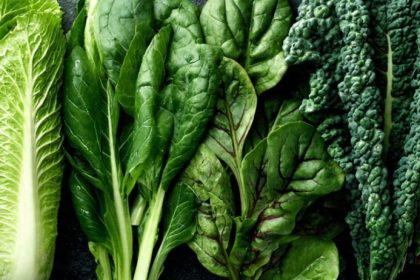
Leafy greens —especially spinach, romaine, kale — are the ingredients that quietly make every juice more nourishing. You might not taste them much when they’re blended with cucumber or apple, but your gut absolutely registers the difference. Greens are rich in chlorophyll (the pigment that makes plants green), which research has linked to healthier bacterial balance in the gut — supporting the growth of beneficial bacteria while helping keep less helpful strains in check. They also deliver magnesium, a mineral that relaxes the smooth muscle of your intestinal wall. That’s the muscle responsible for moving food through your system, and when it’s tense or tight, you feel it as cramping or bloating. A handful of greens tossed into your daily juice is one of the simplest, most consistent ways to keep your mineral levels steady — and your gut feeling calm.
Lemon (or lime — both work the same way here) is the smallest addition that makes the biggest difference. Half a lemon or lime squeezed into any juice sharpens the flavor and wakes up your entire digestive system — and there’s a real reason for that. Lemon and lime stimulate your liver to produce bile, the digestive fluid your body uses to break down fats and absorb fat-soluble vitamins like A, D, E, and K. When bile is flowing well, your small intestine works more efficiently, food gets broken down more completely, and less undigested material reaches the colon. In everyday terms, that means less gas, less fermentation, and less of that uncomfortable bloated feeling after meals. It’s one of those ingredients that does a lot without asking for much space in the recipe.

Which Juice Combinations Work Best for Gut Support?
Individual ingredients are powerful, but combinations can amplify the effect. Here are three combinations that cover the main pillars of gut support — prebiotic feeding, hydration, and inflammation reduction.
The Daily Gut Base: Cucumber + Celery + Apple + Ginger This is one of the juices I’d recommend if you’re only going to make one thing a day. Cucumber hydrates deeply, celery supports your stomach and digestion, apple feeds your good bacteria, and ginger gets everything moving. It tastes clean, slightly sweet, and fresh — the kind of juice you actually look forward to in the morning. One large cucumber, two to three celery stalks, two to three apples (Elstar works beautifully here), and a small piece of ginger gives you about 500 ml (roughly 16 oz). Drink it on an empty stomach, and you’ll feel the difference within the first week.
The Gut Repair Blend: Cabbage + Apple + Lemon + Ginger TThis one is specifically for the gut lining. Cabbage delivers L-glutamine and sulforaphane for cell repair, apple adds prebiotic support, lemon gets bile flowing, and ginger keeps everything moving. Use roughly half a small green cabbage, one to two apples, half a lemon, and a small piece of ginger. The flavor is milder than you’d expect — the apple and lemon balance it really well. If you’re working through a period of bloating, discomfort, or digestive sensitivity, this blend three to four times a week can make a noticeable difference within two to three weeks.
The Green Mineral Flood: Spinach + Cucumber + Celery + Lime This is your mineral replenishment juice — magnesium, potassium, silica, and chlorophyll in one glass. It’s deeply hydrating and especially good in the afternoon when energy tends to dip and your body is naturally more dehydrated. Two handfuls of spinach, one cucumber, two celery stalks, one to two apples or pears for natural sweetness, and a lime. Without the fruit it’s fairly bland — the apple or pear is what makes it something you’ll actually enjoy drinking every day. Light, clean, and genuinely refreshing.
For more on how specific prebiotic compounds in juice feed your gut bacteria, this article explains the mechanism in detail: Best Prebiotic Juices for Gut Health (Feeding Good Bacteria Through Fresh Juice). It covers which produce contains the most effective prebiotic fibers and how fermentation in the colon actually works.
When Is the Best Time to Drink Juice for Gut Health?
Here’s the good news: your body benefits from fresh juice whenever you drink it. There’s no wrong time. But timing does influence which systems benefit most and how deeply your gut absorbs what you’re giving it.
The most effective window for gut-specific support is on an empty or near-empty stomach — typically first thing in the morning or mid-afternoon, at least 20-30 minutes before eating. When there’s no solid food competing for your body’s attention, juice reaches the intestinal lining fast. The minerals, polyphenols, and prebiotic compounds arrive concentrated and undiluted, which is when they have the strongest impact on both the microbiome and the lining itself.
If you drink juice alongside or right after a meal, it still delivers nutrients — but absorption is slower and more diffused, because your digestive system is already busy processing solid food. The juice essentially joins the queue rather than getting priority access.
For most people, a morning juice on an empty stomach followed by a second glass in the mid-afternoon (around 2-4 PM) creates the most consistent gut support across the day. The morning juice kickstarts digestion and hydration after overnight fasting. The afternoon juice replenishes minerals during the part of the day when energy and hydration naturally dip. If you batch-juice in the morning and store the second portion in a sealed glass jar filled to the top (minimizing air contact), it stays fresh for up to 72 hours in the refrigerator — so you only have to juice once.
This timing framework is explored in more depth here — including how to sequence juice and solid food throughout the day so they work together rather than competing: When to Drink Juice During the Day (And When to Eat High-Fiber Foods). That article walks through each window — morning juice, mid-morning fruit, lunchtime salads, pre-dinner citrus — and explains why each one works based on how your digestion shifts throughout the day.
How Does Gut Health Affect Your Skin and Immunity?
This is where gut health stops being invisible and starts showing up in ways you can actually see and feel.
Your skin is one of the body’s primary elimination organs. When your gut is inflamed, sluggish, or depleted, the skin often reflects it — dullness, breakouts, dryness, uneven texture. The connection is surprisingly direct: when the gut lining is compromised, partially digested proteins and bacterial byproducts can slip into the bloodstream (sometimes called intestinal permeability). Your immune system responds to those particles with low-grade inflammation — and that inflammation often shows up in the skin first.
Fresh juice supports this gut-skin connection from both sides. It delivers the minerals your skin cells need (zinc, silica, vitamin C), while simultaneously calming inflammation where it starts — the gut lining itself. People who juice consistently often notice skin changes within 2-3 weeks: a clearer tone, less puffiness, fewer breakouts. That’s not because juice is a skin treatment. It’s because the gut is finally getting what it needs to do its job, and the skin no longer has to pick up the slack.
If you want to understand how this connection works — how hydration actually reaches the deeper layers of your skin through the bloodstream, which minerals affect skin clarity, and what people tend to notice first — this article goes deep: Juicing for Clear Skin: How Hydration and Minerals Change Your Glow.
Immunity follows a similar pattern — and the numbers are striking. Roughly 70% of your immune system is located in and around your gut, in a layer of tissue called gut-associated lymphoid tissue (GALT). This tissue monitors everything passing through your intestines and decides what’s safe and what needs an immune response. When your gut microbiome is balanced and your lining is intact, this system runs efficiently and quietly — responding when it needs to, staying calm when it doesn’t. When the microbiome is disrupted or the lining is inflamed, that immune tissue becomes overactive, which is often where chronic low-grade inflammation begins.
Juices rich in vitamin C (citrus, leafy greens), zinc (spinach, parsley), and polyphenols (ginger, cabbage, apple) give the GALT exactly the compounds it needs to function calmly and accurately. People who juice consistently often describe feeling more resilient overall — less thrown off by seasonal changes, quicker to bounce back after a demanding week. That’s the power of giving your immune system what it actually needs — consistently, through real food, in a form it can use immediately.
Can Juicing Alone Fix Gut Problems?
Juicing is one of the most efficient tools for gut support, but it works best as part of a daily rhythm that also includes whole raw foods, hydration from (coconut) water, movement, and adequate rest. Juice delivers minerals, polyphenols, and prebiotic compounds in concentrated, rapidly absorbable form — but your gut bacteria also need insoluble fiber (from whole fruits, leafy greens, vegetables, and sprouts) to maintain bulk, motility, and microbial diversity.
Think of it this way: juice delivers hydration, minerals, prebiotic compounds, and soluble fiber in a form your body can absorb almost immediately — it’s concentrated nourishment for both the gut lining and the bacteria living there. Whole raw foods add the insoluble fiber that supports bulk, motility (the muscular movement that keeps things moving through your digestive tract), and even more microbial diversity. The two aren’t doing the same job, but they’re absolutely working together. A daily juice alongside a diet rich in raw fruits, leafy greens, and sprouts creates an environment where the microbiome can genuinely thrive — not just get by.
If you’re dealing with ongoing gut issues — persistent bloating, irregular bowel movements, skin reactions that won’t clear, or energy that crashes no matter what you eat — it’s worth understanding how stress fits into the picture. Stress directly suppresses digestive enzyme production and slows gut motility (the muscular movement that pushes food through your digestive tract), which means even excellent food and juice won’t absorb well if your nervous system is stuck in a chronic stress state. This article connects those dots: How Stress Affects Digestion (And How Juice Helps). Stress directly suppresses digestive enzyme production and slows gut motility, which means even excellent food and juice won’t absorb well if the nervous system is in a chronic stress state. That piece explains what to do about it.
What About Fiber — Does Juicing Remove What the Gut Needs?
This is one of the most common questions around juicing and gut health, and the answer is more nuanced than most sources suggest. Juicing does remove most of the insoluble fiber — the rough, bulky fiber that adds volume to stool and supports bowel regularity. But it retains much of the soluble fiber and virtually all of the polyphenols, minerals, and enzymatic compounds that directly feed gut bacteria and support the gut lining.
Soluble fiber is the type that dissolves in water and forms a gel-like substance in the digestive tract. It’s the type that bacteria ferment into short-chain fatty acids — the primary fuel for colon cells. Apple pectin, celery polysaccharides, and the soluble compounds in leafy greens are all present in fresh juice. So while juice doesn’t replace the need for whole-food fiber in your diet, it absolutely contributes to the prebiotic and anti-inflammatory side of gut health in a way that’s complementary, not competing.
The practical approach: drink juice for concentrated mineral and prebiotic delivery. Eat whole fruits, salads, and raw vegetables for insoluble fiber and bulk. Together, they create a complete gut environment.
This distinction between soluble and insoluble fiber — and why both matter for different reasons — is explained fully here: Does Juicing Remove Fiber? Soluble vs Insoluble, Explained Simply. It’s one of the most important articles on the site for understanding why juicing and whole-food eating aren’t in competition — they’re partners.

How to Build a Daily Gut Health Juicing Routine
Building a sustainable gut-supportive juicing habit doesn’t require complicated recipes or a different juice every day. Consistency matters more than variety, though rotating ingredients over the week ensures your microbiome gets diverse prebiotic compounds.
Here’s a simple weekly rhythm that covers all the bases:
Morning (daily): Cucumber + celery + apple + ginger. This is your foundational gut juice — hydrating, prebiotic, and digestive. Make this your non-negotiable daily habit. On an empty stomach, 20-30 minutes before breakfast or as breakfast itself.
Afternoon (3-4 times per week): Rotate between the gut repair blend (cabbage + apple + lemon + ginger) and the green mineral flood (spinach + cucumber + celery + lime). These replenish minerals, support gut lining repair, and maintain hydration during the afternoon dip.
Additions to rotate in weekly: Half a beet — it supports blood flow to the gut lining, which helps nutrients arrive where they’re needed. A handful of parsley for kidney support and a deep chlorophyll boost. A thumb of turmeric when you want something extra calming for inflammation — it absorbs best when you pair it with a small piece of ginger or a pinch of black pepper.
If you’re using a cold press juicer, you’ll get the best retention of enzymes, polyphenols, and minerals — the compounds that matter most for gut health. Centrifugal juicers work too, but the heat and oxidation they generate reduce quite some of these sensitive compounds. If you’re still deciding which juicer fits your daily routine best, this comparison walks through the real everyday differences: Nama J2 vs Hurom H320N: The Real Differences Between These Hands-Free Slow Juicers. It covers how each machine handles leafy greens, citrus, batch juicing, and cleanup — so you can choose the one that actually fits how you like to juice.
Use discount code RAWFOODFEAST to save on all Hurom & Nama juicers, the M1 plant-based nut milk maker, and accessories.
Batch juicing is also worth mentioning here. If making juice twice a day feels like too much, juice your full daily amount in one session. Store the second portion in a glass jar filled to the brim (to minimize oxygen contact), seal it tightly, and refrigerate. Fresh juice stays nutrient-rich for up to 72 hours when stored this way and made with a cold press juicer — the Nama J2 and Hurom H320N are both excellent options for preserving enzymes, minerals, and polyphenols. This turns a twice-daily habit into a once-daily commitment with zero compromise on quality.
Healthy & Free is built around exactly this kind of practical, daily nourishment. It’s where you’ll find simple juice combinations, raw-inspired meals, and the kind of grounded nutrition guidance that explains not just what to eat — but why your body responds the way it does. If you want this lifestyle to feel easy and doable in everyday life, that’s the space for it.
Your Gut Knows the Difference
The best juices for gut health aren’t exotic, expensive, or complicated. They’re the ones made from fresh, whole produce — celery, cucumber, cabbage, apple, ginger, leafy greens, lemon — juiced consistently and consumed at times when your body can absorb them deeply. What makes them powerful isn’t any single ingredient. It’s the combination of minerals, hydration, prebiotic compounds, and anti-inflammatory plant chemicals arriving together, in liquid form, ready for immediate use.
Your gut rebuilds itself constantly. Every few days, your intestinal lining is essentially new. The question is simply what you’re giving it to build with. A daily juice made from the right ingredients is one of the simplest, most direct ways to answer that question well — not with supplements, not with complicated protocols, but with a glass of something fresh, made in your kitchen, in under five minutes. That’s the kind of health that lasts.