Mirjam Henzen
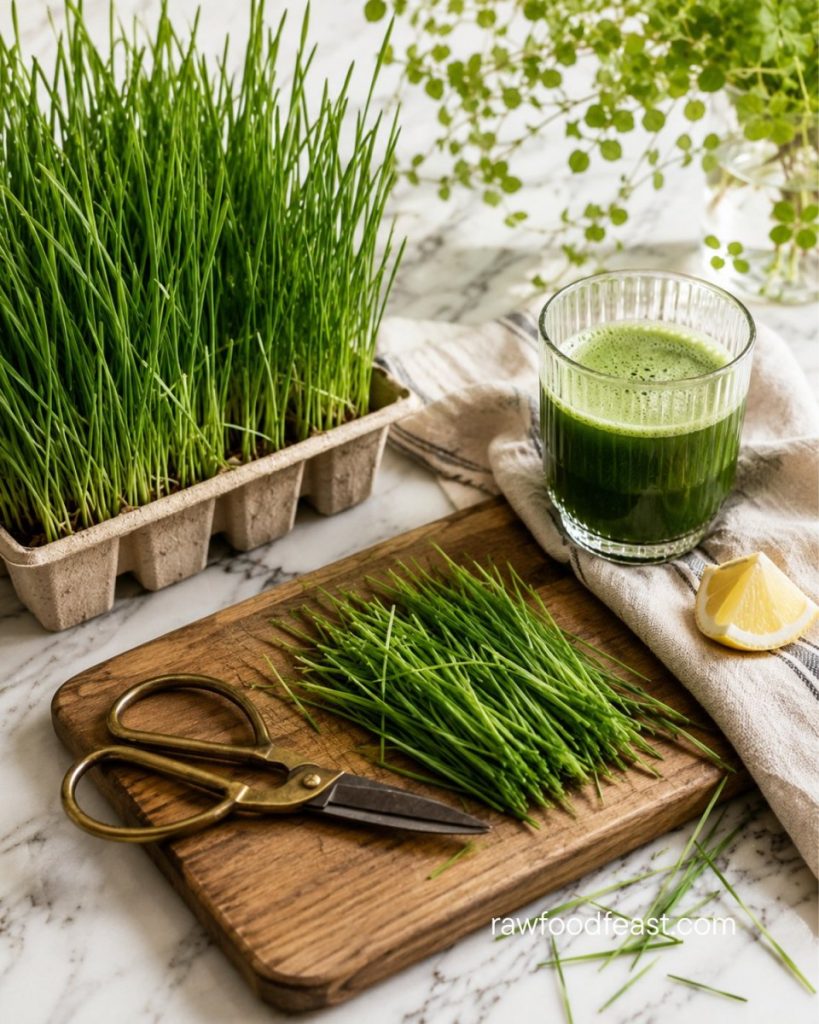
 A tray of fresh wheatgrass changes the rhythm of a kitchen. A flat little tray of bright green grass, sitting on the counter, that quietly turns into the most concentrated chlorophyll juice you can pour. Most people don’t realize how simple it is to grow at home — start to harvest in about ten days, with almost no equipment.
Once you know how to grow wheatgrass at home, you stop paying for tiny shot bottles at the juice bar. You cut what you need, when you need it, straight from the tray on your counter.
What Do You Need to Grow Wheatgrass at Home?
The setup is genuinely simple. You need wheatgrass seeds (also called wheatberries — hard red wheatberries are the most common and most reliable), a shallow tray, organic potting soil if you’re going the soil route, water, and a bright spot to grow.
The tray can be anything food-safe and shallow — a seedling tray, a glass baking dish, a stainless steel sheet pan with a rim. About two inches deep is ideal. You don’t strictly need drainage holes if you stay careful with watering. Skip plastic where you can; what you’re growing here ends up in a glass.
For soil, a thin layer of good organic potting mix is enough — only about one inch deep. Quality matters more than quantity here. Wheatgrass pulls minerals straight out of the soil during those ten days, and whatever the soil is feeding the grass ends up in your juice. Look for organic, untreated potting mix. Skip anything labeled “fertilized” or “moisture control” — those additives are not what you want passing through your tray.
How to Grow Wheatgrass in Soil (Step-by-Step)
Start by soaking the seeds. Rinse them well, cover them in water, and let them sit overnight — eight to twelve hours is plenty. They’ll plump up and triple in size as germination begins.
Drain and rinse the soaked seeds. Spread your one-inch layer of moist (not soaking) soil in the tray and press it down gently. Scatter the seeds in a single dense layer across the surface — touching but not piled. There’s no need to push them in; they’ll root themselves.
Cover the tray loosely with a second tray flipped on top, or a damp cloth. Keep it in a warm spot away from direct sun for two to three days. Mist with water once a day so the seeds don’t dry out.
When the shoots are about an inch tall, uncover them and move the tray into bright, indirect light. Water lightly once a day. From here, the grass grows fast.
Can You Grow Wheatgrass Without Soil?
Yes — and a lot of people prefer the soilless method once they try it. No soil means no dirt under your fingernails, faster cleanup, and zero risk of leftover potting mix making its way into your juice.
The simplest soilless setup is a sprouting jar with a mesh lid, or a shallow tray lined with damp paper towels and a thin layer of water at the base. After soaking the seeds overnight, drain them and spread them in your jar or tray. Rinse twice a day — once in the morning, once in the evening — to keep them moist and to flush away any residue.
The trade-off is that hydroponic wheatgrass tends to be slightly shorter and less dense than soil-grown. The growth pace is the same — seven to ten days — but you have to stay on top of the rinses. Skipping a rinse is the most common cause of mold in soilless setups.
How Long Does Wheatgrass Take to Grow?
From soaked seed to harvest, expect seven to ten days. The exact pace depends on the temperature of your kitchen, how much bright indirect light the tray gets, and the quality of the seeds you started with.
Days one and two are the soak and the initial spread. By day three, you’ll see thin white roots beginning to grip the soil or the tray. Days four and five bring the first green shoots — pale at first, then quickly brightening.
From day six onward, the grass grows fast. Each blade stretches roughly an inch a day under good light. By day seven, you can already cut shorter blades for a small juice. Most people wait until days nine or ten, when the grass is six to seven inches tall and a deep, vivid green — the peak point for chlorophyll, the highest yield, and the freshest taste.
The Seeds You Start With Make All the Difference
The single biggest factor in whether your wheatgrass thrives or struggles is the seeds. Untested, low-quality seeds tend to give patchy germination — half the tray sprouts, half doesn’t — and they’re far more likely to bring mold along for the ride. Good seeds give you full, even coverage and a stronger, brighter harvest.
What you’re looking for is organic, untreated hard red wheatberries — ideally tested for sprouting safety. Look for suppliers who batch-test their seeds for germination rates and pathogens. A few extra dollars at the seed stage pays off in every tray you grow, every shot you drink, and every morning you don’t have to throw a moldy tray in the compost.
If wheatgrass shots on the counter sound like your kind of week, Healthy & Free is the online community built around practical, delicious whole food (un)cooking and juicing. Come join us. You’ll feel it in your energy, your digestion, and your glow.
How to Harvest Wheatgrass for Juicing
Use sharp scissors to cut the grass right at the base, leaving about half an inch behind. A clean cut leaves the roots intact and gives you a fresher-cut blade with less browning. Don’t pull or twist — you’ll loosen the roots and lift bits of soil into the juice.
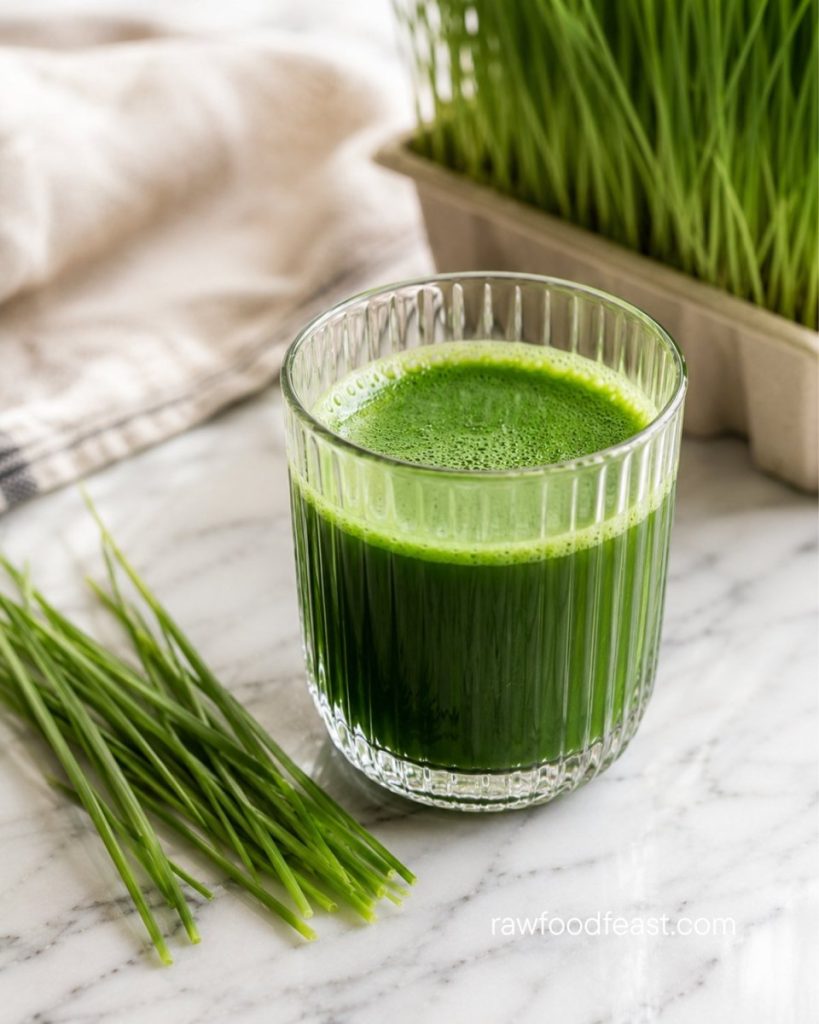
A single tray gives you anywhere from one to two cups of fresh grass, depending on density. That juices down to about two or three small wheatgrass shots — the kind you’d otherwise pay four or five dollars each for at the juice bar. For a closer look at what those shots do once you drink them, read Wheatgrass Juice Benefits.
Most people harvest the entire tray at once. A second cut is possible, but the regrowth is usually thinner, paler, and less sweet. After harvesting, refrigerate any unused blades wrapped loosely in a damp paper towel and use within five days.
Is Growing Wheatgrass at Home Worth It?
For about ten minutes of setup per tray and a minute of watering each morning, you get two or three fresh wheatgrass shots a week, every week — the same shots that run ten or fifteen dollars at the juice bar. The math alone makes a case for it.
But the real reason people stick with it isn’t the savings. It’s the freshness. Wheatgrass starts losing chlorophyll within hours of cutting. Even the best juice bar bottle was cut hours earlier and chilled on its way to you. The tray on your counter gives you something the juice bar can’t.