 Mirjam Henzen
 That moment when your digestion feels quieter, your energy more even, your skin a little clearer — and you can’t quite point to what changed. For a lot of people who start adding more celery to their daily life, that’s exactly what happens. Juiced, blended, or eaten raw off the stalk, it’s one of those vegetables that the body seems to recognize and respond to quickly — in ways that start to make a lot of sense once you understand what’s actually inside it.
Celery health benefits are broader than most people realize. This is a vegetable that works on your cardiovascular system, your gut, your liver, your skin, your nervous system, and your blood sugar — all at once, through a layered profile of compounds that researchers have been studying since 1910. Whether you juice it first thing in the morning, add it to a smoothie, or crunch through raw stalks before a meal, each preparation does something genuinely different and genuinely valuable.
This guide covers all of it — what’s inside celery and what each part does, the benefits by body system in plain language, why fresh juice and whole food aren’t competing with each other, which combinations amplify the effect, and the questions most people are still searching for once they start taking this vegetable seriously. The science is here, and so is the history — starting with the man who built a juicer specifically to extract celery’s medicine nearly a century ago.
The Man Who Started It All: Dr. Norman W. Walker and the Norwalk Juicer
Before celery juice became part of any wellness conversation, Dr. Norman W. Walker was quietly documenting its effects from his Norwalk Laboratory of Nutritional Chemistry and Scientific Research in New York — which he opened in 1910. Walker spent nearly seven decades studying what fresh raw vegetable and fruit juices do in the human body. His book Fresh Vegetable and Fruit Juices, published in 1978, remains the foundational reference in the raw juicing world, and celery held a central place in it.
Walker’s core insight is still one of the clearest explanations of why juicing works: your body spends a significant amount of time and energy extracting nutrients from solid food before anything actually reaches your cells. Fresh raw juice bypasses most of that process. The minerals, enzymes, and plant compounds arrive at the cellular level within 15–20 minutes rather than hours. For therapeutic goals — blood pressure, liver support, reducing inflammation — that speed and concentration genuinely changes what the body can do with what you’ve given it.
Walker was particularly interested in celery’s organic sodium — which he was careful to distinguish from the processed dietary sodium in packaged food. In his framework, the naturally occurring sodium in celery plays a specific role in keeping blood and lymph fluid and flowing, and in keeping calcium soluble in the body so it moves freely rather than depositing in joints and tissues. This was Walker’s clinical observation from decades of practice, not a randomised trial — and it’s worth presenting as exactly that. What’s striking is how closely it aligns with what we now understand about celery’s mineral profile and its effects on vascular and lymphatic function.
In 1930, Walker developed the Norwalk Triturator Hydraulic Press Juicer — the first cold-press juicer built specifically to maximize nutrient extraction from vegetables. It grinds produce first to break open cell walls, then presses the pulp through a hydraulic press for maximum yield with no heat. The Norwalk remains one of the highest-yield juicers available today, nearly a century after Walker designed it. Every slow cold-press juicer you see in a modern kitchen is built on the same principles he established.
What Is Actually Inside Celery — and Why It Works
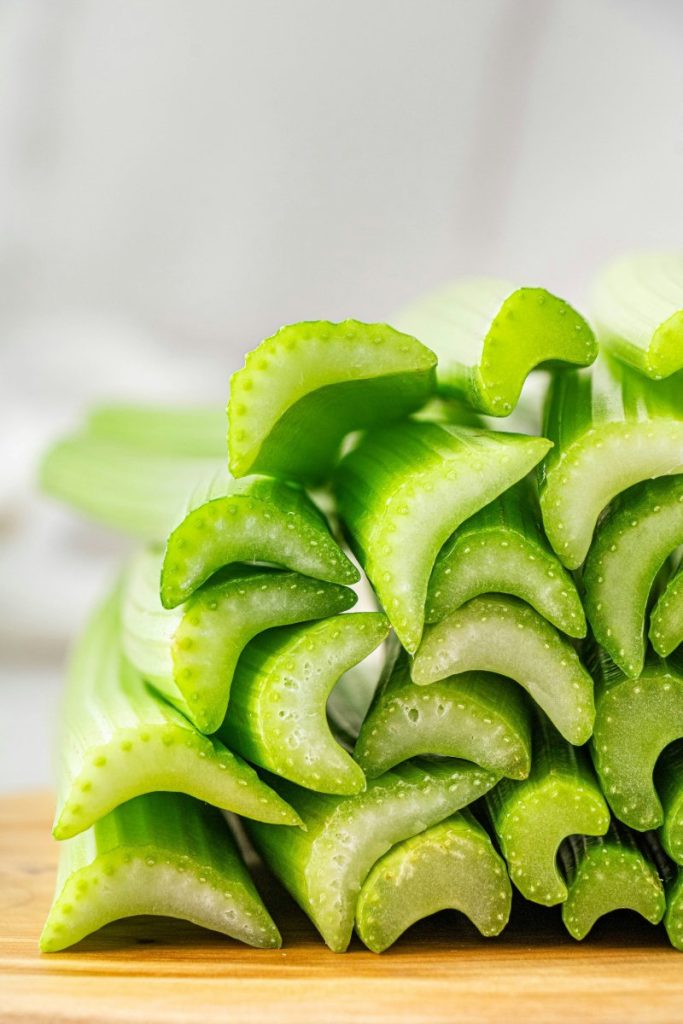
Celery is approximately 95% water — which already tells you something important. This isn’t dry, dense nutrition. It’s hydration that arrives packaged with minerals, and that distinction matters for how your body absorbs and uses it. Two medium stalks deliver around 15 calories alongside vitamin K (for blood clotting and bone metabolism), folate (for cell growth and DNA repair), potassium (for fluid balance and heart rhythm), vitamin C, vitamin A, calcium, magnesium, and a range of B vitamins. Genuinely dense nutrition for almost zero calorie cost.
But the vitamins and minerals aren’t what make celery clinically interesting. The deeper story is in its bioactive compounds — the molecules that interact directly with your body’s systems in ways the nutritional label doesn’t capture.
Phthalides — the reason celery is so good for your heart
If you’ve ever heard that celery is good for blood pressure, phthalides are why. These compounds — particularly one called 3-n-butylphthalide — work directly on the smooth muscle tissue lining your blood vessel walls, causing it to relax and widen. When those walls relax, blood moves through more easily and pressure comes down — the same effect blood pressure medication tries to create, but through food.
A 2025 study that reviewed nine clinical trials across 511 people confirmed it: celery produces significant reductions in blood pressure, fasting blood glucose (the sugar circulating in your blood when you haven’t eaten), and triglycerides — the blood fats that build up when your body has more energy than it can use, and that raise your risk of heart disease when they stay elevated. And unlike pharmaceutical diuretics, phthalides do all of this without throwing off the sodium-potassium balance that keeps your heart rhythm steady and your cells hydrated.
Apigenin — the calm, anti-inflammatory flavonoid
Apigenin is one of the reasons a daily celery practice tends to quiet that low-level background inflammation — the kind that shows up as joint stiffness, skin flares, brain fog, or just feeling a bit off without a clear reason why. It’s a flavonoid — a plant compound — found in high concentrations in celery’s leaves and seeds, and it works by blocking the chemical messengers that tell your body to stay inflamed. When those signals get turned down, the whole system gets calmer.
That calming effect goes beyond inflammation. Apigenin also works on the part of the brain responsible for switching off the stress response — the same mechanism behind chamomile’s reputation as a sleep and anti-anxiety herb. So if you’ve noticed that regular celery juice leaves you feeling a bit more settled and less wired, that’s why. It supports sleep and stress response without making you drowsy during the day. And it’s been studied for its effect on long-term brain health — multiple research reviews have identified it as one of the more promising natural compounds for protecting the brain as it ages.
Luteolin — apigenin’s partner in the anti-inflammatory work
Luteolin works alongside apigenin and deepens the effect. If you deal with seasonal allergies or your airways feel reactive in certain environments, luteolin is the compound doing quiet work there — it calms the inflammatory response in the respiratory system that makes those reactions so uncomfortable. It also helps protect brain cells from the kind of slow, cumulative damage that builds up over years and shows up eventually as memory loss or mental fog. Together with apigenin, these two compounds cover a lot of ground — which is why celery’s effect on the body feels so broad. It isn’t targeting one thing. It’s turning the overall inflammatory dial down across multiple systems at once.
Polyacetylenes, phenolic acids, and the antioxidant layer
Celery also contains a group of compounds that research has linked to antimicrobial properties — meaning they help the body fight off unwanted bacteria and pathogens — and early-stage studies are showing promising results around cancer prevention too, though that research is still developing. On top of that, celery is rich in antioxidants — plant compounds that neutralize the unstable molecules that damage your cells over time and speed up aging. The seeds are particularly potent in this regard, more concentrated than the stalks, which is why celery seed has been used in traditional herbal medicine across cultures for centuries. It’s a different part of the same plant doing a deeper version of the same protective work.
Chlorophyll and organic sodium
Chlorophyll — the pigment that makes celery green — is one of the reasons celery is so supportive of the liver. It stimulates the production of bile, the fluid your liver uses to break down fats and flush waste out of the body. When bile flows well, your liver can keep up with its workload. When it doesn’t, things start to feel sluggish — digestion slows, skin dulls, energy drops.
Organic sodium — the naturally occurring sodium in celery, which is nothing like the processed salt in packaged food — is what Walker paid particular attention to in his decades of practice. He observed that it plays a key role in keeping blood and lymph (the fluid that carries cellular waste away from your tissues) moving freely through the body. The science on this specific mechanism is still catching up to what Walker documented clinically, but everything we know about celery’s mineral profile points in the same direction.
What Celery Actually Does in the Body — System by System
The reason celery comes up in so many different health conversations — blood pressure, gut health, skin, liver, weight, sleep, inflammation — is that its compounds genuinely touch almost every major body system. Here is what happens, in plain language.

Your heart and blood vessels
If you’ve been dealing with high blood pressure, celery is one of the most well-researched foods you can add to your daily life. The compounds that relax your blood vessel walls — phthalides — have been studied in multiple human trials, and the results are consistent: blood pressure comes down, blood fats that build up when your body has more energy than it can use drop, and the heart has less work to do. Potassium supports a steady, healthy heart rhythm. And the anti-inflammatory compounds in celery — apigenin and luteolin — protect your blood vessels from the kind of slow, quiet inflammation that builds up over years and eventually hardens and narrows the arteries.
That process happens so gradually most people don’t notice it until something goes wrong. Celery, used daily, is one of the simplest ways to work against it.
Your digestive system
Whole celery is one of the best things you can eat for your digestive system — and it works on several levels at once. The insoluble fiber moves through your digestive tract largely intact, adding bulk and keeping things moving regularly. The natural carbohydrates in celery feed the beneficial bacteria living in your gut — the ones responsible for everything from immune function to skin clarity to how well you sleep. And celery actively helps keep the less helpful bacteria in check, including the strain linked to stomach ulcers and chronic digestive discomfort.
The 95% water content hydrates the gut at the same time, which matters because fiber only does its job well when everything is adequately fluid — without that hydration, even a high-fiber diet can leave you feeling blocked and uncomfortable. And if you eat it raw, the act of chewing stimulates saliva production, which starts digestion before the food even reaches your stomach and helps protect your teeth in the process.
Your liver and your body’s natural detox pathways
Your liver is quietly working every single hour of the day — filtering everything that enters your bloodstream, breaking compounds down, and packaging waste so it can leave the body. It does this in two stages: first breaking things apart, then neutralizing them so they’re safe to excrete. Both stages need a steady supply of antioxidants, minerals, and hydration to keep up. When those run low, the liver doesn’t stop working — it just works harder and slower, and you feel it as heaviness, brain fog, or that general sense of being a bit backed up inside.
Celery supports both stages in practical, concrete ways. Apigenin actively protects liver cells from the wear and tear of processing — think of it as keeping the engine well-oiled rather than letting it run hot. Chlorophyll stimulates bile production — bile being the fluid your liver uses to carry fat-soluble waste out through the digestive tract — which keeps that exit route flowing freely. And the potassium and organic sodium in celery support your lymphatic system, the network of vessels that collects cellular waste from your tissues and delivers it to the liver and kidneys for processing. When lymph moves freely, the liver isn’t waiting on a backlog.
Walker wrote specifically about the carrot-celery combination in Fresh Vegetable and Fruit Juices, noting that together they furnish a balance of organic minerals that helps restore the body where imbalance and disease have taken root. He also documented carrot-celery as particularly valuable for the nervous system — specifically for restoring the protective sheathing around nerves. These weren’t vague observations; Walker gave specific formulas for this combination across multiple entries in his juice prescription charts, which tells you how central it was to his daily practice.
The honest framing here is simple: celery doesn’t detox your liver. Your liver detoxes itself, every hour of every day, because that’s what it’s built for. What celery does is make that job easier — less wear on the liver cells, better bile flow, lymph that keeps moving. In a world where the liver is processing more than it was ever designed for, that kind of quiet daily support adds up more than most people realize.
If you want to understand what daily juicing does across all of your body’s systems — not just the liver but hydration, energy, digestion, skin, and immunity — this article covers the full picture of what changes when juice becomes a daily rhythm rather than an occasional thing: What Happens in Your Body When You Drink Fresh Juice Daily. It’s one of the most useful reads on the site for understanding why consistency matters more than quantity.
Your immune system
Roughly 70% of your immune system lives in and around your gut — so everything that keeps your gut healthy is also keeping your defenses strong. Vitamin C is what your immune cells burn through fastest when your body is fighting something off or going through a stressful stretch — celery keeps that supply steady. Vitamin A maintains the soft tissue linings of your nose, mouth, and digestive tract — basically the first door your body closes against anything trying to get in. And the anti-inflammatory compounds in celery help keep your immune system from going into overdrive.
That matters more than most people realize — an immune system that overreacts starts attacking your own tissues, and that’s where a lot of chronic discomfort quietly begins. Celery helps keep things calm enough that your body responds when it needs to, and stands down when it doesn’t.
Your nervous system and brain
If you’ve noticed that regular celery juice leaves you feeling a bit calmer and more settled, that’s not your imagination. Apigenin works on the part of the brain responsible for switching off the stress response — the same mechanism behind why chamomile tea has been used as an anti-anxiety herb for centuries. It supports better sleep and a quieter nervous system without making you drowsy during the day.
Luteolin adds another layer of brain protection — it helps shield your brain cells from the kind of slow, cumulative damage that most people don’t notice until it shows up as memory loss or difficulty thinking clearly years later. And vitamin K, which celery contains in good amounts, plays a role in maintaining the protective coating around your nerve fibers — the insulation that keeps nerve signals firing cleanly. Most people don’t connect celery to brain health, but the compounds are genuinely there and genuinely working.
Your blood sugar and metabolism
The same study that confirmed celery’s effect on blood pressure also found that it helps stabilize blood sugar — the level of sugar circulating in your blood between meals. Phthalides appear to support how your body processes glucose directly. And as the background inflammation that apigenin and luteolin calm comes down, your cells start responding better to the signals that regulate blood sugar in the first place — so the whole system runs more smoothly. As a whole food, celery is also about as gentle on your blood sugar as a vegetable gets. You can snack on it freely without any of that spike-and-crash energy that comes from most convenience foods. If you’re someone who notices their energy dipping sharply in the afternoon, that’s worth paying attention to.
Your skin
Your skin and your gut microbiome are more connected than most people realize. When your gut is inflamed or out of balance, your skin tends to show it first — breakouts, redness, dullness, that puffy uneven quality that no face cream seems to fix. When the gut calms down and starts getting what it needs, the skin follows. It’s not instant, but it’s one of the most consistent changes people notice.
Celery works on this from both directions — feeding the gut bacteria that keep inflammation in check, and delivering the kind of deep hydration that reaches your skin from the inside out in a way that drinking more water alone often doesn’t. Most people who juice celery daily start noticing something different in their skin around the two to three week mark. A clearer tone, less puffiness, a more settled quality. That’s not the celery working on your skin directly. That’s your gut finally getting what it needs — and your skin no longer having to pick up the slack.
Your kidneys
Celery is naturally flushing — it increases how much fluid your kidneys move through the body, which is why a lot of people notice they need the bathroom more after drinking celery juice. That’s a good thing. Your kidneys are constantly filtering your blood, and giving them more fluid to work with helps them clear waste more efficiently.
Celery seed in particular has been used across traditional herbal medicine systems for centuries specifically for kidney and urinary tract health — and more recent research is backing up what those traditions observed long ago. One thing worth knowing: if you have existing kidney disease, it’s worth moderating your celery intake and checking with your doctor, because in large amounts it can add a little extra work for kidneys that are already under strain.
Weight management
A whole bunch of celery makes about 500 ml (16 oz) of juice for roughly 50 to 60 calories. That’s almost nothing — and yet it’s genuinely filling, genuinely hydrating, and genuinely nourishing. As a whole food eaten before a meal, raw celery is one of the simplest tricks going — the water, the fiber, and the act of chewing all tell your body you’ve had something before you’ve touched the main meal, so you naturally eat less without trying. And because celery helps keep your blood sugar steady, you also get fewer of those sharp energy dips that send you reaching for something sweet at 3pm. Celery isn’t going to do the work for you, but it makes the whole thing easier — quietly, without asking much.
Three Ways to Use Celery — and What Each One Gives You
How you prepare celery changes what you get from it. And there’s no wrong answer here — juicing, blending, and eating it raw each do something different for your body, and all three are worth having in your life.
Fresh celery juice: concentrated, fast, and therapeutic
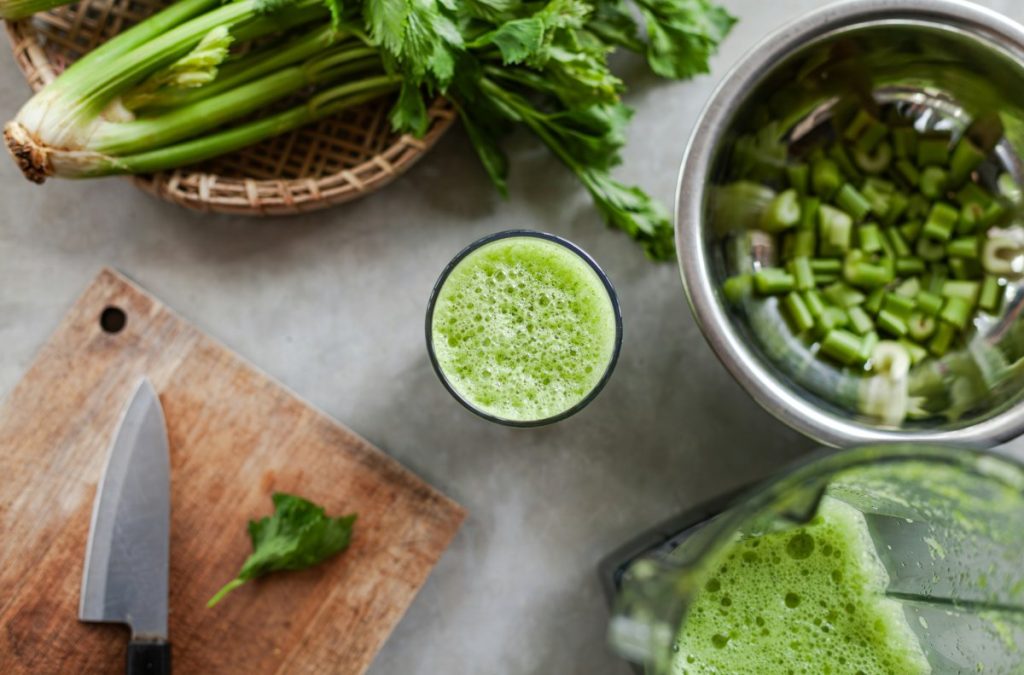
If you’ve ever noticed that celery juice hits differently than eating celery whole — that’s not your imagination. Juicing separates the insoluble fiber, the bulky roughage that gives celery its crunch, into the pulp. What ends up in your glass is the soluble fiber, the minerals, the phthalides, apigenin, luteolin, organic sodium, and vitamins — all in a liquid your body can absorb within about 15 to 20 minutes. No heavy digestion required.
One whole bunch of celery makes around 500 ml (16 oz) of juice — which is exactly Walker’s standard portion for any juice, and not a coincidence. A concentration of active compounds that would take real effort to get through as whole food. This is what Walker built his entire protocol around, and it holds up: for blood pressure, liver support, inflammation, or a focused morning practice, a glass of fresh celery juice delivers something genuinely therapeutic before your day has even started.
The soluble fiber that stays in the juice continues feeding your gut bacteria and supporting digestion — so you’re not losing that. What you are setting aside is the bulk. And that’s worth understanding rather than worrying about. Juice isn’t designed to replace your whole raw vegetables — it’s designed to do something different. Pair the two and you’ve got everything covered.
The full breakdown of what actually happens to fiber when you juice — and why it matters — is here: Does Juicing Remove Fiber? Soluble vs Insoluble, Explained Simply.
Celery in smoothies: fiber intact, whole-food nutrition
Blending works differently than juicing — the whole plant goes in and stays together, fiber and all. That makes a smoothie more filling and slower to digest, which some people prefer, especially in the morning when they want something that keeps them going for a few hours. Your gut bacteria get plenty to work with, and the experience is more grounding than a juice. If celery in a smoothie fits your morning better than a separate juicing practice, that’s a completely valid way to do it. Celery blends beautifully with cucumber, green apple, lemon, ginger, and leafy greens — bright, clean, and honestly the kind of thing you actually look forward to drinking every day.
Whole raw celery: full fiber, dental health, and pre-meal satiety
There’s something eating celery raw does that neither juicing nor blending can quite replicate — and it starts the moment you bite into it. Chewing gets digestion going before the food even reaches your stomach, and the fibrous texture does a gentle clean-up job on your teeth and gums as you go. On a veggie platter with almond pulp tzatziki (grab the recipe here), zucchini hummus, or guacamole, the healthy fats in those dips actually help your body absorb more of what’s in the celery — fat and certain vitamins are a team, and they work better together than apart.
And as something to eat before a meal, raw celery is one of the simplest tricks going — it’s almost calorie-free, genuinely filling, and by the time you’ve worked through a few stalks your body has already started telling you it’s had something. You naturally eat less of everything else without trying.
Pure Celery Juice or Mixed — Does Adding Cucumber, Lemon, or Apple Change Anything?
This is one of the most commonly searched questions about celery juice — and the honest answer is that pure celery juice and mixed combinations are genuinely different drinks, not better or worse versions of the same thing. When you juice celery on its own, every sip is concentrated celery. The phthalides, the organic sodium, the minerals — all of it, undiluted, absorbed fast. That’s what Walker’s protocol was built around, and it’s still the right choice when you’re working on something specific like blood pressure or liver support.
When you add cucumber or apple, you get a gentler, broader drink — less celery per glass, but with its own compounds doing their own valuable work alongside it. That’s not a problem. It just means you’re drinking something different, not something better or worse. The combinations people reach for most often have real merit — they just do different things well.
Celery + cucumber: amplified hydration and adrenal support
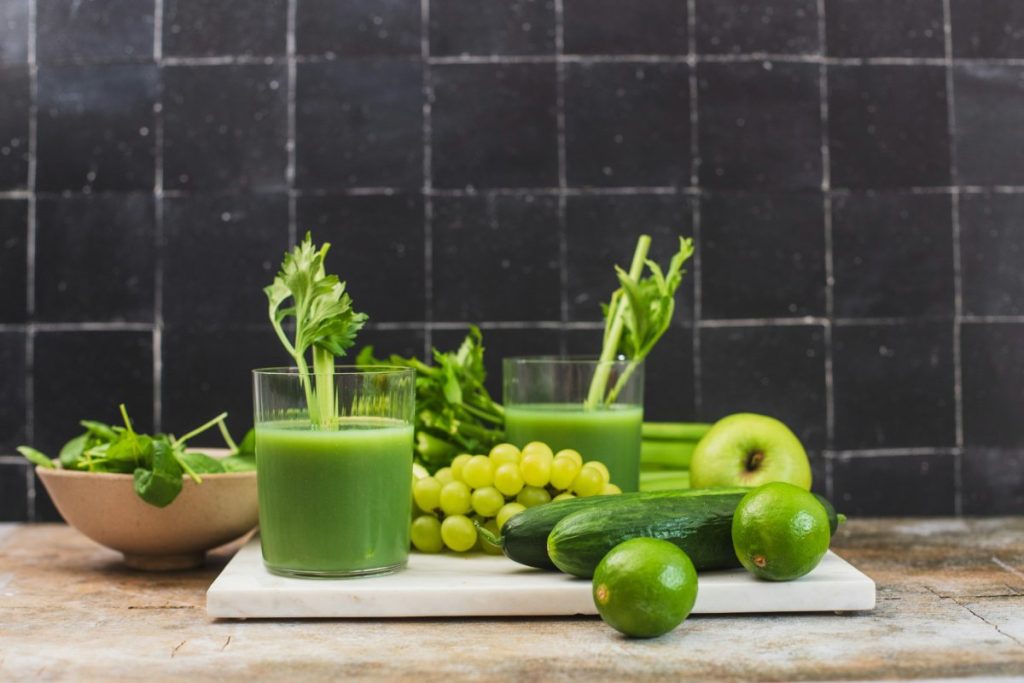
Celery and cucumber are a natural pair — both are mostly water, both are packed with minerals, and together they make a juice that hydrates your body at a level plain water often doesn’t reach. The electrolytes — the minerals that help your body actually hold and use the water it takes in — from both vegetables work together in a way you actually feel. Cucumber also brings silica — a mineral your skin, joints, and connective tissue love — which makes this combination particularly good for anyone who wants to feel it in their skin and their joints over time.
And if you’re new to celery juice and find the flavor on its own a bit much, cucumber is the answer. It softens the whole thing without watering down what makes celery worth drinking in the first place. Most people find this combination easier to stick with daily — and that consistency is where the results actually show up.
How timing changes where this juice lands in your body — and why an empty stomach makes all the difference — is covered here: Best Time to Drink Cucumber–Celery Juice for Hydration, Adrenals, and Clear Skin.
Celery + lemon or lime: vitamin C synergy and liver support
Lemon and lime do more than brighten the flavor — though they do that beautifully too. Vitamin C helps your body absorb more of the iron and minerals already in the celery, and it keeps the other plant compounds in the juice active for longer. Lemon also gives the liver a gentle nudge — it supports the first stage of the liver’s natural detoxification process, where compounds get broken down before being cleared out. Celery then picks up the second part of that job through its chlorophyll and mineral content.
Together they cover more ground than either one does alone — which is a good reason to keep lemon as a regular addition if liver support is something you’re working on. And honestly, the acidity just makes the whole thing taste better. The best juice is always the one you actually look forward to making every morning.
Celery + apple: quercetin, natural sweetness, and building the habit
Apple changes the experience of celery juice more than any other addition. The natural sweetness makes it something you genuinely look forward to rather than something you drink because you know it’s good for you — and that shift is not trivial. A juice you enjoy is a juice you drink every day, and consistency is where the results actually show up. Apple also contributes quercetin, a flavonoid with its own anti-inflammatory and antihistamine (allergy-calming) properties that works alongside celery’s apigenin and luteolin — so you’re not just adding sweetness, you’re adding something genuinely useful.
For anyone using celery juice as a daily nourishing habit, celery-apple is a wonderful choice. If you’re working specifically on blood pressure or liver support, pure or cucumber-based versions will serve those goals better on most days — but the apple version is absolutely the right call on any day when the most important thing is that you actually make the juice.
How Celery Supports Your Body’s Natural Detox Pathways
The word detox gets used loosely enough that a lot of people have started dismissing it — and that’s worth pushing back on, because what’s actually happening in the body is real and worth understanding. Your liver, kidneys, lymphatic system, gut, lungs, and skin are continuously processing and clearing the waste products of your own metabolism as well as the compounds that enter your body through food, air, and skin. This isn’t a seasonal cleanse. It’s a constant, 24-hour process that requires a steady supply of specific nutrients to run at full capacity.
Here’s what celery actually brings to that process. Apigenin helps protect liver cells from the daily wear of processing everything that passes through — think of it as keeping the engine from running hot. Chlorophyll gets bile moving — bile being the fluid your liver uses to carry waste out through the digestive tract — and when that flows well, the liver can keep up with its workload.
Potassium and organic sodium support your lymphatic system, the network of vessels that collects waste from your tissues and delivers it to the liver and kidneys. When lymph moves freely, nothing backs up. Celery’s natural flushing effect also gives the kidneys more fluid to work with, which helps them clear waste more efficiently. And the compounds in celery feed the beneficial bacteria in your gut microbiome — which plays a bigger role in clearing hormones and environmental compounds from the body than most people realize.
For a deeper look at how celery specifically supports the liver — and what’s actually happening inside when you drink it daily: Does Celery Juice Help the Liver? What Actually Happens When You Drink It Daily. The deepest treatment of this topic on the site, and worth reading alongside this hub.
Does Timing Matter? What Happens When You Drink Celery Juice First Thing
Morning on an empty stomach is when celery juice tends to work hardest — and there’s a simple reason for it. When your body isn’t busy digesting a meal, the minerals and plant compounds in fresh juice move through quickly and get to work fast. Your liver has been processing through the night and is ready to receive fresh support first thing. Nothing is competing for the nutrients. They go where they’re most needed.
Drinking celery juice at other times of day still delivers real value — the timing just shifts what benefits most. With food in your stomach it supports digestion and adds to your hydration through the day, which is genuinely useful too. But morning on an empty stomach tends to produce the clearest results — which is why it’s the approach most people stick with once they try it.
Why an empty stomach changes where celery juice lands first — and what that means for bloating, digestion, and how your morning feels — is here: Best Time to Drink Celery Juice for Digestion and Bloat Relief: What Happens When You Drink It First Thing.
And if celery juice is part of a broader morning practice aimed at energy and natural detox support, this article explains why an empty stomach changes everything: Morning Detox Juice for Energy: Why It Works Best on an Empty Stomach.
Once you understand why it works, you’ll find you’ll actually want to do it — it stops feeling like a habit you have to maintain and starts feeling like something you miss when you don’t.
The Questions People Ask Most About Celery and Celery Juice
How much celery juice should I drink daily?
Walker’s standard portion was always 500 ml (16 oz) — and one whole bunch of celery gets you right there. That’s the amount that tends to produce the clearest results for blood pressure, liver support, and keeping your minerals topped up daily. If you’re new to it, starting with half that and building up over a week or two gives your body time to adjust. Some people notice looser stools when they start — that’s the body responding to a sudden increase in minerals, and it usually settles within a few days. Once you’re comfortable, 500 ml daily is the goal.
Can I drink celery juice every day?
Yes — and drinking it daily is actually where the results show up. The phthalides, apigenin, and luteolin in celery work over weeks, not in a single glass, so consistency matters more than quantity. Walker’s entire protocol was built around daily use, and that holds up. For most healthy people, daily celery juice is completely fine.
Two things worth knowing: if you’re on blood thinners, it’s worth being aware that many raw foods — leafy greens like kale, spinach, and parsley, as well as celery itself — are naturally rich in vitamin K, which plays a role in blood clotting. That’s not a reason to avoid them, but it’s worth mentioning significant dietary changes to your doctor so they can keep an eye on things. And if you have existing kidney disease, it’s worth moderating your celery intake and checking in with your doctor first.
Is celery juice good for weight loss?
Celery juice supports the conditions that make weight management easier — stable blood sugar, less inflammation, good hydration, and a body that’s working the way it should — without being a fat-loss tool in itself. A glass from a whole bunch is around 50-60 calories, making it one of the most nutrient-dense low-calorie drinks you can make.
Where celery works most powerfully for weight management is eaten whole before meals: the combination of water, fiber, and the act of chewing tells your body it’s had something before you’ve touched the main meal, so you naturally eat less without trying. Used consistently as part of a raw food diet, it makes maintaining a natural healthy weight significantly easier without asking much of you.
Does celery juice help with bloating?
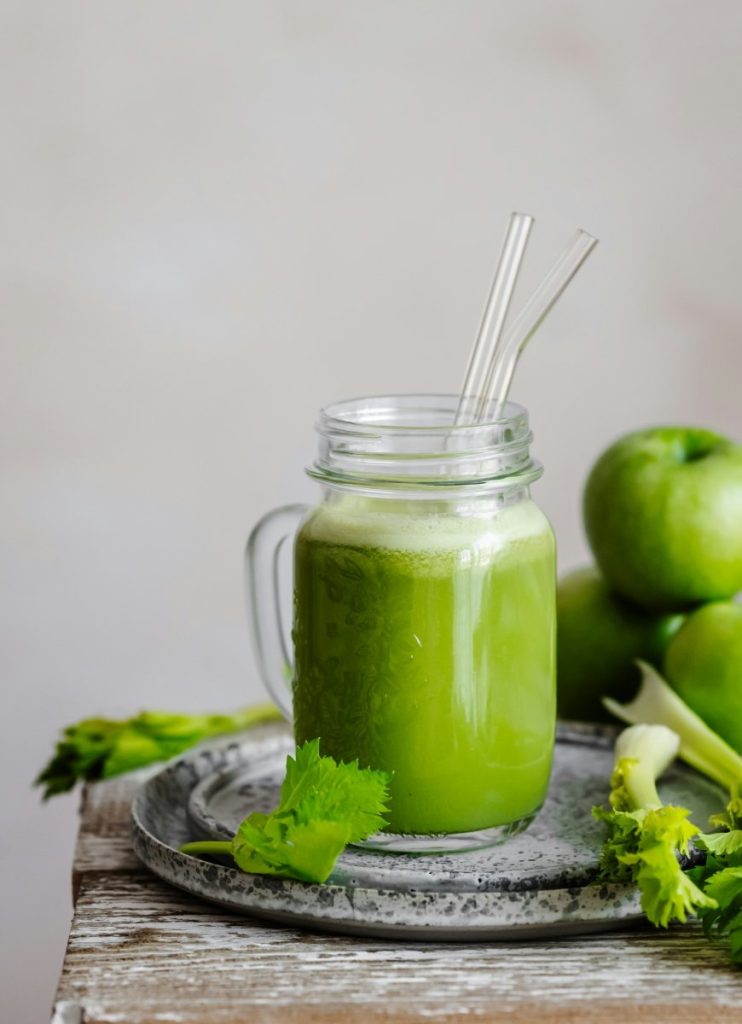
For most people, yes. Potassium helps the body release water it’s been holding on to, which is one of the most common reasons people feel puffy and bloated. Apigenin and luteolin calm the gut inflammation that makes the digestive tract feel swollen and uncomfortable. And the compounds in whole celery feed the beneficial bacteria in your gut microbiome over time — which reduces the gas and bloating that comes from microbial imbalance.
Most people who drink celery juice consistently notice a difference within one to two weeks. It’s gradual because the gut takes time to shift — but it’s real, it’s consistent, and it makes complete sense given everything celery does in the digestive system.
Is celery juice good for skin?
Genuinely yes — and it works on the skin from more than one direction. A healthier gut microbiome produces less inflammation throughout the body, and inflammation is the underlying driver of most common skin conditions — acne, redness, eczema flares, dullness.
Celery’s antioxidants protect skin cells from the kind of slow, cumulative damage that shows up over time as uneven tone and premature aging. And the deep hydration celery delivers — absorbed quickly in juice form — supports the skin elasticity and that natural glow that no topical skincare can replicate from the outside. Most people who juice celery daily start noticing skin changes around the two to three week mark, which lines up with how long it takes gut shifts to show up visibly on the skin. The skin benefits are real — they’re just downstream of gut and liver health, which is where celery does its most consistent work.
What’s the difference between juicing celery and eating it whole?
They’re different tools that do different things — not better or worse versions of the same thing. Eating celery whole keeps all the fiber — the soluble kind that feeds your gut bacteria, and the insoluble kind that keeps things moving regularly — plus the real fullness that comes from chewing and bulk. Juicing separates out the insoluble fiber into the pulp and concentrates the minerals, phthalides, and flavonoids in a liquid your body can use within minutes.
Juice is for fast, concentrated support — blood pressure, liver, and inflammation — while also continuing to feed your gut bacteria through the soluble fiber that stays in the glass. Whole celery adds the bulk and the fullness that juice doesn’t deliver in the same way. Walker understood both and recommended both. They work together, not against each other.
Does organic celery make a difference?
Organic is ideal for juicing — when you juice a whole bunch at a time, you’re concentrating everything in those stalks, and celery does appear regularly on high-pesticide lists for conventional produce because the ridges make it harder to wash thoroughly. So if you can choose organic for your juicing celery, it’s worth it.
That said, don’t let it stop you. If conventional celery is what’s available or what fits your budget, use it. Soaking the stalks in water for a few minutes with some soda or veggie wash and then scrubbing with a vegetable brush works really well for getting into every groove.
And if your overall diet is rich in raw fruit and leafy greens, you’re already consuming the plant compounds that help your body deal with pesticide residues. Things like chlorophyll, antioxidants, and the natural detoxification support that comes from eating a wide variety of fresh plants give your liver and gut what they need to break down and clear residues that do make it in. It’s not a free pass — but it does mean that someone eating a diet built around raw plants is in a very different position than someone eating mostly processed food who then worries about one non-organic vegetable. The most important thing is that you actually make the juice. Perfect ingredients matter less than a consistent habit.
How to Choose the Right Juicer for Celery Health Benefits
Celery is one of the most demanding vegetables for a juicer to handle well. The long fibrous strings wrap around centrifugal blades, reduce yield dramatically, and clog filters — which is why so many people have tried celery juice, been frustrated with watery results and a machine that jams, and quietly stopped. Almost always, the juicer is the problem, not the celery.
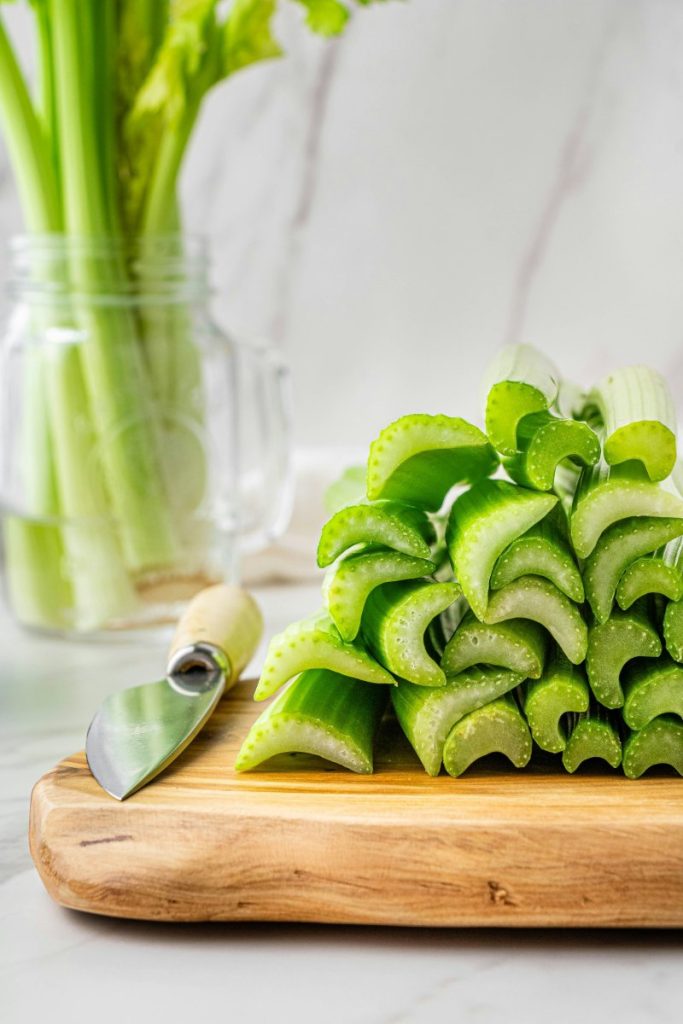
Walker developed the Norwalk Juicer himself — a two-stage hydraulic press that grinds produce first to break open cell walls, then presses it with no heat for maximum yield. The fact that a juicer designed in the early 20th century is still considered one of the finest available today says everything about how far ahead of his time Walker was. It’s also expensive and substantial — firmly in the committed-practitioner category rather than the everyday kitchen — but if you ever get the chance to juice on one, you’ll understand why it still has devoted fans.
The good news is that today’s slow cold-press juicers bring everything that made the Norwalk exceptional — gentle extraction, no heat, minerals intact — into something that actually fits a real morning routine. The Nama J2 and Hurom H320N are two of the best for celery specifically, and both are genuinely hands-free, which changes everything. Chop a whole bunch into thirds, load the hopper, press start, and walk away. No feeding stalks one at a time, no standing over it, no jamming. Cleanup takes about two minutes — a rinse and a brush and you’re done.
If you’ve ever tried juicing celery in a centrifugal juicer and wondered why you got so little juice for so much celery, that’s the machine. A slow juicer extracts significantly more from the same bunch — which means better results and a lower weekly celery bill. When the process is this easy and the yield is this good, daily juicing stops being something you have to motivate yourself to do and just becomes part of your morning.
If you’re deciding between the Nama J2 and Hurom H320N, this comparison covers every meaningful real-world difference — hands-free flow, juice yield, batch juicing, and daily cleanup: Nama J2 vs Hurom H320N: The Real Differences Between These Hands-Free Slow Juicers. It’s the most practical guide to making this choice based on how you actually use a juicer in daily life.
Use discount code RAWFOODFEAST to save on all Hurom & Nama juicers, the Nama M1 plant-based nut milk maker, and accessories.
Pure Celery Juice vs. Celery in a Smoothie: Which Is Right for You?
This question comes up constantly, and the honest answer is both — just for different things and different moments in your day. Pure celery juice concentrates the active compounds and gets them into your body fast, without fiber slowing things down. That’s what Walker built his protocol around, and it’s the right choice when you’re working on something specific — blood pressure, liver support, or just wanting that clean focused morning hit.
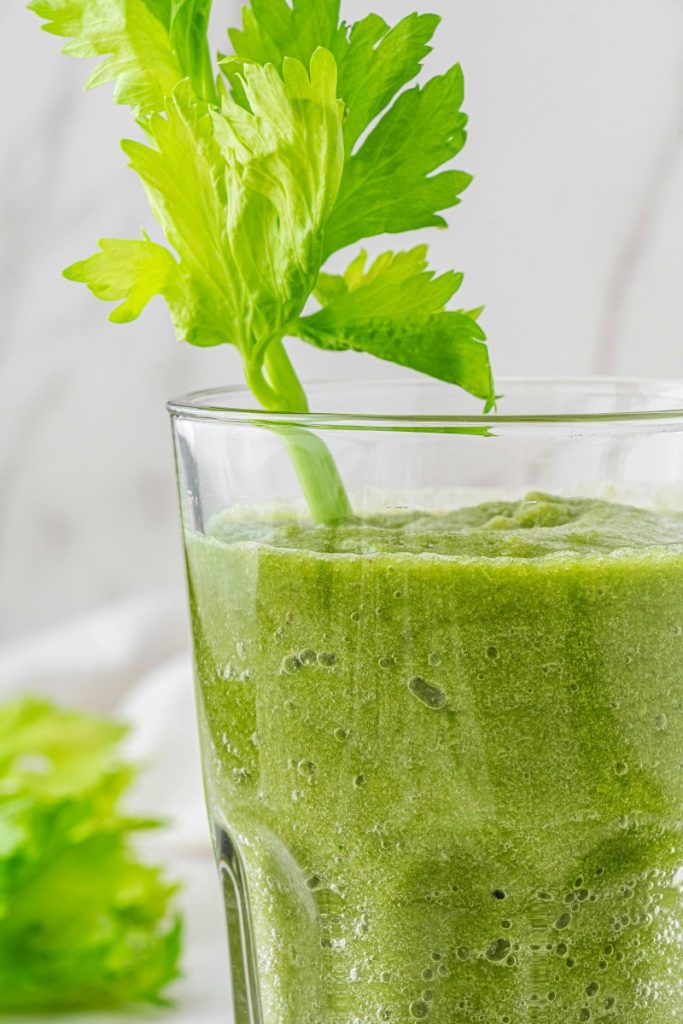
A celery smoothie works more gradually and keeps all the fiber in. Your gut bacteria get more to work with, you feel fuller for longer, and it’s a great option if you don’t own a juicer yet or simply prefer something more substantial in the morning. A celery smoothie with cucumber, apple, and lemon gets you most of what celery has to offer in a different and equally worthwhile way.
The most complete approach — and this is where a raw food diet really shines — is both. Juice in the morning on an empty stomach, and whole celery or smoothies through the day for fiber and fullness. Walker ate and juiced; he never treated them as competing choices, and neither should you.
The full comparison of what each method gives you and how to choose based on what you’re actually going for: Pure Celery Juice vs. Celery in a Smoothie: What’s the Difference and Which Is Better for You. The most useful guide to making this decision with real clarity.
If you’re curious about going deeper with raw food and juicing — whether you’re just starting out or already living this way — Healthy & Free is the online community built around exactly that. Real recipes, practical food knowledge, and people at every stage of the journey. If you’re tired of starting over every Monday, running out of raw meal ideas, doing this alone. This is where that changes. Come and join us.
Ready to actually start juicing celery? This practical guide covers everything from how to prep and juice celery, what yield to expect, how to store it, and what the first week tends to feel like: How to Juice Celery: The Right Way to Get Maximum Yield and Nutrients. A clean start-to-finish guide that makes the habit easy to build and actually keep.
Celery: a Vegetable That Has Always Delivered
Celery has been earning its reputation since long before anyone used the word superfood. Dr. Norman Walker was documenting its effects in careful, practical detail from 1910. The research that has accumulated since — on blood pressure, inflammation, liver function, brain health — has largely confirmed what nearly a century of practice already showed. This is a vegetable that works across multiple systems at once, in ways that become visible in the body when you use it consistently.
The changes don’t arrive in a single glass. They show up in the quieter digestion after a week or two, the steadier energy, the skin that starts looking more settled. That’s how food as medicine works — not dramatically, not overnight, but reliably and cumulatively in a body that’s being given good raw materials every day and allowed to do what it was designed to do. Celery is one of the most accessible, affordable, and well-supported of those raw materials. It has been, for over a century, and it will keep being.



Wow!! This article is such a wealth of information. I’ve learned so much, and it is so easy and interesting to read. Thank you for putting this together and sharing it.
Hi Kat, thank you so much for your kind words! It truly means a lot, as I’ve spent a couple of days writing this one to help people just like you. I’m so glad it resonated with you and hope it brings you lots of inspiration (and something delicious too). Have a great week, Mirjam