Mirjam Henzen
 Papaya is one of those foods that people reach for almost instinctively when their digestion is heavy or slow. There is a reason for that. Papaya contains papain — a proteolytic enzyme, meaning an enzyme that breaks down proteins — and it is one of the most potent digestive enzymes found in the plant world. The papaya benefits for digestion are not incidental to the fruit. They are built into its biology.
If you have ever eaten papaya after a heavy meal and noticed the heaviness lift faster than expected, or felt your stomach settle in a way that other fruit does not quite produce, that is papain at work. It breaks down protein with a speed and efficiency that takes significant pressure off the stomach and small intestine — which are the parts of your digestive system that ordinarily carry the full load of protein digestion.
Understanding how papain works, and how to eat papaya to get the most from it, changes how useful it can be in a daily raw food routine.
What Is Papain and What Does It Do in the Gut?
Papain is a cysteine protease — a class of enzyme that cleaves (cuts) the peptide bonds that hold protein chains together. In practical terms, it does to dietary protein what scissors do to thread: it breaks it into smaller pieces (amino acids and short peptide chains) that the body can absorb directly without further processing.
The stomach typically handles protein digestion through hydrochloric acid and an enzyme called pepsin. But this process takes significant energy and time — and when protein intake is high (or digestion is already compromised), the stomach can struggle to fully break down everything before it moves into the small intestine. Incompletely digested protein in the small intestine is one of the primary causes of bloating, gas, and that heavy, full feeling that lingers for hours after eating.
Papain accelerates protein breakdown, reducing the digestive burden on the stomach and small intestine. It also remains active across a wide pH range — from the acidic environment of the stomach (pH 3.5) to the more alkaline environment of the small intestine (pH 6–7) — which means it keeps working throughout the entire protein digestion process, not just in one location.
This is why papain has been used clinically in enzyme therapy for decades — as a digestive aid, a wound-healing agent, and an anti-inflammatory compound in connective tissue. The full picture of how digestive enzymes work and why raw food is such a rich source is covered in Digestive Enzymes Explained.
Does Papaya Reduce Bloating?
Yes — and the mechanism is straightforward. Most bloating after meals is caused by one of two things: incomplete protein digestion producing fermentable residue that gut bacteria act on (generating gas), or slowed gut transit that allows food to sit and ferment before it moves through. Papain addresses both.
By accelerating protein breakdown, papain reduces the amount of undigested protein that reaches the large intestine, where bacterial fermentation occurs. Less fermentable material means less gas production, which directly translates to less bloating after eating.
Papaya also contains fiber that stimulates peristalsis — the muscular wave contractions (the rhythmic squeezing motion that moves food through the digestive tract) that keep food moving. The combination of enzyme-driven protein breakdown and motility support makes papaya one of the most comprehensively useful fruits for post-meal bloating. For a broader picture of what helps and what does not when it comes to gut inflammation and bloating, Best Juice for Gut Inflammation covers the juice side of this in detail.
Green Papaya vs Ripe Papaya: Which Has More Enzymes?
This is one of the most practically useful distinctions when it comes to papaya and digestion. Green papaya and ripe papaya are not nutritionally equivalent — particularly when it comes to enzyme concentration.
Green papaya contains dramatically higher levels of papain than ripe papaya. The green fruit is actually harvested specifically for papain extraction in commercial enzyme production — the latex (milky fluid) found in unripe papaya flesh and skin contains papain at concentrations far exceeding the ripe fruit. If digestive enzyme support is the primary goal, green papaya is the more potent choice.
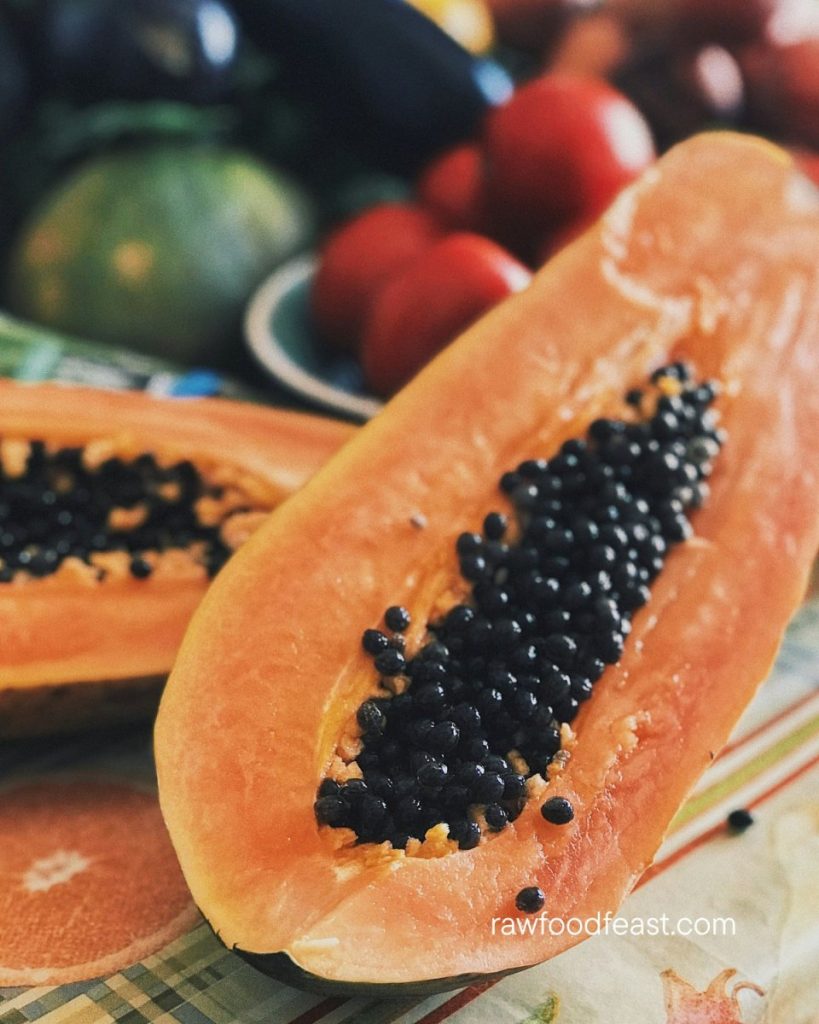
Ripe papaya contains less papain — the enzyme activity decreases as the fruit ripens and sugar content increases — but it delivers more vitamin C, beta-carotene (which the body converts to vitamin A), and a richer flavor. It is also substantially easier to digest overall, since the sugars are more developed and the fruit’s cell structure is softer. For most people eating papaya as part of a daily raw food routine, ripe papaya is the most practical choice and still delivers meaningful enzyme and anti-inflammatory benefit.
Green papaya is best used in savory preparations — raw papaya salads (a staple in Thai and Southeast Asian cuisine), shredded into bowls, or blended into green smoothies where its mild flavor is easily masked. The key with green papaya is to eat it raw — cooking deactivates the papain almost entirely.

What Else Does Papaya Do for Your Body?
Papain and enzyme support are the most distinctive aspects of papaya, but the fruit has a broader nutritional profile worth knowing.
Vitamin C: A single cup (145 g) of ripe papaya contains approximately 90 mg of vitamin C — more than the adult daily requirement in one serving. Vitamin C is essential for immune function, building collagen, and the absorption of non-heme iron from plant foods. It is also a primary antioxidant that directly neutralizes free radicals (unstable molecules that damage cell membranes and accelerate aging). Since vitamin C degrades rapidly with heat, raw papaya delivers this nutrient at its full potency.
Beta-carotene: Papaya’s deep orange flesh is evidence of its beta-carotene content. Beta-carotene is what your body converts into vitamin A as needed — and a fat-soluble antioxidant that supports immune function, skin health, and eye health. Eating papaya with a small amount of fat (avocado, hemp seeds, or a drizzle of cold-pressed olive oil) increases beta-carotene absorption significantly, since fat-soluble nutrients require dietary fat to be absorbed properly.
Anti-inflammatory compounds: Papaya contains chymopapain — a second proteolytic enzyme — as well as isothiocyanates and flavonoids that directly suppress inflammatory signaling. Studies have shown papaya extracts reduce levels of CRP (C-reactive protein, a key marker of systemic inflammation) — effects attributed to the combined activity of papain, chymopapain, and the antioxidant compounds in the flesh and seeds.
Papaya seeds: Often discarded, the seeds contain carpaine and benzyl isothiocyanate — compounds with antimicrobial and antiparasitic properties. The seeds are edible raw, taste mildly peppery (similar to black pepper), and a small amount (around a teaspoon) can be eaten alongside the fruit or blended into smoothies. Large amounts are not recommended — a small quantity as an occasional addition is sufficient.
Folate: Papaya is a good source of folate (vitamin B9), which is involved in DNA repair, cell division, and the production of serotonin and dopamine. A cup of papaya provides around 57 mcg of folate — meaningful support for anyone on a plant-rich diet where folate levels can be variable.
How to Eat Papaya Raw for Maximum Digestive Benefit
The most important rule for getting the digestive benefit from papaya is timing: eat it alone, or at the start of a meal, before other foods. This allows papain to act directly on the gut without being immediately diverted toward digesting the food that arrives alongside it.
Eaten on its own as a first food in the morning or as a standalone snack between meals, papaya allows its enzymes to move through the digestive tract with maximum contact time. When eaten as part of a mixed meal — particularly one that includes cooked food, dairy, or dense protein — much of the papain is consumed in digesting that meal, reducing the excess available to support general gut health.
In practice, a quarter to a half of a medium papaya (roughly 200 to 300 g of flesh) is a useful daily amount for digestive support. A full papaya eaten at once is not harmful, but it is more than most people need or want.
Simple raw serving ideas that work well:
The first option is simply sliced with lime. Half a ripe papaya, seeds scooped out, flesh scooped with a spoon or sliced, with a generous squeeze of fresh lime. The lime brightens the flavor and the vitamin C from both sources is additive. This is the simplest, fastest preparation — less than two minutes, no equipment.
The second option is a papaya bowl. Half a papaya used as a bowl, filled with a small fruit salad — mango, kiwi, and passion fruit work well alongside it — topped with a tablespoon of hemp seeds and a squeeze of lime. Visually appealing, nutritionally complete for a morning meal, and easy.
The third option is a green papaya salad in the Thai style. Shredded green papaya with julienned carrot, cucumber, cherry tomatoes, fresh lime, a small amount of tamari or coconut aminos, and fresh herbs (basil, cilantro, mint). This is the highest-enzyme preparation and works well as a light lunch or a side alongside other raw dishes.
The fourth option is a papaya smoothie. Ripe papaya blended with banana, mango, fresh ginger, and lime juice. This is a good choice for anyone who finds the texture of raw papaya unusual — blending makes it smooth and easy to drink, while still delivering the enzyme and nutrient benefit.
For broader guidance on building this kind of eating into a daily rhythm, Healthy & Free is where we go deeper into raw food digestion support, with recipes and practical guidance from people doing this daily.
How Does Papaya Compare to Other Digestive Enzyme Foods?
Papaya sits alongside pineapple (which contains bromelain, another potent proteolytic enzyme) and mango (which contains zingibain and other minor enzymes) as one of the most enzyme-rich fruits. Among these, papain is generally considered the most well-studied and most potent for protein digestion specifically.
Compared to pineapple, papaya tends to be gentler on the gut lining — bromelain can be quite aggressive for people with sensitive stomachs, while papain is generally well-tolerated even by people with gut sensitivities. The combination of papaya and pineapple is particularly useful for someone who needs strong digestive enzyme support, as the two enzymes work on slightly different proteins and complement each other.
For anyone dealing with consistently sluggish digestion, poor nutrient absorption, or recurring bloating, papaya is one of the most practical raw food additions available — affordable, widely available, requiring no preparation beyond slicing, and consistently effective.
A ripe papaya in the morning is not a medical intervention. It is simply a fruit with an unusually capable enzyme, doing what it has always done — helping the gut move with less resistance, absorb with more efficiency, and finish the day feeling lighter than it started.