Mirjam Henzen
 Most people walk past cabbage in the produce aisle without giving it a second thought. It’s plain, cheap, and not particularly photogenic. And yet — for gut health, cabbage juice is one of the most powerful raw drinks you can make at home.
Cabbage juice for gut health has been studied for almost a century. In the 1940s, a Stanford researcher found that fresh cabbage juice helped ulcers heal in about a quarter of the usual time. Today we understand why — and the same compounds that did the work back then are still doing the work now.
Why Is Cabbage Juice So Good for Your Gut?
Cabbage isn’t flashy. It doesn’t have the antioxidant headlines of blueberries or the celebrity status of celery. But cabbage juice does three things almost no other juice does at the same time: it supports your stomach lining, calms gut inflammation, and feeds the bacteria you actually want growing in there.
When you juice raw cabbage, you concentrate compounds your gut needs in real doses — far more than you’d get from eating a few cabbage leaves in a slaw. That’s the difference. Cabbage as a salad is mildly helpful. Cabbage as a juice is a gut-repair tool.
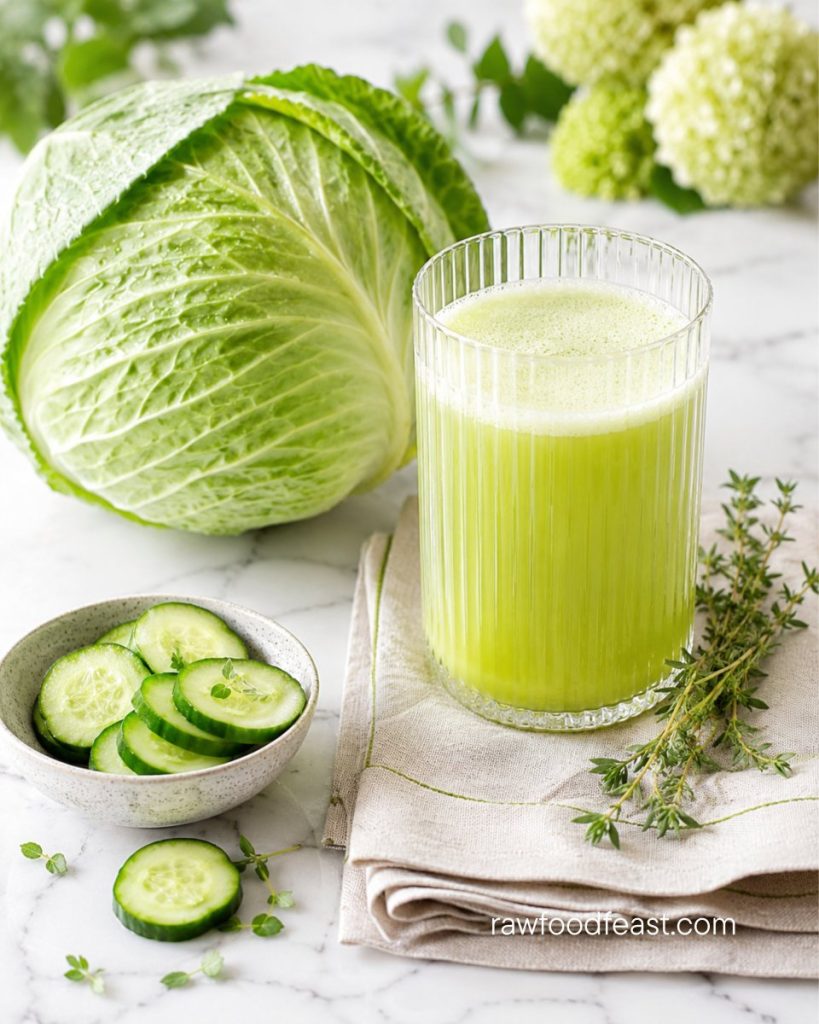
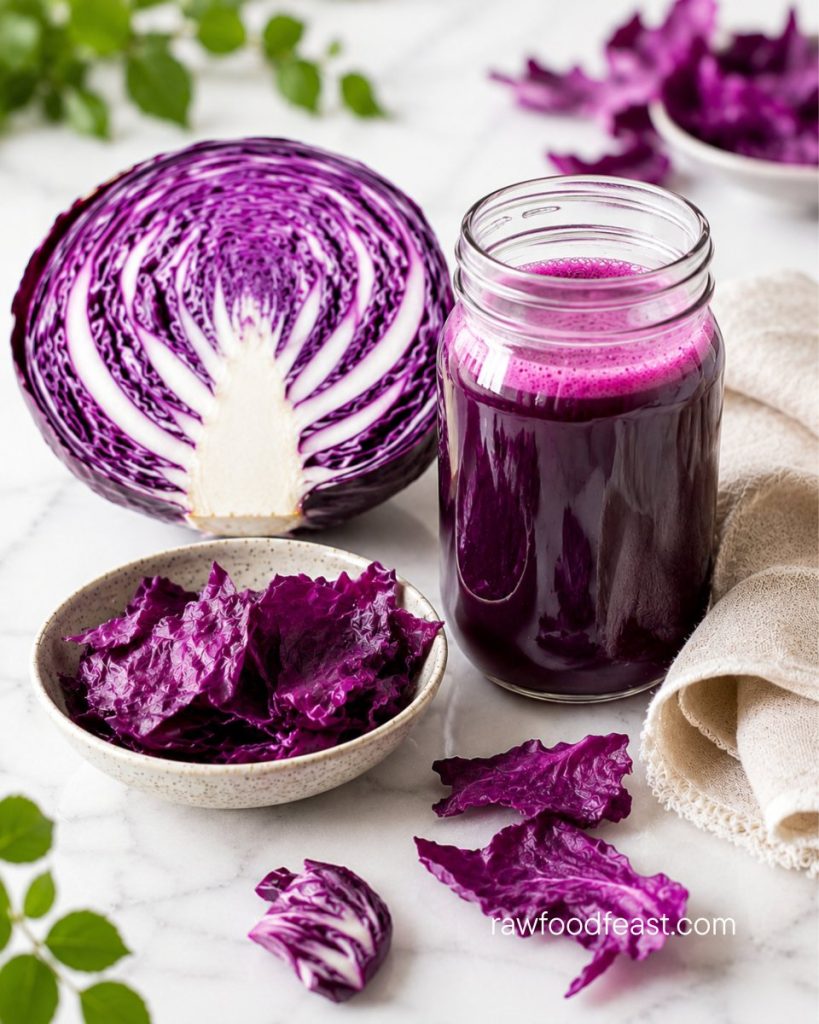
Any cabbage works — green is the most common, red has even more antioxidants (the same anthocyanins that make blueberries famous). Both deliver the same gut-supporting compounds underneath the color.
The Compounds That Make Cabbage Juice Special
Three compounds do most of the heavy lifting. L-glutamine — the amino acid your stomach uses to rebuild its lining. Vitamin U (technically a sulfur compound called methylmethionine sulfonium chloride) — first identified specifically because of cabbage’s effect on ulcers in the 1940s. And sulforaphane — the same compound that makes broccoli sprouts famous, here at smaller, gentler doses.
You also get vitamin C, vitamin K, folate, and a serious dose of natural prebiotics that feed the beneficial bacteria in your gut. The inflammation-calming side is well-documented enough that cabbage juice is one of the most consistently recommended drinks for gut inflammation across both functional medicine and traditional European folk medicine. For a wider look at this category, see Best Juice for Gut Inflammation.
What Does Cabbage Juice Actually Do in Your Stomach?
Three things, in order. First, the L-glutamine and vitamin U get to work on your stomach lining — patching small irritations, calming inflamed tissue, supporting the cells that produce protective mucus. Most people feel this within the first few days as a quiet settling in their stomach, especially if they’ve been dealing with mild burning, reflux, or post-meal discomfort.
Second, the sulforaphane and other sulfur compounds calm low-grade inflammation throughout the gut. This is the slower, deeper work — it happens over weeks rather than days, but it’s what shifts long-term issues like food sensitivities, sluggish digestion, and chronic bloating.
Third, the natural prebiotic fiber feeds the beneficial bacteria that produce short-chain fatty acids and keep your microbiome balanced. Best Prebiotic Juices for Gut Health covers the broader prebiotic juice category if you want to layer cabbage with others.
How Much Cabbage Juice Should You Drink?
Start small. Cabbage juice is potent — start with 1 to 2 ounces (30 to 60 ml) once a day, on an empty stomach in the morning. Most people work up to 4 ounces (120 ml) a day over the first couple of weeks. If you’re using it specifically for stomach lining repair, some practitioners suggest up to 6 ounces (180 ml) a day split between morning and evening — but that’s the higher end and most people don’t need it.
Drink it within 30 minutes of juicing — fresh is when the active compounds are at their highest. The taste is mild but distinctly cabbage. Most people find it more palatable mixed with celery (calming), cucumber (smoothing), or a green apple (sweetness). Half cabbage, half cucumber is a forgiving starting ratio.
How to Make Raw Cabbage Juice
Use raw green or red cabbage — both work, both have the same key compounds. Wash and chop into wedges that fit your juicer. For about 6 ounces of juice, you’ll need roughly a quarter to a third of a medium cabbage head.
Cabbage is fibrous and a little tough on standard juicers. A cold-press (slow) juicer extracts cabbage cleanly without oxidizing the heat-sensitive compounds the way a fast centrifugal juicer does. The Nama J2 and the Hurom H320N are both excellent choices for cabbage — both are engineered by Hurom, both have wide hoppers (so you don’t have to chop into tiny pieces), and both preserve the active vitamin U through slow extraction.
Use discount code RAWFOODFEAST to save on the Nama J2 and the Hurom H320N. If you want a fuller picture of where cabbage juice fits in a daily gut routine, Best Juices for Gut Health covers the broader landscape.
If gut-supportive juicing is becoming a regular part of your week, Healthy & Free is the online community built around practical, delicious whole food (un)cooking and juicing. Come join us. You’ll feel it in your energy, your digestion, and your glow.
When Will You Feel the Difference?
The first thing most people notice is in the first three days — a quieter stomach. Less acidic feeling, less post-meal heaviness, no more bloating that lingers all afternoon. That’s the L-glutamine and vitamin U working on the surface.
Around weeks two to four, the deeper changes start showing up. Better appetite signals (you actually know when you’re hungry). More consistent bowel movements. Less reactivity to foods that used to bother you. Energy that feels steadier through the day, because so much of daily fatigue is actually downstream of gut inflammation. Stop Bloating on Raw Food walks through the broader shifts that pair well with cabbage juice during this window.
By weeks six to eight, most people stop thinking about their gut as a problem at all. That’s the point where the cabbage juice itself becomes maintenance, not repair.
Is Cabbage Juice Worth Adding to Your Routine?
For most people dealing with quiet gut issues — mild reflux, late-night bloating, that vaguely-off feeling after meals — yes. Cabbage juice is one of the few drinks where the research, the traditional use, and the felt experience all land on the same answer.
It’s also one of the cheapest gut-healing things you can do. A whole cabbage costs almost nothing and gives you a full week of small daily doses. Most people find that within a month, the stomach they thought was just their normal turns out to have been quietly struggling all along.