Mirjam Henzen
 If your digestion feels sensitive, reactive, or easily overwhelmed, you’re not alone. Gut inflammation often shows up quietly—as pressure, heaviness, unpredictable digestion, or foods suddenly feeling like “too much.”
The best juice for gut inflammation is one that reduces digestive workload while increasing hydration and mineral flow. Fresh juice does this naturally, helping the gut calm rather than stimulating it further.
Physiologically, this matters because inflammation often reflects a gut that’s working harder than it can recover from. When digestion is supported with hydration, minerals, and ease, the nervous system relaxes—and the gut environment can begin to settle.
What Makes a Juice Supportive for Gut Inflammation?
A gut inflammation juice works by doing less, not more.
Fresh juice requires minimal mechanical digestion. That means the stomach and intestines don’t have to break food down before nutrients and hydration become available. When inflammation is present, that reduction in effort alone can feel relieving.
Juice also delivers water bound to minerals. This matters because the gut lining relies on hydration to maintain its protective barrier. When tissues are well hydrated, they’re less reactive and better able to regulate immune signaling locally.
Another key factor is digestive load. Juice shifts the body from processing mode into absorption mode. Instead of triggering strong contractions, acid release, or bile demand, juice tends to move through gently, supporting calm rather than stimulation.
This is why fresh juice is often described as soothing when the gut feels inflamed—even though it’s still deeply nourishing.
Does Juice Reduce Inflammation or Just Feel Easier?
Juice doesn’t “force” inflammation down. It supports the conditions that allow inflammation to soften naturally.
Inflammation in the gut is closely linked to hydration status, nervous system tone, and the balance of gut bacteria. When these systems are supported, inflammatory signals often quiet on their own.
Fresh juice helps by improving hydration at a cellular level, supplying minerals that support nerve signaling, and feeding beneficial bacteria without creating digestive friction.
This is also why juice often feels different from solid food during sensitive phases. It’s not lighter in value—it’s lighter in demand.
The broader impact of this daily shift is explained clearly in: What Happens in Your Body When You Drink Fresh Juice Daily. Once you understand how the body responds to liquid nourishment, the calming effect on digestion makes much more sense.
Which Juice Ingredients Tend to Calm an Inflamed Gut?
All fresh juices made from fruits, leafy greens, and vegetables offer nourishment. When inflammation is present, certain ingredients tend to feel especially supportive because they hydrate deeply and digest easily.
Cucumber is cooling, mineral-rich, and often one of the most soothing bases for sensitive digestion.
Celery supports hydration and smooth muscular signaling in the gut.
Apple adds softness and balance without heaviness.
Pear offers gentle hydration and tends to feel steady rather than stimulating.
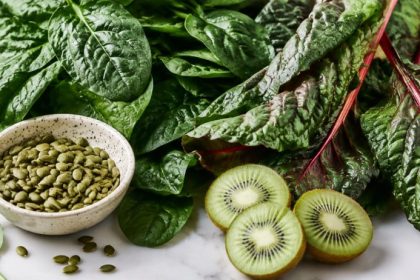
Leafy greens like romaine or spinach can be supportive when used lightly and balanced well.
This isn’t about excluding other ingredients. It’s about choosing combinations that match what digestion can comfortably process right now.
If you want to see how fiber behaves differently depending on form and context, this article clarifies that relationship: When Fiber Helps Digestion (And When It Doesn’t). Learn why juice often feels easier during inflammatory phases without positioning fiber foods as problematic.
When Is the Best Time to Drink Juice for Gut Inflammation?
Timing doesn’t determine whether juice “works.” It simply changes which system benefits first.
Earlier in the day, juice often directs hydration toward deeper tissues before heavy digestion begins. Between meals, it can support gut calm without competing with food processing.
Smaller amounts more consistently—such as one glass rather than multiple large servings—often feel more supportive when inflammation is present.
This timing relationship is mapped out in detail here: When to Drink Juice During the Day (And When to Eat High-Fiber Foods). Understanding this removes guesswork and helps you use juice in a way that feels steady rather than reactive.
Does the Juicer Itself Matter for Sensitive Digestion?
When digestion is sensitive, texture matters.
A slow juicer that produces smooth, stable juice without excess foam or grit is often easier on an inflamed gut—especially when working with leafy greens and high-water vegetables.
If you’re deciding between hands-free slow juicers, this comparison clarifies how different machines handle greens, batch juicing, and everyday cleanup: Nama J2 vs Hurom H320N: The Real Differences Between These Hands-Free Slow Juicers. It walks through how each machine feels in real use, so the tool supports consistency instead of becoming another variable.
Use discount code RAWFOODFEAST to save on all Hurom & Nama juicers, the M1 plant-based nut milk maker, and accessories.
How Juice Fits into Long-Term Gut Stability
Fresh juice isn’t a short-term fix. It’s a way to create breathing room for digestion.
When hydration improves, minerals are replenished, and digestive load decreases, the gut environment often becomes more resilient. Over time, this supports smoother digestion, steadier energy, and a calmer relationship with food.
This is the kind of approach that Healthy & Free is built around—raw-inspired nourishment that feels supportive in everyday life. It’s for people who want digestion to feel easier without turning food into a project.
Gut inflammation doesn’t mean the body is broken. It often means it’s asking for less pressure and more support. Used thoughtfully, fresh juice can be one of the simplest ways to offer that support—quietly, consistently, and in rhythm with how the body actually works.