Mirjam
 Something shifts in your 40s that doesn’t quite fit the usual explanations. Your sleep is different. Your energy has a different quality. Your mood moves in ways you don’t always recognize. You’re doing everything you’ve always done — eating well, exercising, managing stress — and yet your body feels like it’s running on a different system.
Most women assume this is just what perimenopause is. Something to push through, manage, and wait out. But here’s what I want you to hear: perimenopause and menopause are natural transitions that your body is designed to move through. Hot flashes, brain fog, sleepless nights, and weeks of feeling off — these are very common. But common is not the same as inevitable. How you eat and live has a profound effect on how your hormonal system handles this transition. The difference between a difficult perimenopause and a smooth one is often not luck or genetics. It’s what you’ve been giving your body to work with.
Raw food and perimenopause turns out to be a meaningful pairing — not because raw food is a treatment, but because the systems that process and regulate hormones rely directly on what you eat. Give them what they need and they work well. Let the liver get burdened, let fiber go low, let magnesium deplete — and the transition gets harder than it has to be.
Here’s what’s actually happening, and what changes when you feed it right.
Can a Raw Food Diet Help Perimenopause Symptoms?
Yes — genuinely, and more than most women expect. But the bigger question is not just whether raw food helps. It’s whether perimenopause has to feel the way most women are told it will feel. And I don’t think it does.
Perimenopause is the transition leading into menopause — typically beginning somewhere in the early to mid-40s, though some women notice the shift as early as 38. It can last anywhere from four to twelve years. Menopause itself is a single moment — one year without a period — but everything leading up to it is perimenopause.
During this time, the ovaries gradually produce less progesterone first, then estrogen. But the change isn’t a smooth decline. Estrogen can spike unusually high in some cycles and drop sharply in the next. That unpredictability is what produces most of the symptoms women find disruptive — not the hormonal shift itself, but how the body handles it.
And that is where food comes in. Hormones don’t just float around in the body on their own. They need the body’s systems to be working well — the liver to process used estrogen and pass it out through the gut, the gut to catch it with fiber and carry it away, the nervous system to stay steady through the fluctuations. When those systems are well-nourished, the body moves through perimenopause with a kind of ease most women have never been told is possible. When they’re not, every fluctuation lands harder.
Raw food supports all of it — at the same time, from the same meals.
The Liver Connection — Why This Is the Piece Most Women Miss
Your liver is the organ that processes estrogen once it’s done its job. Everything that moves through your bloodstream eventually passes through the liver to be filtered and cleared. During perimenopause, as estrogen fluctuates more than usual, the liver is handling a bigger workload than it’s used to.
When the liver is running well — getting the plant compounds and hydration it needs — it processes used estrogen cleanly and sends it out through the gut. When it’s sluggish, that process backs up. Used estrogen gets reabsorbed into the bloodstream instead of leaving, which means estrogen levels stay higher than they should — even in a body where overall production is meant to be declining. The symptoms of this look like: heavier periods, stronger mood shifts, breast tenderness, bloating. Many women in perimenopause experience exactly this and don’t understand why, because they’ve been told their estrogen is going down.
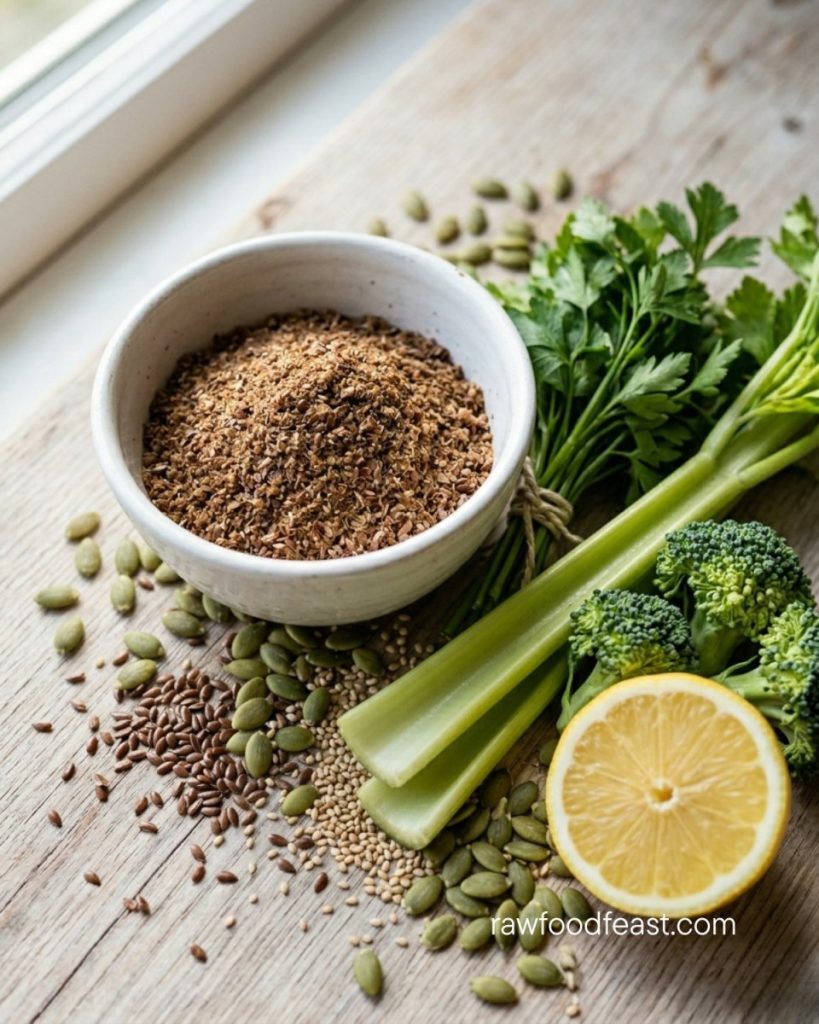
Several things in raw plant foods are particularly useful for the liver at this stage. Apigenin — found in celery and parsley — helps protect liver cells from the kind of slow build-up of damage that happens over years. Chlorophyll in leafy greens supports bile production, and bile is what carries processed estrogen out of the liver and into the gut. Cruciferous vegetables — broccoli, cabbage, kale, watercress — eaten raw contain compounds that help the liver process estrogen in a cleaner, less disruptive way.
None of this works overnight. But a consistent diet built around raw plant food gives the liver what it needs to work through a more demanding season — and most women feel the difference within a few weeks.
What celery juice specifically does for the liver — and why daily use produces a different result than occasional use — is covered in Does Celery Juice Help the Liver? What Actually Happens When You Drink It Daily.
Which Raw Foods Support Hormone Balance Most During Perimenopause?
Some raw foods are particularly well-suited to this stage — not because they act like hormones, but because they contain specific things the body needs most right now.
Flaxseeds are the standout. They contain lignans — plant compounds that interact gently with the body’s estrogen receptors — at levels roughly 800 times higher than most other plant foods. They appear to have a buffering effect, helping to smooth out the swings rather than amplify them. Two tablespoons of freshly ground flaxseeds daily is one of the most straightforward habits a woman can build during perimenopause. Grind them fresh — the beneficial compounds in whole seeds aren’t absorbed well.
Sesame seeds work similarly. They’re also high in these plant compounds and deliver a meaningful amount of magnesium — a mineral that becomes increasingly important as the hormonal system shifts. Pumpkin seeds and hemp seeds round out the mineral picture. Dark leafy greens — spinach, romaine, arugula — are rich in folate, calcium, and magnesium, all of which help keep the nervous system steady and support sleep.
Cruciferous vegetables deserve specific mention. Raw broccoli, cabbage, kale, and watercress contain compounds that help the liver handle estrogen more cleanly. Cooking reduces the activity of these compounds significantly — one of the real reasons eating them raw makes a difference at this stage.
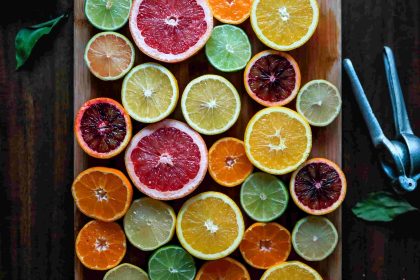
Berries and citrus bring antioxidants that calm the inflammation that tends to make perimenopausal symptoms more intense. When the body is inflamed, it’s more reactive to every hormonal shift. Daily fruit — and plenty of it — is not indulgent during perimenopause. It’s doing real work.
If you want to understand how raw food and juicing work together for hormone support — and how hydration and digestion affect the whole picture — Raw Foods for Hormone Balance: How Hydration, Digestion, and Timing Affect Your Cycle covers the foundational connections.
If this is resonating and you want to go deeper — recipes and a community doing exactly this — Healthy & Free is an online community built around practical, delicious whole food (un)cooking and juicing. Come join us and enjoy food that gives you energy, happy digestion, and glow.
Does Raw Food Help with Hot Flashes, Sleep, and Brain Fog?
What I see consistently — in my own experience and with the women I work with in their 30s and 40s — is that when the body gets what it needs, the hormonal system moves through perimenopause very differently. Not without any awareness of the transition, but without the disruption that most women have been led to expect. That is a meaningful distinction.
Women who come to me are often dealing with difficult periods alongside early perimenopausal shifts. One by one, as they move into a raw-inspired diet, their periods change. The cramps ease. The heaviness lightens. The mood swings settle. And when that happens, something shifts in how they relate to the whole picture — they realize they have real influence over their hormones. Instead of being led by what their body does to them, they start to feel like they’re in the lead. That experience carries directly into how they move through perimenopause itself.
Hot flashes are a good example of how this plays out. They’re driven partly by estrogen fluctuation, but they’re made much worse by gut inflammation, unstable blood sugar, and a liver that’s not clearing estrogen efficiently. A raw food diet addresses all three at once. Fiber keeps gut bacteria balanced and inflammation lower. Fruit sugars keep blood sugar steadier than refined carbohydrates do. And the plant compounds in raw food help the liver process estrogen more cleanly. Women who eat this way consistently tend to notice fewer and less intense symptoms — whatever form those symptoms take for them. Not because raw food is a treatment, but because it removes what was making everything harder.
Sleep during perimenopause is often disrupted by night sweats, a busy mind, or waking in the early hours. Magnesium is one of the most overlooked pieces of this. It calms the nervous system and supports deeper sleep, and it’s one of the minerals most commonly low in women at this stage. Raw plant foods deliver magnesium intact — unlike cooked vegetables, which can lose 30–40% of their magnesium to heat and water. The full picture of what low magnesium actually looks like and which foods restore it most effectively is in 6 Signs of Low Magnesium — and the Raw Foods That Fix It Every Day.
Brain fog is one of the symptoms women find most unsettling — partly because it feels so separate from hormones. But estrogen directly affects serotonin production, and serotonin is largely made in the gut. When estrogen fluctuates, serotonin production becomes less stable, and how clearly you think follows. Raw food supports the gut bacteria that produce serotonin and calms the gut inflammation that gets in the way of clear thinking. Most women notice a real shift in mental clarity within one to two weeks of eating more raw food consistently. The connection between your gut and your thinking, and what specifically lifts perimenopausal brain fog, is explored in How to Clear Brain Fog Naturally: Why It Starts in Your Gut (And How Raw Food Lifts It).
Fatigue is something almost every woman I work with brings up. They’re eating well and still feel depleted — and assume nothing can be done. But a significant part of perimenopausal tiredness comes from the gut absorbing nutrients less efficiently during a period of hormonal change. When digestion is working less smoothly, the body gets less from every meal — even a good one. Raw food, with its enzymes intact, reduces the digestive load and improves what the body actually takes in. Why eating well isn’t always enough on its own is something I explore in Eating Healthy but Still Tired? Here’s What Your Digestion Is Missing.

Why Fiber Matters So Much During Perimenopause
The standard recommendation for women is 30 grams of fiber daily. Most women in Western diets get closer to 15. I personally recommend aiming for 40 grams of living plant fiber every day — and during perimenopause, that target becomes more important than at any other stage of life.
Here’s why. After the liver processes used estrogen, it sends it out through the gut via bile. Fiber is what catches it there and carries it out of the body with the stool. Without enough fiber, a significant portion of that used estrogen gets reabsorbed — sent back into circulation when the body has already finished with it. The result is estrogen levels staying higher than they should, even as overall production is declining. Heavier periods, stronger mood shifts, breast tenderness, bloating — all of this is consistent with too much estrogen recycling through a system that doesn’t have enough fiber to clear it.
Getting to 40 grams or more from raw plant food is not as difficult as it sounds. A large salad with seeds, two or three pieces of fruit, some raw vegetables, and a green juice or smoothie will get most women well past 30 grams. The difference it makes to how perimenopause feels is something most women notice within two to three weeks of eating this way consistently.
Why the standard fiber recommendations fall short — and how 30 different plants a week transforms the gut microbiome in ways that matter hugely for hormones — is covered in depth in Signs of Fiber Deficiency: Why Your Gut Is Still Sluggish (And How to Fix It with 30 Raw Plants).
What Raw Food Won’t Fix — and Why Starting Now Matters
If symptoms are severe — particularly concerns around bone density, cardiovascular health, or very disruptive sleep — those are conversations to have with a doctor, and hormone therapy may be the right choice for some women. Raw food and medical care are not in opposition.
But what raw food does is give every one of the body’s own systems the best possible conditions to work with. The liver, the gut, the nervous system, the pathways that move and clear hormones — all of them function better when they’re properly nourished. The more cleanly those systems run, the less disruptive every hormonal fluctuation feels.
And here is what I want to say clearly: the sooner you start, the smoother it tends to go. The women I work with who are in their late 30s and early 40s, before symptoms have become entrenched, consistently have the smoothest transitions. Not because they avoided perimenopause — but because their body was already well-equipped to move through it. The foundation you build now shows up directly in the experience you have later.
Perimenopause is not something that’s happening to you. It’s a transition your body is designed to make. Give it what it needs, and it will show you what that can feel like.