Mirjam Henzen
 Many women recognize the signs long before menstruation starts.
A heavier belly. Rings that feel tighter. Digestion that slows down. A sense that the body is holding on instead of flowing through.
For some, this has been labeled “PMS” for so long that it feels almost expected. Something to manage. Something to endure.
But here’s the part that matters: this doesn’t have to be the experience of your cycle.
Not now. Not forever.
Bloating, pressure, and discomfort before your period are signals of imbalance—not proof that something is inherently wrong with your body.
PMS is common—but it isn’t a requirement of being a woman
In a body that is well hydrated, well mineralized, and not overloaded by digestion, the menstrual cycle often moves quietly.
Ovulation comes and goes. Menstruation starts and finishes. Hormones rise and fall without drama.
When PMS symptoms appear—bloating, heaviness, mood shifts—they’re usually signs that the body is working harder than it needs to. Fluid isn’t moving as freely. Digestion is slowed. The system is compensating.
This is especially common after years of processed and mostly cooked food, irregular eating, dehydration, stress, and hormonal suppression through the pill. For many women, it takes time for the body to relearn its natural rhythm.
Consistency matters here. Not perfection. Not extremes. Consistency.
Why bloating shows up before the cycle
In the second half of the cycle, the body naturally slows slightly. This isn’t a flaw—it’s preparation.
But when digestion is heavy or hydration is low, that natural slowdown turns into stagnation. Fluids are retained. Waste clears more slowly. The belly feels fuller.
What the body needs in this phase isn’t restriction or control. It needs ease.
Foods that hydrate without burden. Minerals that help tissues release. Meals that don’t demand all of the body’s energy just to digest.
The role of hydration in hormone rhythm
Hydration isn’t just about thirst. It’s about how fluid moves through the body.
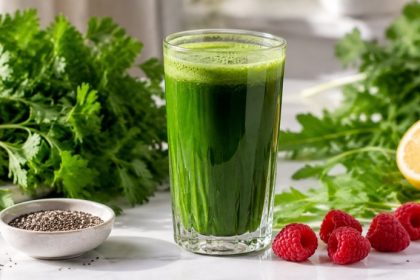
When the body is consistently hydrated with raw plant-powered foods and fresh-pressed juices, fluids distribute evenly. The lymph moves. The gut clears. Hormones are transported and broken down efficiently.
When hydration is inconsistent, the body holds on—especially before menstruation. That’s when bloating appears.
Hydrating foods don’t flush the body. They teach it to let go.
Fruits that support a light, steady cycle
Fruits are often misunderstood around hormones because they’re blamed for sugar spikes or told to be “too stimulating” for women’s cycles. In reality, water-rich fruits are one of the most supportive foods for hormone balance because they hydrate deeply, reduce digestive load, and help the body clear excess hormones instead of holding on to them.
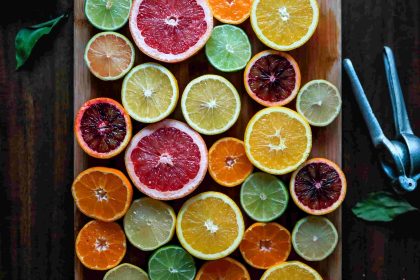
Water-rich fruits like citrus, berries, papaya, pears, mango, and melon bring hydration in a form the body recognizes immediately. They help fluids circulate instead of pooling.
Citrus fruits—especially oranges and grapefruit—are particularly helpful before menstruation. They support gentle movement, liver clearance, and a feeling of lightness rather than fullness.
When fruit is eaten consistently, not just “for symptoms,” many women notice their cycle becomes quieter over time.
Leafy greens and mineral balance
Minerals are essential for hormone balance, and leafy greens are one of the most accessible sources.
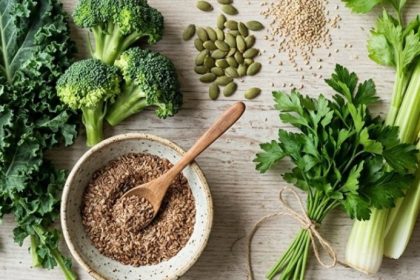
Greens like romaine, spinach, butter lettuce, arugula, and herbs provide magnesium and potassium—minerals that help muscles, tissues, and the gut relax instead of contract.
When mineral intake is low, the body grips. When minerals are steady, the body releases.
This is one reason women eating fully raw or high-raw diets often report minimal or no PMS symptoms once the body has had time to rebalance.
The digestive ease of raw foods plays a role here as well, as explored in: Raw Food Digestion: Is Raw Food Really Better for Nutrient Absorption? This explains how gentle, hydrating foods reduce digestive load and support nutrient uptake—key for hormone rhythm.
Light vegetables that support flow, not pressure
Vegetables with high water content help the body feel supported during the cycle rather than weighed down.
Cucumber, zucchini, celery, fennel, and leafy greens add volume and hydration without density. They support bowel movements, which is crucial—because when waste clears easily, bloating reduces.
This isn’t about eating less. It’s about eating lighter.
Fiber, digestion, and the cycle
Fiber supports hormone balance by helping the body move waste and used hormones out through the gut. But fiber never works in isolation. It only does its job well when it’s paired with enough fluid and a digestive system that isn’t overloaded.
Both soluble and insoluble fiber are part of a healthy cycle. Fruits, vegetables, leafy greens, seeds, and plant foods all contribute different kinds of fiber that help stool form, move, and clear. Problems do not tend to arise from the type of fiber, but from dryness, dehydration, or adding large amounts of fiber without increasing hydration alongside it.
When fiber and hydration rise together—through water-rich fruits, leafy greens, vegetables, juices, and smoothies—the gut can clear more easily. That clearing plays a direct role in reducing bloating before the cycle, because when the gut moves well, the body doesn’t need to hold on.
Consistency changes the cycle over time
It’s important to say this clearly: food diet doesn’t “fix” PMS overnight.
But consistent nourishment changes the baseline.
Women who eat fully raw or high-raw plant-powered diets often notice that PMS symptoms fade gradually. The cycle becomes something that passes through rather than announces itself.
For some, this happens quickly. For others, especially after years on hormonal birth control, it can take longer. The pill suppresses natural hormone signaling, and the body needs time to recalibrate once it’s removed.
But the direction is clear. The more the body is supported, the less it needs to compensate.
Living without PMS as a goal—not an exception
A cycle that feels calm, predictable, and light is not unrealistic. It’s physiological.
When hydration is steady, digestion is light, minerals are abundant, and food supports rather than burdens the system, the cycle often reflects that balance.
If you’re drawn to this way of eating—fresh juices, hydrating fruits, mineral-rich greens, and raw-inspired meals that support your body day by day—Healthy & Free is the place where you’ll find easy and delicious recipes and grounded insights that make this lifestyle feel doable and sustainable in real life.
PMS doesn’t need to be your identity.
For many women, supporting the body this way changes how the cycle is experienced—often bringing more ease, stability, and predictability over time.