Mirjam Henzen
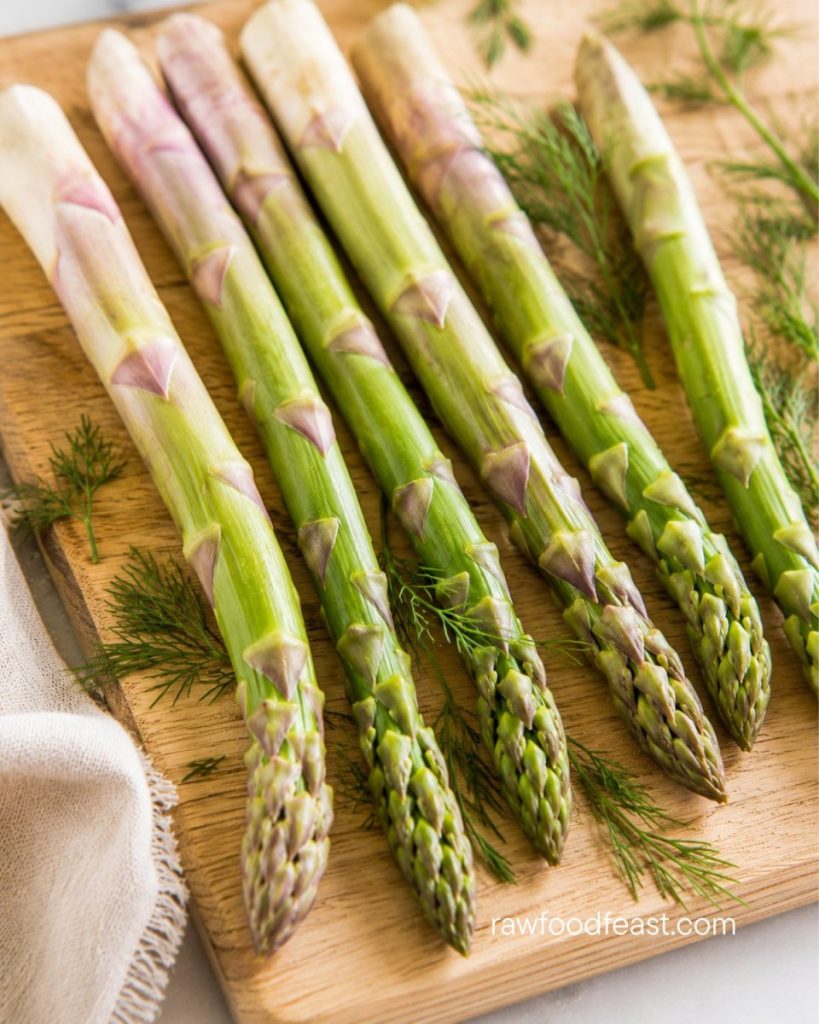
 There’s a small ritual that happens at the market in late spring. The asparagus is suddenly piled high again — slim spears with that pale-purple base, available for what feels like just a few weeks. Most people grab a bunch because it’s seasonal, cook it lightly, and move on. What most don’t realize is that asparagus gut health benefits are some of the strongest of any spring vegetable — and most of those benefits land best when it stays raw.
Asparagus carries a specific kind of fiber called inulin that beneficial gut bacteria love. It also brings folate, vitamin C, polyphenols, and a small dose of natural diuretic action. The combination is rare among vegetables, and for the gut microbiome, it lands fast.
Below is what asparagus actually does for your gut, why raw works better than cooked, and how often to bring it in while it’s at its best.
What Makes Asparagus So Good for Your Gut?
Three things stack up at once.
The first is inulin — a prebiotic fiber that beneficial gut bacteria, Bifidobacterium especially, ferment into the short-chain fatty acids that feed your gut lining. Asparagus is one of the highest natural sources of inulin in the vegetable world, especially when eaten raw.
The second is folate. Asparagus is among the best vegetable sources, and folate matters for the gut lining because the cells of that lining turn over every three to five days. Folate is one of the materials your body uses to build new ones. A well-fed gut lining is one of the most important pieces of a young microbiome.
The third layer is the polyphenols. Asparagus is rich in flavonoids and rutin — plant compounds that travel further down into the colon and feed specific beneficial bacterial families that polyphenols alone seem to nourish.
The Inulin Story: Why Asparagus Is One of Spring’s Best Prebiotics
Inulin is a chain of fructose units that your own digestive enzymes don’t break down. It travels mostly intact through your stomach and small intestine and lands in the lower part of your gut — exactly where the most beneficial bacteria live.
Once it arrives, the Bifidobacterium family treats it as fuel. They ferment it into short-chain fatty acids, the small molecules that feed your gut lining and calm low-grade inflammation across the body. Other beneficial species then cross-feed on those metabolites and produce butyrate — the short-chain fatty acid most directly tied to a healthy gut lining and a younger microbiome.
Asparagus is one of a small handful of vegetables that carry inulin in real quantities. Jerusalem artichokes, raw garlic, raw onion, leeks, and chicory root are the others. Asparagus stands out because it is seasonally distinct, mild-tasting, and easy to fit into a daily meal — which is half the work with prebiotics. The bacteria respond to consistency more than to one big dose. For other practical ways to deliver prebiotic fiber straight to the lower gut, see Best Prebiotic Juices for Gut Health.
Is Asparagus Better Raw or Cooked?
Raw delivers the full picture.
Raw asparagus keeps every milligram of its vitamin C, the enzymes that aid your own digestion, and the full structure of its inulin fiber. Cooking does make inulin slightly more accessible to the bacteria — that part is true — but the trade-off is real. Cooking destroys most of the vitamin C, reduces folate by about a third, and inactivates the digestive enzymes that come naturally with the raw vegetable. For a gut microbiome looking for steady support, raw wins on balance.
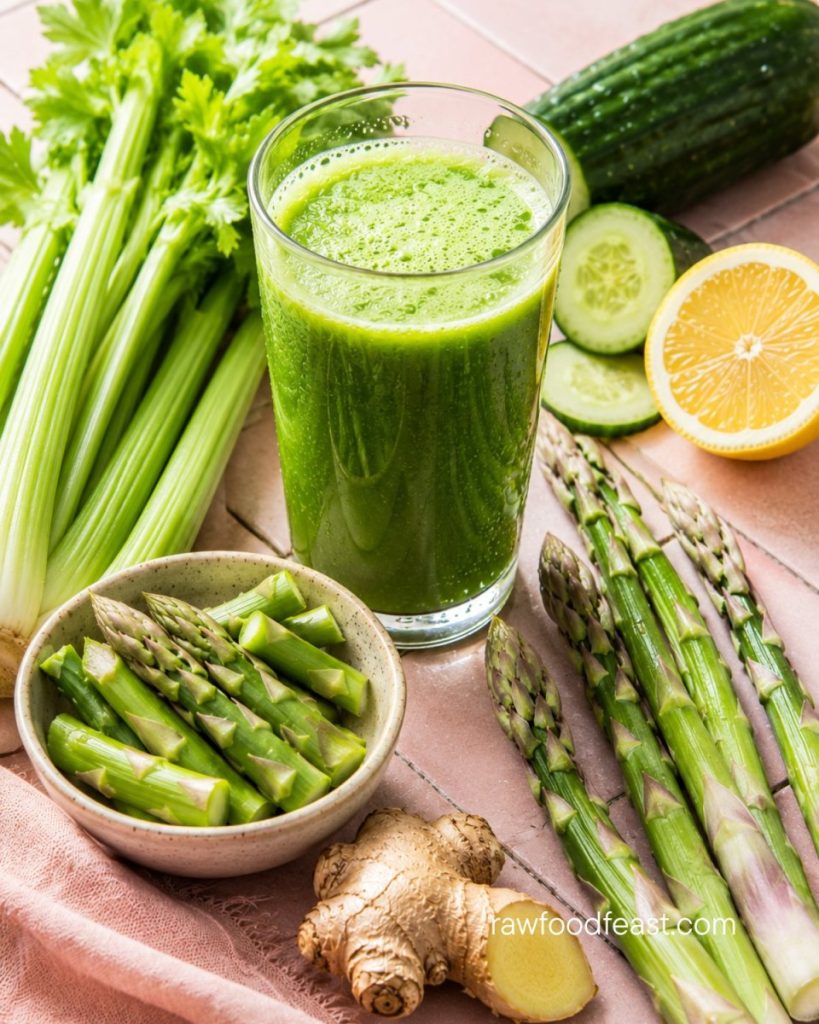
The easiest raw approach is to shave it. Use a vegetable peeler or a sharp knife to slice asparagus into long thin ribbons. The texture goes from chewy to tender immediately, and the flavor opens up — fresh, grassy, slightly sweet. Toss it with lemon, herbs, and your usual salad ingredients. You can also chop raw asparagus into a green juice — it blends cleanly with celery, cucumber, and lemon.
What Asparagus Does for Digestion Day-to-Day
Three things show up consistently when asparagus becomes a regular addition.
Regularity gets steadier. Asparagus brings both soluble fiber (inulin) and insoluble fiber (the structural part of the spear). Soluble fiber slows things down and feeds the bacteria. Insoluble fiber adds bulk and keeps things moving. Together they create the kind of digestive rhythm most people are looking for.
Your body feels lighter. Asparagus contains asparagine — an amino acid that acts as a natural diuretic. Your kidneys flush a little more efficiently, your body releases some retained fluid, and the heavier feeling that sometimes follows lower-fiber days starts to lift. This is the reason your urine sometimes smells different after eating asparagus — your body is processing the asparagine straight through.
Your microbiome diversity widens. Adding asparagus to your weekly plant rotation is one of the easiest ways to bring in a different fiber type — and different fiber types feed different bacteria. The more variety, the more workable the whole gut picture becomes. For a deeper read on what fiber deficiency actually looks like in the body, see Signs of Fiber Deficiency.
If you want to make asparagus and other prebiotic-rich plants part of a daily rhythm, Healthy & Free is the online community built around practical, delicious whole food (un)cooking and juicing. Come join us and enjoy plant-powered food that gives you energy, happy digestion, and glow.
How Often Should You Eat Asparagus for Gut Benefits?
During peak season — late April through early June, depending on where you live — a bunch a week is a strong target. That works out to about 250 to 500 grams, or roughly two or three servings spread across the week.
You do not have to eat it all at once. A few raw spears shaved into a salad on Monday, a small handful chopped into a green juice on Wednesday, the rest cut into a bowl on Friday — that pattern delivers the inulin consistently, which is what the bacteria respond to.
Frozen asparagus works off-season. The inulin survives freezing well, and most of the folate is preserved when it is frozen quickly after harvest. If you want to broaden the prebiotic rotation across the year, pair asparagus with the year-round options like raw garlic, onion, and broccoli sprouts. For why broccoli sprouts sit at the top of the prebiotic and gut health conversation, see Broccoli Sprouts Benefits.
Make Asparagus a Weekly Spring Habit
Asparagus is one of those rare vegetables where the seasonal window matters and the eating window is short. From late April through June, it is at its best — tender, mineral-rich, and full of the prebiotic fiber your microbiome responds to fastest.
Buy a bunch. Shave it raw into a salad, chop it into a juice, set a small pile aside for a bowl. Eat it three days out of seven. By the end of the month, the difference shows up.