Mirjam Henzen
 Getting enough iron on a raw food diet is easier than most people expect — and more built into the diet than the mainstream narrative suggests. The concern makes sense: plant iron absorbs at a lower baseline rate than iron from animal meat. That statistic is real, and it circulates widely in spaces that frame plant food as nutritionally incomplete. What it consistently leaves out is the part that changes the whole picture. Vitamin C dramatically increases the rate at which the body absorbs plant iron — and a raw food diet is naturally built around the foods highest in it. This is not something you have to plan around. It happens by default when you eat this way.
Can You Get Enough Iron on a Raw Food Diet?
Yes — and the structure of raw food eating makes it genuinely well-suited for iron. Here is the context that almost never accompanies the absorption statistics.
Iron from plant food is non-heme iron — the form of iron found in all plant foods, absorbed more efficiently when vitamin C is present in the same meal. It absorbs at a rate of 2 to 20 percent depending on what else is in the meal. The range is wide, and that width is the key point: what you eat alongside your iron sources determines how much your body actually takes in. Vitamin C is the factor that moves absorption toward the higher end of that range. Studies show it can increase non-heme iron absorption by 2 to 6 times — enough to make a significant difference across a day of eating.
Iron deficiency does occur on raw food diets, as it does on any diet where iron-rich foods are not a consistent part of the rotation. The solution is not supplements — it is knowing which raw foods deliver the most iron and making sure they are paired with vitamin C-rich foods regularly. Both are abundant in a raw plant diet. The two pieces of the solution arrive together naturally. The specific signs the body gives when iron has been running low for a while — and the raw foods that restore it — are covered in 8 Signs of Iron Deficiency — and the Raw Plant Foods That Restore Your Energy.
The Best Raw Food Sources of Iron
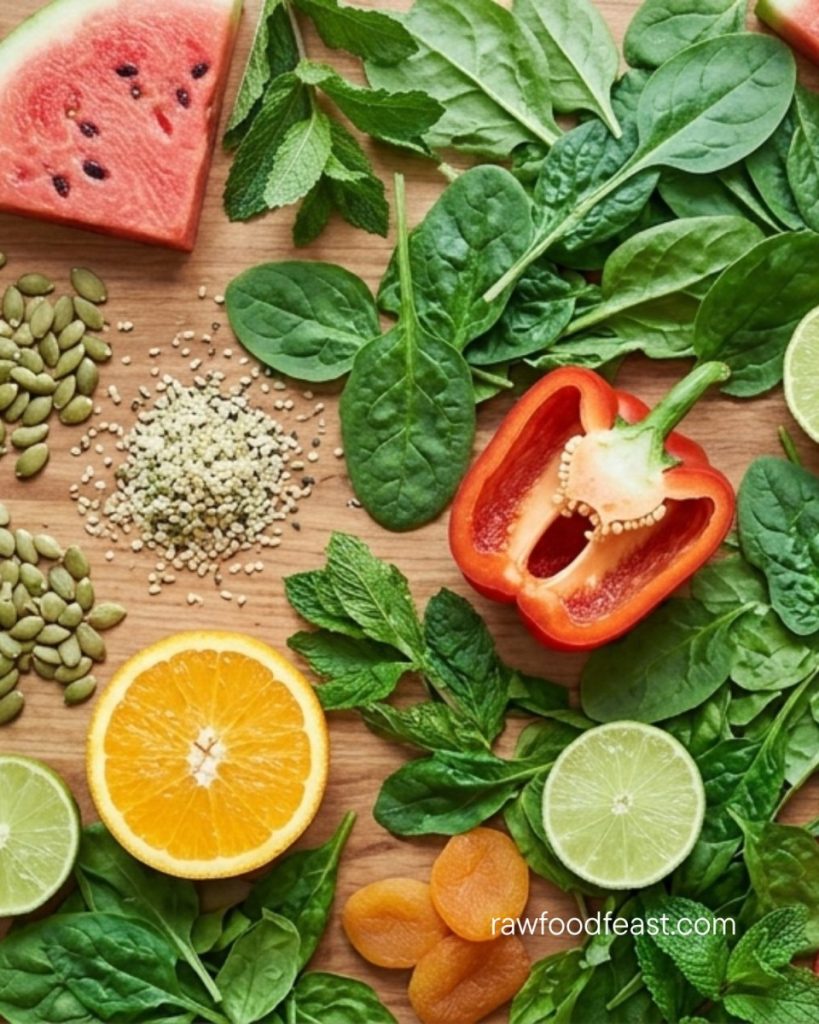
Dark leafy greens, seeds, sprouted legumes, and dried fruit are where raw food iron lives — and these are foods most raw eaters already include regularly.
Seeds are the standout category. Pumpkin seeds deliver around 2.5mg of iron per 28g — one of the highest plant-based iron concentrations available and easy to add to a smoothie, a salad, or blended into an oil-free pesto or dressing. Hemp seeds bring about 2.4mg per three tablespoons. Chia seeds and sesame seeds (or tahini) add meaningful amounts too. These seeds are also among the most reliable raw sources of magnesium — the signs your body is running low on magnesium are covered in 6 Signs of Low Magnesium — and the Raw Foods That Fix It Every Day.
Dark leafy greens — spinach, kale, Swiss chard, collard greens — contribute iron alongside potassium, calcium, and chlorophyll. Raw spinach contains about 0.8mg per cup, which adds up meaningfully when two or three cups go into a smoothie. What spinach juice specifically delivers — iron, folate, magnesium, and chlorophyll absorbed rapidly and completely — is explored in Spinach Juice Benefits: What Happens When You Drink It Daily.
Sprouted legumes are worth including for anyone who uses them. Sprouted lentils bring around 3.4mg of iron per cup and are genuinely raw food — sprouting is a natural process that increases nutrient bioavailability alongside iron content. Sprouted chickpeas are another good option.
Dried fruit concentrates iron along with natural sugars. Dried apricots deliver around 3.5mg per half cup. Figs and raisins contribute too. Not an everyday food in large amounts, but as a regular addition to a raw bowl or a smoothie, they make a genuine contribution.
Why Vitamin C Is the Missing Piece
The process is straightforward. In the digestive tract, vitamin C converts non-heme iron from ferric iron — the form that is harder to absorb — into ferrous iron, which crosses the gut lining easily. This conversion happens right there in the meal, which means the vitamin C needs to be present at the same time as the iron. Not hours later. At the same meal.
A raw food diet handles this without any effort. The most common combinations already pair these two things:
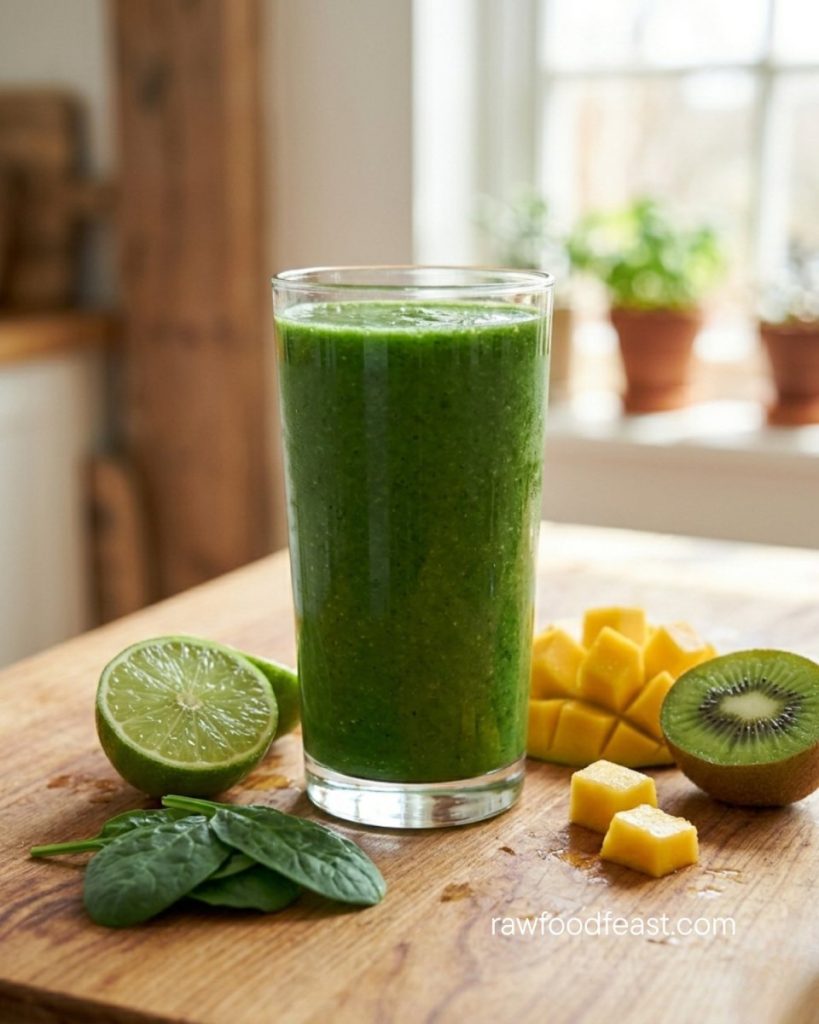
A green smoothie with spinach or kale, banana, mango, and a squeeze of lemon or lime brings iron from the greens and vitamin C from the fruit — naturally paired in the same glass. A salad with pumpkin seeds, bell pepper, and a citrus dressing brings iron from the seeds and vitamin C from the pepper and citrus. A sprouted lentil curry with mango and fresh herbs has the same structure. You are not engineering anything. You are eating the way raw food eating naturally works.
Bell peppers are worth highlighting specifically. A single medium red bell pepper contains around 150mg of vitamin C — well above the daily recommended amount, and one of the most concentrated sources available in raw food. Add it to a salad with pumpkin seeds or hemp seeds and the iron-vitamin C pairing is built in without thinking about it.
If you want a daily raw food practice that builds these combinations in naturally — with recipes, guidance, and a community doing it alongside you — Healthy & Free is an online community built around practical, delicious whole food (un)cooking and juicing. Come join us and enjoy food that gives you energy, happy digestion, and glow.
Does Spinach Block Iron? The Oxalate Question, Answered
The concern here is specific: spinach contains oxalic acid, which binds to iron in the digestive tract and reduces how much is absorbed. This is technically true. It is also partial, not total. Oxalates reduce the iron contribution from spinach — they do not eliminate it. And the vitamin C present in almost every green smoothie compensates, shifting absorption back toward the favorable end of the range.
The net iron contribution of spinach remains positive, especially when it is part of a varied diet that includes seeds and other non-oxalate iron sources. Rotating your greens — spinach one day, kale the next, Swiss chard or romaine after that — adds variety and prevents any one factor from dominating.
Gut health is part of the picture too. A well-fed, fiber-rich gut absorbs minerals more effectively across the board. When fiber drops and the gut environment starts to deplete, absorption of everything — including iron — becomes less efficient. What a depleted gut looks like and how fiber rebuilds it is covered in Signs of Fiber Deficiency: What Your Body Is Trying to Tell You.
The oxalate concern about spinach grew significantly in recent years, largely driven by the same corner of the nutrition internet that frames plant food broadly as problematic. The evidence does not support avoiding spinach for iron reasons — variety, vitamin C, and a well-functioning gut take care of it. The full picture of what oxalates actually do in the body, who genuinely needs to pay attention, and why the concern is overblown for most people eating a raw plant diet is covered in Are Oxalates Bad for You? Here’s What a Raw Food Diet Actually Does.
The overlap between mineral deficiencies is worth knowing — fatigue, cold extremities, and low energy show up across several gaps, not just iron. The signs of low potassium and the raw foods that address it are covered in 7 Signs of Low Potassium — and the Raw Foods That Fix It Every Day.
How to Build Iron-Rich Raw Food Meals Every Day
The principle is simple: iron-rich food plus vitamin C-rich food at the same meal. Here is what that looks like in practice.
A green smoothie with spinach or kale, citrus fruit or mango, a tablespoon of pumpkin seeds or hemp seeds, and a squeeze of lemon. Iron from the greens and seeds, vitamin C from the fruit — absorption built in from the start of the day.
A salad with mixed dark leafy greens, sliced red bell pepper, pumpkin seeds, and a lemon-tahini dressing. One of the most concentrated vitamin C sources available paired with one of the most concentrated raw food iron sources. This combination works.
A sprouted lentil bowl with mango, chopped fresh herbs, cucumber, and lime. Iron and vitamin C without any calculation or planning — just good raw food combined naturally.
Dried apricots alongside fresh kiwi as a snack. A small, consistent iron and vitamin C pairing that adds up across days and weeks.
A few signs that iron may need more attention: persistent fatigue that does not shift with sleep, cold hands and feet even in warm weather, and pale gums. These are worth taking seriously.
Iron on a raw food diet is not something you have to manage carefully or supplement around. Eat the greens. Add the seeds. Keep citrus and fresh fruit in every meal. The body takes care of the rest.