Mirjam Henzen
 There’s a smoothie bowl that turns sunset-pink in the blender and stays that way through every spoonful. This pink pitaya smoothie bowl comes from red-fleshed dragon fruit — the deepest-magenta variety of pitaya, with enough betalain pigment — a plant antioxidant that protects cells from inflammation — to color a full bowl without losing a shade. Frozen raspberries and strawberries bring the bright berry flavor, medjool dates bring the natural caramel sweetness, fresh coconut milk brings the creaminess, and the whole thing comes together in five minutes.
What makes this version stand out is the color story. Pink pitaya carries betalains — the same pigment family found in beets — and that pigment is remarkably stable through blending. So the bowl holds its sunset-pink hue from the first spoon to the last. The berries lead the flavor, the pitaya leads the visual, the dates round out the sweetness, and the coconut milk pulls everything together.
This guide walks through which dragon fruit variety to actually buy, what makes red-fleshed pitaya the star, how to get the texture exactly scoopable, and how to fold the bowl into a weekly rotation your gut notices.
What Makes This Pink Pitaya Smoothie Bowl Different
Most fruit smoothie bowls land somewhere in the middle — sweet, fruity, photogenic. This pink pitaya version is built for color first. Frozen red-fleshed pitaya brings deep magenta to the base. Frozen raspberries and strawberries bring bright tart-sweet flavor. Medjool dates bring rich natural caramel. A half cup of fresh coconut milk brings creaminess without dominating the fruit. Every ingredient plays a clear role.
The red-fleshed pitaya brings real flavor of its own — gently sweet with a tropical edge, somewhere between kiwi and pear — and it layers beautifully with raspberries and strawberries. The pitaya leads the color story while every fruit contributes to the taste. The result is a bowl that’s fruit-forward, magenta-pink, naturally sweet, and pretty enough to feel like a treat first thing in the morning.
Which Dragon Fruit Variety Should You Use?
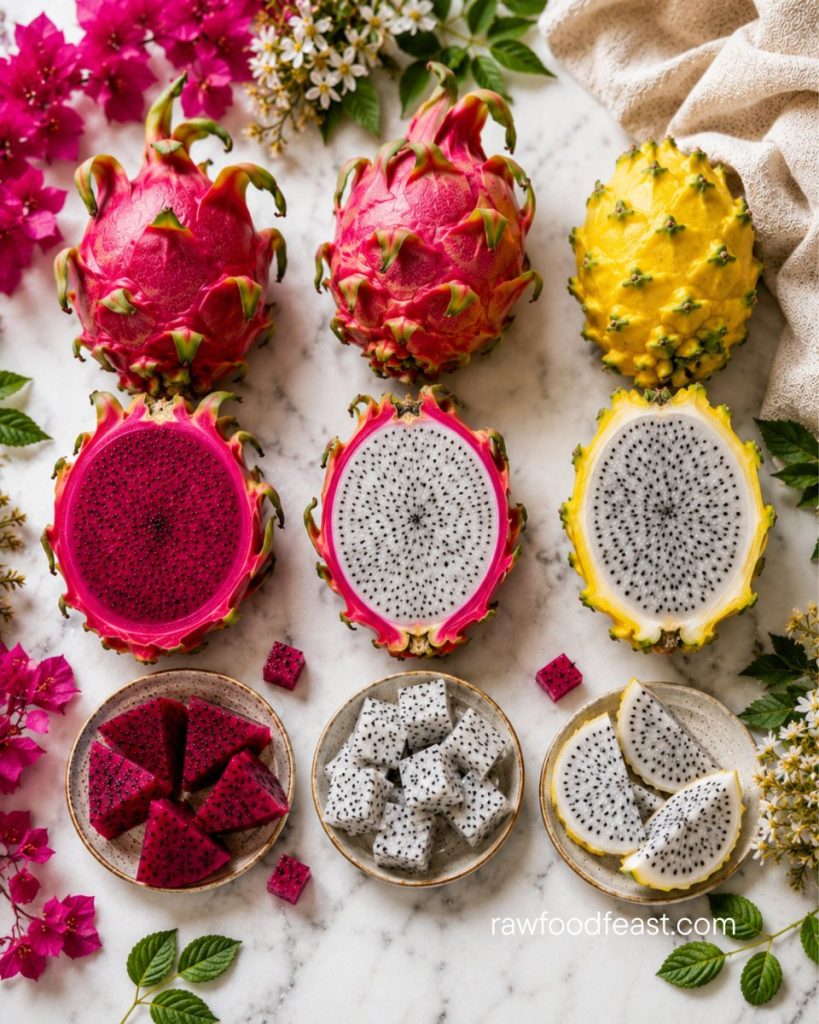
Not all dragon fruit is created equal. There are three main varieties you’ll come across, and the difference in the smoothie bowl is real.
Red-fleshed dragon fruit (Selenicereus monacanthus) is the one to look for. The flesh is deep magenta-pink — so saturated it dyes everything it touches. It carries more betalain pigment than the other varieties, which means the color holds through blending and stays vivid in every spoonful. The flavor is rich and pronounced — gently sweet with a tropical edge, somewhere between kiwi and pear — far more flavorful than the white-fleshed version. This is what you want for a pink pitaya smoothie bowl. It’s most often sold frozen as a puree pack in 100g portions, which is exactly what the recipe calls for. Fresh red-fleshed pitaya works just as well — frozen puree packs aren’t always easy to find depending on where you live. Just scoop the flesh from a ripe fruit and use it as-is. Freezing first is optional, not necessary.
White-fleshed dragon fruit (Hylocereus undatus) is the most common variety in supermarkets — pink-skinned with creamy white interior dotted with tiny black seeds. The flavor is delicate, the color is gentle. A beautiful slicing fruit on its own — the red-fleshed variety is the one to reach for when you want this bowl’s signature magenta.
Yellow pitaya (Selenicereus megalanthus) is the rarest of the three — yellow-skinned with white flesh inside. It’s exceptionally sweet, often called the sweetest of all dragon fruits, and absolutely worth tracking down for fresh eating. The flavor is incredible — and the creamy white interior is beautiful for slicing fresh on top of a bowl, just not the right pick when you want the magenta-pink color in the base.
Bottom line: red-fleshed for the base, yellow for fresh garnish if you can find it, and white-fleshed is best enjoyed sliced fresh.
What Makes Pink Pitaya the Ultimate Smoothie Bowl Base?
Pink pitaya carries betalains — the same pigment family that gives beets their deep ruby color. Betalains are antioxidants that calm inflammation and protect cell membranes, and they happen to be remarkably stable through blending. That’s why the bowl holds its color from the first spoon to the last instead of fading to brown the way some smoothie bowls do.
The other thing pink pitaya does beautifully: it’s gentle on the gut. Gently sweet from the fruit itself and full of small black seeds that act like fiber inside the bowl. The seeds are tiny enough to vanish into the blended base, but they carry trace minerals and fiber that round out the nutritional profile.
For a daily breakfast bowl, that combination — bold color, gentle sweetness, gut-friendly fiber — is hard to beat.
How to Get the Perfect Spoon-Able Texture
The single biggest mistake people make with smoothie bowls is making them too liquid. A bowl that pours instead of scoops isn’t a smoothie bowl — it’s a smoothie. The trick is the frozen-to-liquid ratio.
For this recipe, the frozen ingredients are the pitaya, raspberries, and strawberries. The liquid is just half a cup of fresh coconut milk. That ratio gives you a thick, scoopable base that holds the toppings instead of letting them sink. If your blender starts struggling, add a splash more milk only — not a glug. The goal is thick.
The fresh coconut milk matters too. Boxed coconut milk works, but the smoothest bowls happen when you make the coconut milk fresh — coconut flakes and water blended in the Nama M1 plant-based milk maker, which produces a creamy, lightly sweet milk in minutes. Add a single pitted medjool date to the milk batch and the natural sweetness rounds out beautifully. Three cups of fresh coconut milk takes about three minutes to make and keeps for three days in the fridge — enough for several bowls or smoothies through the week. The full breakdown of why the cold-press method makes such a different kind of milk is in The Nama M1 Plant-Based Milk Maker: Cold-Press Milk Without Heat or Blending.
Use discount code RAWFOODFEAST to save on the M1 plant-based nut milk maker and accessories.
For another bright berry breakfast that lands in the same weekly rotation, the Strawberry Spinach Salad with Strawberry Balsamic Dressing turns the same season’s berries into a savory-sweet plate.
A Daily Pink Pitaya Habit Your Gut Will Thank You For
Here’s where most morning routines get stuck: you want to eat for your gut every day, but the same three breakfasts on repeat don’t build the plant variety your microbiome is actually asking for. And the microbiome IS asking. Research from the American Gut Project shows that people who eat 30 or more different plant foods per week have measurably more diverse gut bacteria than those eating fewer than 10. That diversity isn’t an abstract number — it’s the foundation underneath nearly every system you care about.
A diverse microbiome trains your immune cells, which is why people with diverse gut bacteria get sick less often and recover faster when they do. It produces most of your body’s serotonin — the neurotransmitter that runs your mood, your sleep, and your sense of calm — so when the bacteria thrive, you feel steadier. It ferments fiber into short-chain fatty acids that feed your gut lining and steady your energy through the day, with no afternoon crash. And it calms the systemic inflammation that shows up as dull, tired, breakout-prone skin — which is why people who shift to a diverse plant intake often notice their skin clearing and brightening within weeks.
Thirty different plants a week is the threshold the research keeps pointing to.
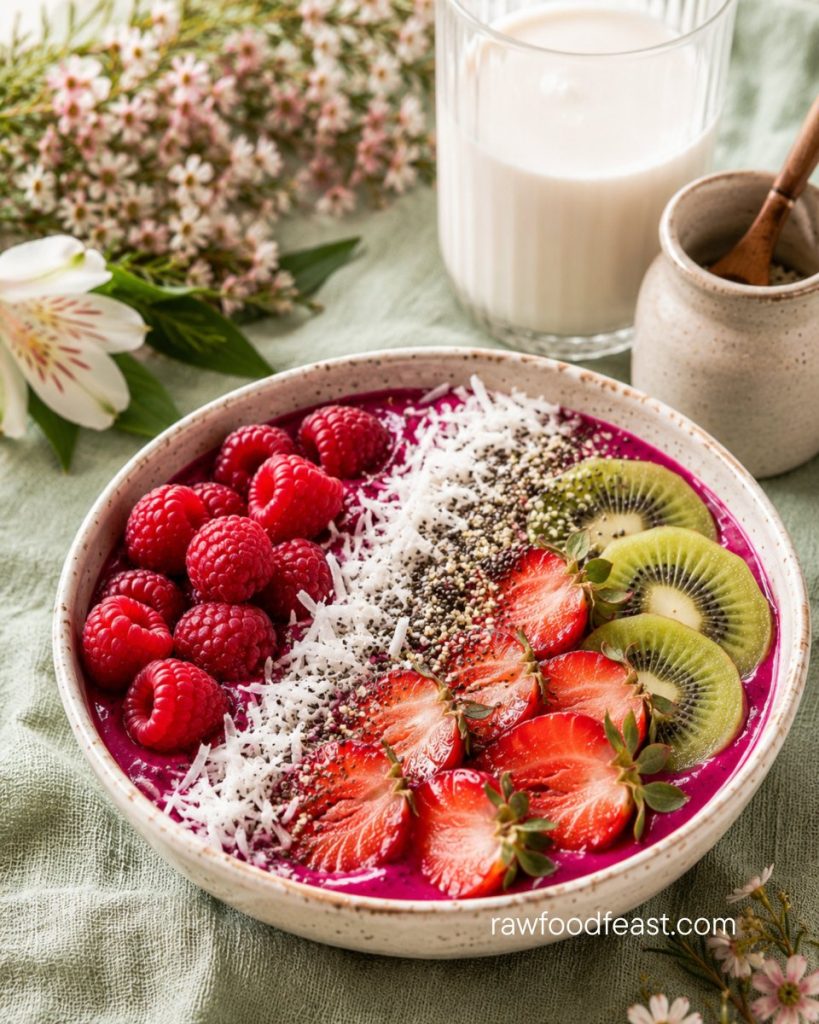
This is where Fiber First closes the gap. The fiber tracker for gut health counts every plant you eat in a week, plus your daily fiber and hydration. A single pink pitaya smoothie bowl lands you eight different plants in one serving — pitaya, raspberry, strawberry, kiwi, coconut, dates, hemp seeds, chia seeds — already a fifth of the way toward 30. Rotate through the bowl two or three mornings a week, vary the toppings each time, and the week’s plant count builds itself. You stop guessing — you see exactly where you are. And as the number climbs, the downstream shifts show up: steadier mood, clearer skin, stronger immunity, glowing skin, energy that holds through the afternoon.
How Long Does a Pink Pitaya Smoothie Bowl Last?
Eat it immediately. A smoothie bowl is at its best the moment it comes out of the blender — the texture is at peak scoopability, the color is at peak vivid magenta, and the toppings haven’t started sinking. Wait too long and the base softens, the toppings drift, and the visual story falls apart.
The fresh coconut milk is a different story. A batch keeps for three days in a sealed glass jar in the fridge — which means you can make it once and have the base ready for several bowls or smoothies across the week.
If you want to prep ahead, the freezer is your friend. Pre-portion frozen pitaya, berries, and dates into single-serving zip bags. In the morning, dump a bag into the blender with fresh coconut milk and you’re ninety seconds from a finished bowl.
A bowl that’s pretty enough to slow you down. Berries leading the taste, pitaya leading the visual, every spoonful holding the same magenta from start to finish. The kind of morning that doesn’t feel rushed because the bowl asked you to sit with it.
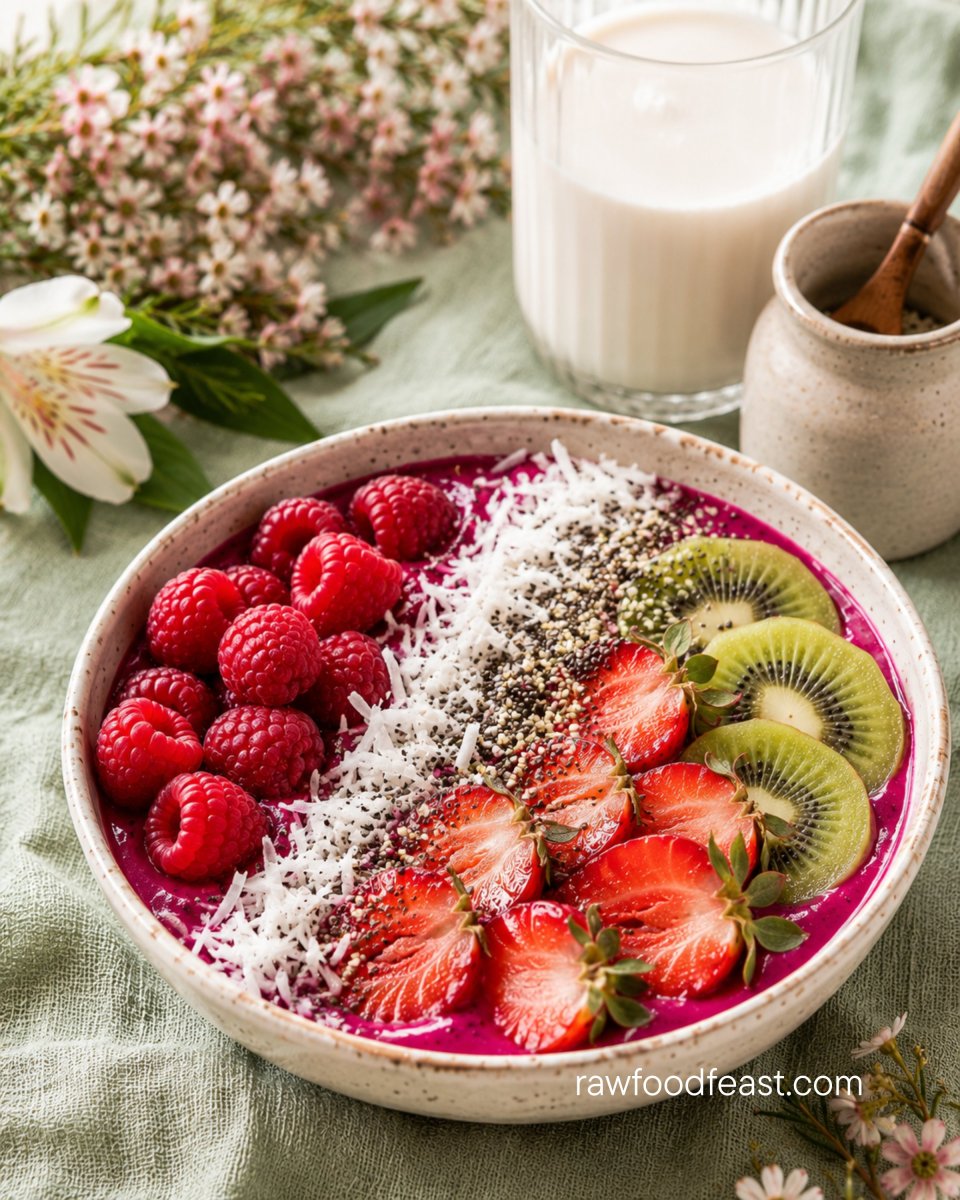
Pink Pitaya Smoothie Bowl with Berries and Coconut (Raw, Vegan, Nut-Free, Ready in 5 Minutes)
Ingredients
Method
- Make the coconut milk: add the coconut flakes, filtered water, and pitted medjool date to the Nama M1 plant-based milk maker and run the coconut milk program. Pour into a glass jar — makes about 3 cups, keeps for 3 days in the fridge.
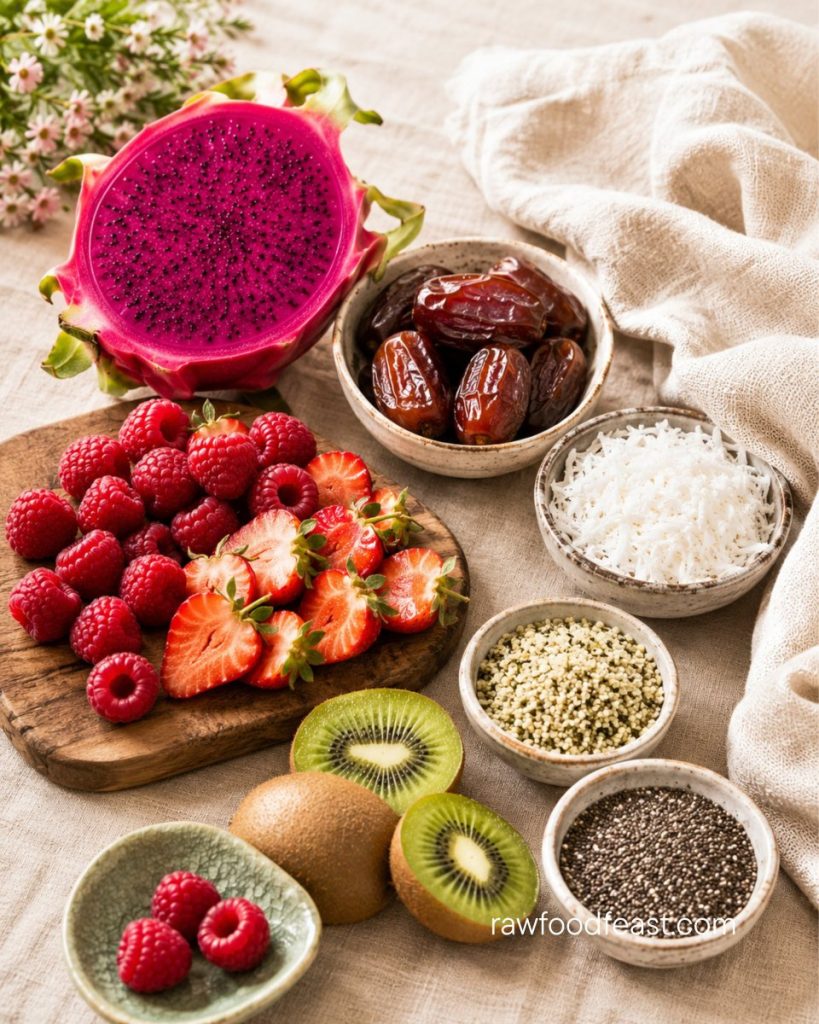
- Add the frozen pitaya, raspberries, strawberries, dates, ½ cup of the fresh coconut milk, and hemp seeds to a high-speed blender.
- Blend on low first, then increase to high. Stop to scrape down the sides as needed — texture should be thick and scoopable.
- Spoon into a wide shallow bowl and smooth the top.
- Arrange the fresh raspberries, strawberries, and kiwi slices in clusters.
- Sprinkle with coconut shred and chia seeds.
Nutrition
Notes
Tried this recipe?
Let us know how it was!