Mirjam Henzen
 A small jar of broccoli sprouts on the kitchen counter is one of the most concentrated forms of sulforaphane you can grow at home. The kind that 20-times-multiplies your intake of one of the most studied gut and longevity compounds in modern nutrition — straight from a tablespoon of seeds, in about five days.
Once you know how to grow broccoli sprouts at home, the rest sorts itself out. You start one jar. You harvest from it five days later. You start the next one. Two minutes of rinsing a day, a single mason jar, and a few cents of seeds — that’s the whole setup.
What Do You Need to Grow Broccoli Sprouts?
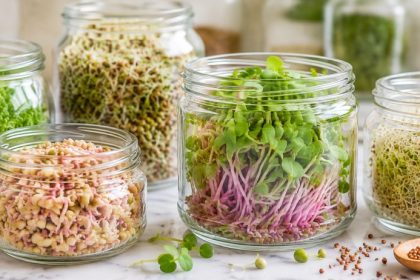
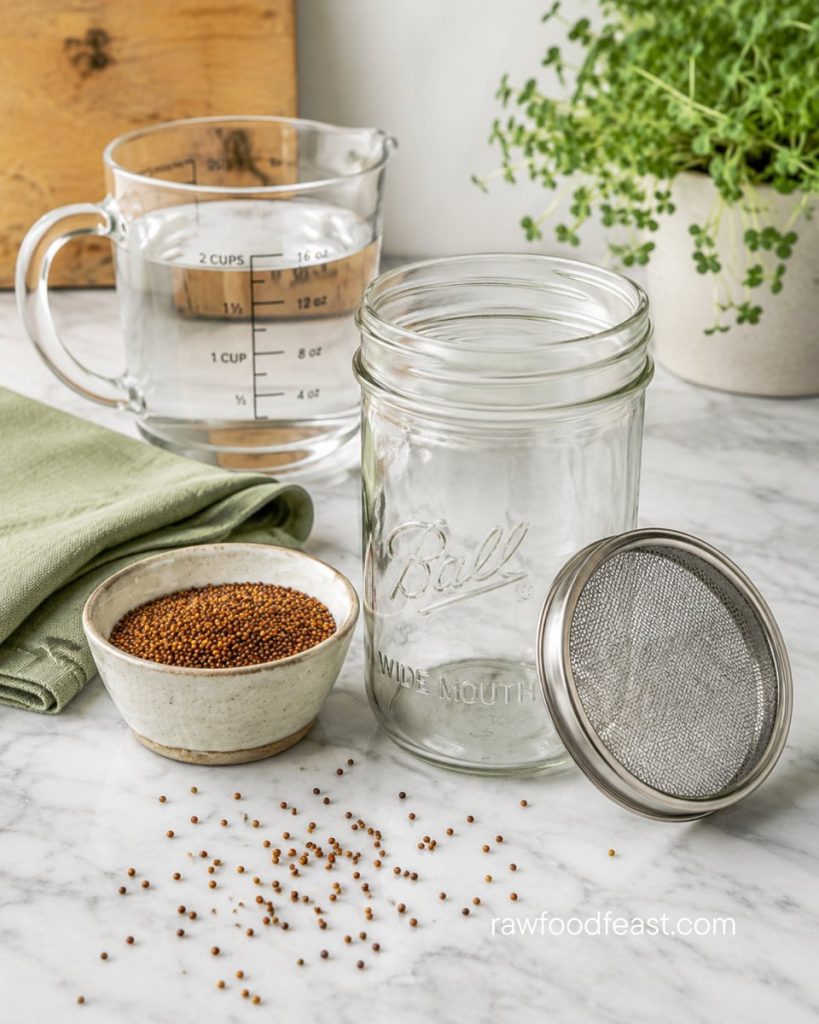
The setup is small. You need broccoli sprouting seeds (specifically labeled for sprouting — not garden seeds, which are often treated). A wide-mouth glass mason jar, ideally one quart in size or larger. A stainless steel mesh lid that screws onto the jar, or a piece of cheesecloth secured with a rubber band. A bowl or dish rack for tilted drainage. Filtered water. A spot on your kitchen counter with indirect light.
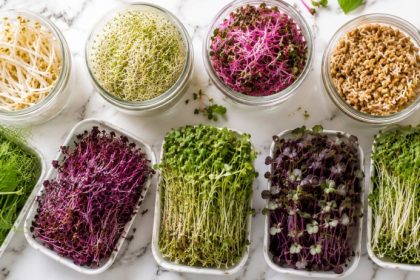
That’s it. No soil, no heat, no special equipment. Broccoli sprouts are sometimes confused with broccoli microgreens — they’re different. Sprouts are eaten whole (roots and all) at the first-leaf stage, after just a few days. Microgreens are grown longer in soil. The full distinction is in Sprouts vs Microgreens. If you’re new to sprouting altogether, Benefits of Sprouting covers the broader case for adding sprouts to your week.
How to Grow Broccoli Sprouts in a Jar (Step-by-Step)
Start with one to two tablespoons of broccoli sprouting seeds per quart of jar capacity. Any more than that crowds the jar and limits airflow.
Put the seeds in the mason jar and cover with about a cup of cool filtered water. Screw on the mesh lid and let them soak for 8 to 12 hours — overnight is easiest. The seeds will swell and crack open as germination begins.
In the morning, drain the soak water through the mesh lid. Rinse the seeds with fresh water and drain again. Then tilt the jar at a 45-degree angle in a bowl or dish rack so any remaining water drains out completely. Sprouts sitting in standing water is what creates mold problems.
Rinse and re-drain twice a day for the next four to five days — once in the morning, once in the evening. Keep the jar on the counter, out of direct sun. Within 24 hours you’ll see tiny white roots. By day three you’ll see green shoots. By day four or five, you’ll have a jar full of dense bright green sprouts ready to harvest.
How Long Do Broccoli Sprouts Take to Grow?
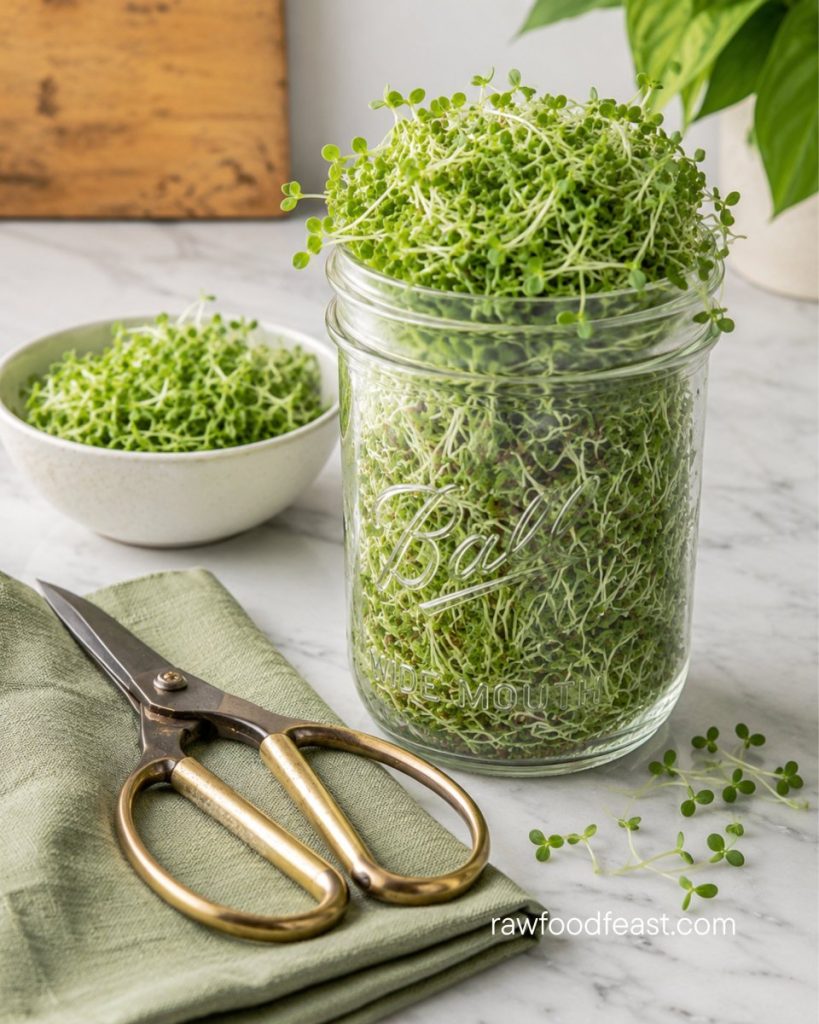
Most broccoli sprouts are ready in four to five days from the morning of the first soak. Some batches go to six days depending on kitchen temperature — warmer rooms speed things up, cooler rooms slow them down. The visual cue you’re looking for: the seeds have rooted, the shoots are about an inch tall, and the first two leaves (called cotyledons) have unfurled and turned green.
If you want the exact timing for broccoli — or any other seed you’re sprouting alongside it — this free sprouting calculator gives you per-seed timing plus the nutritional highlights of each sprout. Different seeds finish at different times and bring different benefits, so when you’re running multiple jars, having both timing and nutrition info per seed keeps everything coordinated and intentional.
How to Harvest Broccoli Sprouts at the Right Time
Harvest when the sprouts are dense, bright green, and the first leaves are fully open — usually day four or five. This is the peak sulforaphane window. After that, the sprouts continue to grow but the sulforaphane content begins to drop as the plant matures.
To harvest, give the jar a final rinse and drain. Some people then float off the seed hulls (the brown papery bits) by submerging in a bowl of water — the hulls float to the top, you skim them off, and the sprouts settle. Others leave the hulls in (they’re completely edible). Either way, drain thoroughly and store in the fridge in a clean glass jar or container — they’ll keep for 5 to 7 days.
For the full picture of what those daily sprouts are actually doing in your body, see Broccoli Sprouts Benefits.
The Seeds You Use Make All the Difference
This is the part most home sprouters underestimate. Not all broccoli seeds are equal. Standard broccoli seeds vary widely in their glucoraphanin content (the precursor your body converts into sulforaphane). Some varieties have up to three times more than typical seeds. Quality and purity matter even more — cheap untested seeds are the leading cause of mold issues and contamination.
What you want is batch-tested organic broccoli seeds, specifically high-glucoraphanin varieties. The Sprouting Company carries exactly these — high-glucoraphanin organic broccoli seeds batch-tested for safety, plus a purpose-built sprouter designed for clean airflow and drainage. Use discount code RAWFOODFEAST to save at The Sprouting Company on all products. For the safety side of the equation, How to Prevent Mold on Sprouts walks through what to do and what to avoid.
Broccoli Sprouts Are 1 of 30 Plants per Week — Make Them Count
A jar of broccoli sprouts on your counter gives you a guaranteed daily plant toward the 30 different plants a week your gut microbiome actually needs to thrive. That’s the math underneath everything you’ve read about gut health — variety is what feeds the bacteria that drive your digestion, immunity, mood, and energy.
Tracking how close you get to 30 is the part most people skip — partly because it sounds harder than it is. Fiber First is built for exactly this. It’s the fiber tracker for gut health that counts every plant you eat in a week, plus your daily fiber and hydration. Broccoli sprouts log as one plant. Add herbs, seeds, spices, and the rest of your normal eating, and the 30 mark gets closer than you’d think — fast.
Are Home-Grown Broccoli Sprouts Worth It?
For about five minutes of total work spread across five days, you get a jar of one of the most concentrated gut-and-longevity foods you can eat. A tablespoon of seeds — costing pennies — produces a cup or more of fresh sprouts. The equivalent at a juice bar runs five to seven dollars a serving.
The rhythm is what makes this work. One jar harvesting, one jar starting. By the end of week two, you have a continuous supply on your counter, and broccoli sprouts become part of your kitchen the same way fresh herbs are.