Mirjam Henzen
 You can eat well and still feel something shift. Digestion that sits heavier than it did last year. A cold that drags on an extra week. Skin losing some of its glow for no obvious reason. The answer often sits in a place most people never think to look.
The shift is happening in the ecosystem of trillions of bacteria that live in your gut. This is gut microbiome aging. Your microbiome moves on its own timeline, and what it needs to stay young is more specific than most people realize. Energy, sleep, mood, skin, digestion, immune resilience — they all start here.
A paper presented at Digestive Disease Week 2026 in May brought this into sharper focus. Researchers at the University of Texas Medical Branch took aging mice and reseeded their guts with their own younger gut bacteria — preserved from when those same mice were young. The result was striking — zero of eight treated mice developed liver cancer compared to two of eight in the control group, and inflammation across the body dropped. It is animal research, and that matters. The same proof in humans is still in progress. But it lines up with what raw vegans have been sensing for a long time. The microbiome you are feeding now is the one you are aging with.
Below are the five signs of gut microbiome aging worth recognizing, what they are doing underneath, and the variety of plant foods that genuinely slow the drift.
What Is Microbiome Aging?
Your gut microbiome — the trillions of bacteria, yeasts, and other microbes living in your intestines — is its own ecosystem. Microbiome aging is the gradual drift from a young, diverse state to a narrower, more inflammatory one.
In a young gut, the diversity is wide. Many different species share the space, each doing a different job — digesting different fibers, producing different vitamins, calming different kinds of inflammation. Beneficial bacterial families — the friendly species that show up most in a young gut, with names like Bifidobacterium, Akkermansia, and Faecalibacterium — are well represented. Short-chain fatty acids, the small molecules these bacteria make when they ferment fiber, are produced in steady supply. Butyrate is the one to know. It feeds the cells that line your gut directly.
In an aging gut, all of that shifts. Diversity narrows. The beneficial species lose ground. Inflammatory species spread into the space they leave behind. The gut lining thins. Butyrate production drops. The lining stops getting fed properly, and small gaps open between cells that should be tightly sealed. Bits of bacteria and food particles cross into the bloodstream, and once they are in circulation, they trigger inflammation everywhere they land.
This is what is meant by inflammaging — low-grade inflammation running in the background as you get older. You do not feel it as inflammation. You feel it as slower repair, less resilient immunity, sleep that does not restore the way it used to, energy that takes longer to come back. The microbiome is one of the strongest drivers behind all of it, and one of the most workable.
The 5 Signs Your Gut Microbiome Is Aging (Even If You Feel Fine)
You do not need a stool test to notice microbiome aging starting to show. Your body gives you signals — small ones at first, easy to attribute to something else.
One — your digestion is heavier than it used to be. A meal that would have moved through smoothly five years ago sits longer. Bowel movements become less regular without an obvious cause. Your gut is not broken. Its bacterial workforce has shifted, and digestion runs slower than it did.
Two — foods that never bothered you start causing bloating. Beans, certain vegetables, lentils, particular fruits. They used to be neutral and suddenly are not. This is usually because fewer kinds of bacteria are around to ferment those specific fibers. Fewer kinds of bacteria, fewer kinds of fibers your gut comfortably handles.
Three — your skin loses some of its clarity. Breakouts in unfamiliar places. A duller tone. Sensitivities to skincare you have used for years. A ruddier complexion that was not there twelve months ago. The gut-skin link is direct — when the gut lining loosens and bits of bacteria and food particles cross into circulation, the skin is often the first place you see it.
Four — brain fog and energy dips show up despite sleeping, hydrating, and eating reasonably. Your gut produces many of the same chemical messengers your brain uses, including most of your serotonin — and your gut bacteria are part of that production line. When the bacterial side of the line thins out, the messengers thin out with it, and mood and focus take a hit before anything else feels off.
Five — recovery from small things takes longer. A cold lingers an extra few days. A headache that used to clear in an afternoon stays through the next morning. Your immune system is built around your microbiome — when bacterial diversity narrows, immune resilience narrows with it.
If you recognize three or more of these, your microbiome has likely aged ahead of where you want it. Here is the good news. The bacteria in your gut renew themselves fast when given different food. Within two to four weeks of meaningful dietary change, the dominant species can look noticeably different. The drift is reversible.
Why Gut Microbiome Aging Drives Inflammation, Brain Fog, and Skin Changes
Three pathways do most of the work underneath those five signs.
First — your gut lining. In a young microbiome, beneficial bacteria ferment fiber into butyrate. Butyrate feeds the cells of your gut lining directly. They use it as fuel. When the producing bacteria decline, butyrate drops, the gut lining thins, and tiny gaps open between cells that should be sealed. Bits of bacteria and food particles cross into the bloodstream. The body reads that as a constant low-grade emergency.
Second — your immune system. Roughly seventy percent of your immune cells are stationed around your gut. They are in constant conversation with your gut bacteria. A diverse microbiome teaches the immune system how to respond appropriately — strong when it needs to be, calm when it does not. A narrowed microbiome leaves the immune system overreacting to small triggers. That is what chronic low-grade inflammation actually looks like at the cellular level.
Third — your brain. The gut and the brain are wired together through the vagus nerve, a long nerve running from your brainstem down to your gut. Your gut produces many of the same chemical messengers your brain uses, including a large share of your serotonin — and your gut bacteria are part of that production line. When the bacterial side of that line declines, the messengers decline too — and mood, focus, and sleep all become harder to maintain on the same lifestyle. The deeper science is in The Gut-Brain Connection.
Inflammation. Brain fog. Skin changes. These are not three separate problems happening to age you. They are three signs of the same shift further back.
Can You Reverse an Aging Gut Microbiome?
The honest answer is yes, significantly. Whether you can fully reverse it depends on how long the drift has been happening and what counts as reversed — but the direction is genuinely workable.
Here is what shows up across the research. The microbiome responds to food faster than almost any other system in the body. Within two to four weeks of meaningful dietary change, the dominant species shift. Butyrate production rises. Diversity widens. The gut lining starts rebuilding itself.
You do not need a stool transplant. You do not need a long regimen of supplements. You need the food the beneficial bacteria are actually hungry for — fiber from a wide range of plants, polyphenols from colorful produce, consistency over months. Your body recognizes this food because it is the food the human microbiome evolved on.
This is also why fresh plant juice often shifts gut symptoms within days rather than weeks. The soluble compounds in fresh juice reach the lower gut and feed beneficial bacteria directly, faster than waiting for solid food to digest. The full picture is in What Makes a Juice Prebiotic. Juice does not replace whole plants. It sits alongside them as a faster way to feed the bacteria.
The 7 Plant Foods That Keep Your Gut Microbiome Young
These are not exotic supplements. They are everyday plants the beneficial bacteria recognize and use. Pick three or four to rotate through this week. Add the others over the coming weeks.
Cruciferous vegetables. Broccoli, cauliflower, kale, brussels sprouts, cabbage. They contain sulforaphane and a unique set of fiber types that feed Akkermansia muciniphila, one of the bacterial species most closely tied to a young, intact gut lining. A serving most days is enough to move the needle.
Broccoli sprouts. Tiny and among the richest plant sources of glucoraphanin — the compound the body converts to sulforaphane — at ten to a hundred times the concentration found in mature broccoli. A small handful daily on a salad or in a smoothie does more than most supplements. The full why is in Broccoli Sprouts Benefits.
Berries. Blueberries, raspberries, blackberries, strawberries. Polyphenol-rich, soluble-fiber-rich, anti-inflammatory. The polyphenols that give berries their color are food for specific beneficial bacteria — Akkermansia and Bifidobacterium populations grow in their presence.
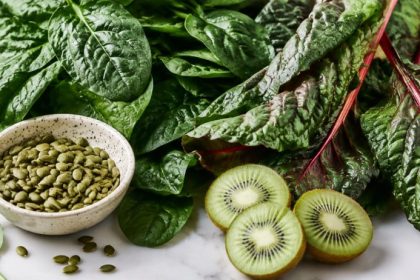
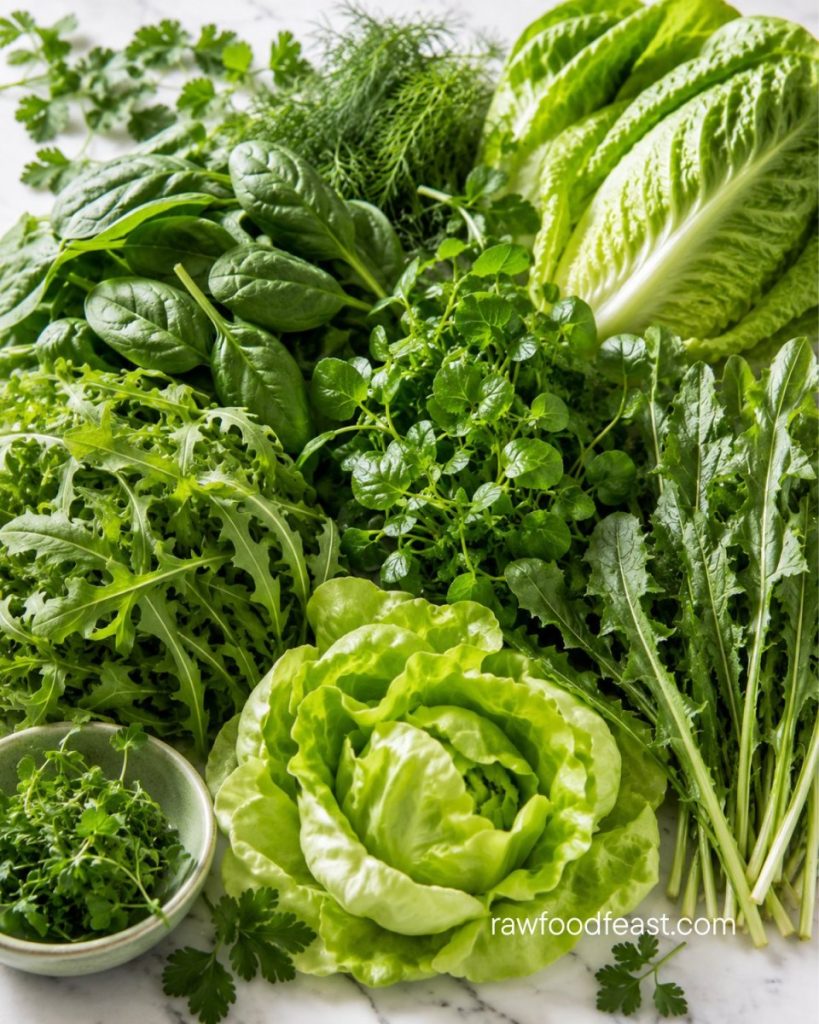
Leafy greens. Spinach, arugula, dandelion, watercress, lettuces of every kind. They deliver magnesium and folate that the gut lining uses to rebuild itself, and they bring different fiber types every few days when you rotate them. Five to seven different leafy greens across a week is a strong target.
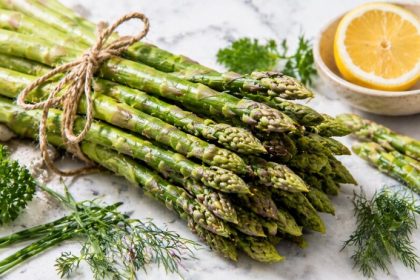
Asparagus. In season right now and one of the best prebiotics on the plate. Asparagus contains inulin — a fiber that beneficial bacteria like Bifidobacterium ferment into the short-chain fatty acids your gut lining feeds on. A bunch a week through May and June is easy nutrition for a younger gut.
Raw garlic and onion. Both contain a fiber called fructooligosaccharide (a chain of fructose units bacteria love to ferment) that beneficial species feed on immediately. A small amount raw — minced garlic in a dressing, raw onion in a salad — keeps every part of the plant intact. The prebiotic fibers themselves survive cooking reasonably well, but other gut-supportive compounds, like allicin in garlic, weaken within minutes of heat.
Fresh herbs. Parsley, cilantro, basil, mint, dill. Often treated as a garnish, but they are concentrated sources of polyphenols and chlorophyll, both of which support a more diverse microbiome. Use them like a leafy green, not a sprinkle.
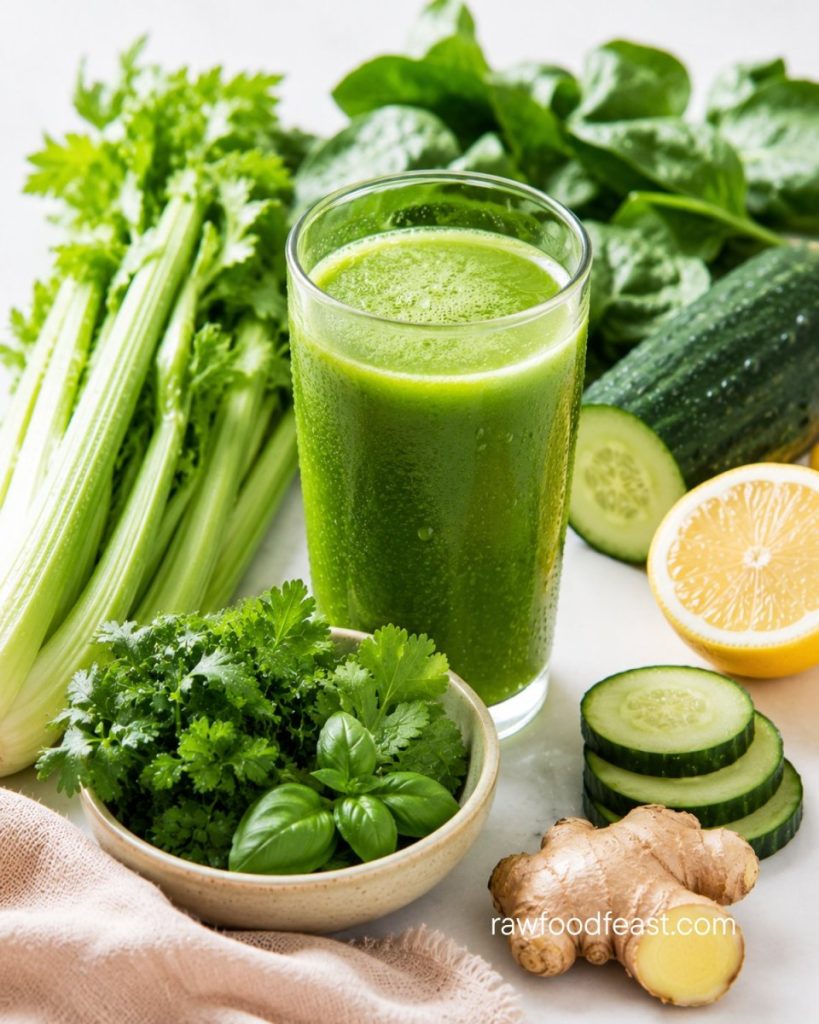
Add fresh pressed juice to this list as a supporting layer. Green juices with leafy greens, cucumber, celery, lemon, and ginger deliver soluble prebiotic fiber and minerals to the lower gut quickly. For the everyday rotations that work best, see Best Prebiotic Juices for Gut Health.
How Many Plants a Week for a Healthy Gut Microbiome?
Thirty different plant foods a week. That is the number the American Gut Project landed on after analyzing microbiome samples from more than ten thousand people across the US, UK, and Australia. In that dataset, people who hit thirty different plants weekly had significantly more diverse gut microbiomes than people eating fewer than ten — no matter whether their diet was labeled vegan, omnivore, or anything else. Diversity of intake produced diversity of microbiome.
Plants here means everything. Fruits, leafy greens, vegetables, herbs, spices, sprouts, nuts, seeds, sea vegetables, legumes, and grains. Each is its own plant food. Six different leafy greens in one big salad already counts as six. A dressing made with lemon, garlic, parsley, and tahini adds four more.
Most people are not close to thirty. The standard Western pattern lands around eight to ten different plants weekly. The fiber gap this opens up — and why it shows up as everything from sluggish digestion to lower immune resilience — is laid out fully in Signs of Fiber Deficiency.
The thirty-plant target is not a rule to grade yourself against. It is a useful reference. The closer you get to it across a week, the more workable the rest of microbiome aging becomes.
Polyphenols and Gut Bacteria: How Color in Your Diet Feeds Microbial Diversity
There is a second nutrient layer beyond fiber that the microbiome depends on — polyphenols. They are the compounds that give plants their color and a lot of their healing power. Anthocyanins in berries. Lycopene in tomatoes. Curcumin in turmeric. Resveratrol in grapes. Chlorophyll in leafy greens. Different compound, different signal, different bacterial family.
Polyphenols do not get absorbed in the small intestine the way most nutrients do. They travel further down — into the colon — where the beneficial bacteria break them apart and use them as fuel. In return, the bacteria release smaller compounds back into circulation that your body can actually absorb. The exchange runs in both directions.
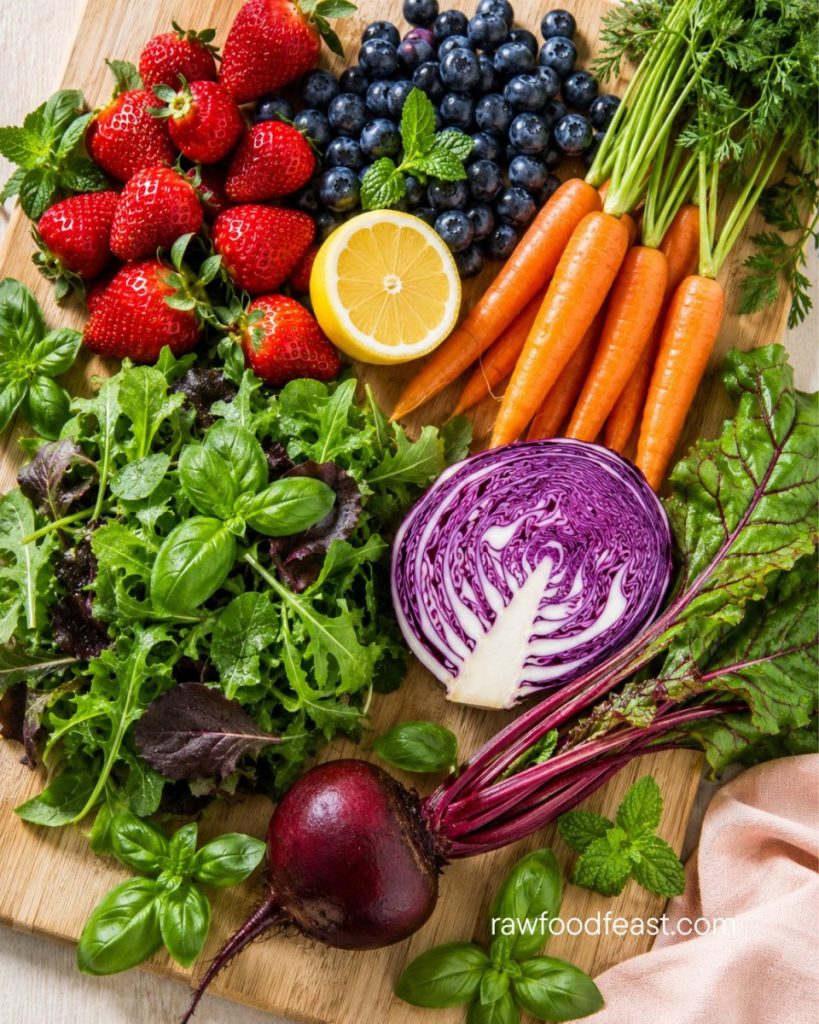
The practical lever is simple. Eat across the color spectrum every day. Deep red strawberries, dark blueberries, orange carrots, yellow lemon, green leafy mix, purple cabbage, red beet. The variety of colors on your plate is a fast way to estimate the variety of polyphenols reaching your gut bacteria.
For a structure of daily juice rotations that hit the gut bacteria directly, the breakdowns in Best Juices for Gut Health are a strong starting point.
For day-to-day immersion in raw, plant-rich eating that supports a younger gut over time, Healthy & Free is the online community built around practical, delicious whole food (un)cooking and juicing. Come join us and enjoy plant-powered food that gives you energy, happy digestion, and glow.
What Damages Your Gut Microbiome the Most (And How to Stop)
A few patterns do most of the damage. None of them are surprising once you see them together.
First — a low-fiber, low-diversity diet. The microbiome cannot stay diverse on a small rotation of plants. When the same five or six plants come in every week and the rest of the calories come from processed food, the bacteria adapted to handle a wider range starve out. Diversity can drop measurably within months.
Second — regular processed food. Emulsifiers, artificial sweeteners, refined sugars. All of them disrupt the gut lining and shift the balance toward inflammatory bacterial species. Even small amounts taken over many months reshape the ecosystem.
Third — chronic stress. Stress is not a diet, but the gut treats it like one. When the nervous system is stuck in a high-alert state, digestive enzymes drop, the rhythm that moves food through your gut slows down, and the conditions favor less-helpful bacteria. The full story — and what helps it — is in How Stress Affects Digestion.
Fourth — environmental. Microplastics, residues, and chemical exposure that accumulate over time. The microbiome takes most of this first because the gut is where most of it enters. The plant fibers that clear these particles before they cross into circulation are described in Foods That Remove Microplastics.
Each shift in the right direction counts. Less processed food this week than last. Two more plants. One green juice in the morning. The microbiome responds to direction, not perfection.
How to Improve Your Gut Microbiome in 30 Days
A workable thirty-day shape looks like this.
Week one. Add a green juice in the morning — cucumber, celery, leafy greens, lemon, ginger. Five mornings out of seven is plenty. Add one new plant food you do not usually eat — a different leafy green, a herb you have not used, a sprout you have not tried.
Week two. Layer in cruciferous vegetables most days. Broccoli, cauliflower, cabbage, brussels sprouts — raw, lightly massaged into a salad, or sliced into a bowl. Add a tablespoon of ground flaxseed or chia to your morning, either in a smoothie or stirred into fresh juice. Both deliver soluble fiber the bacteria use immediately.
Week three. Start counting plants across the week. Six leafy greens, four fruits, four root vegetables, three herbs, two sprouts — you are already at nineteen. Aim for thirty by the end of the week. Anything counts. A bunch of parsley in a dressing is a plant.
Week four. Add broccoli sprouts daily — a small handful on a salad, in a smoothie, or as a sprinkle on a bowl. This is the single most important addition for sulforaphane. Keep the green juice. Keep the cruciferous rotation. Keep the seeds.
By day thirty, your microbiome is meaningfully different from where it was on day one. The dominant species have shifted. Butyrate production has risen. The signs you came in with — sluggish digestion, bloating, skin changes, brain fog, slower recovery — start softening, often by the third week. The work is consistent, not heroic.
The Long Game: A Younger Gut Is Built One Meal at a Time
A younger gut microbiome is not won in a thirty-day reset or a one-time cleanse. It is built over years, in the food you keep coming back to — a handful of broccoli sprouts here, a green juice there, a new leafy green tried, a bowl with seven plants in it.
The research is pointing where your body has been pointing the whole time. Plants. Variety. Consistency. That is the work, and it pays back across every other system you have.