Mirjam Henzen
 There is something satisfying about a morning where nothing goes to waste. You juice your carrots. The glass fills with that clean, bright sweetness. And what is left behind — two cups of carrot pulp, finely textured and ready for something genuinely beautiful — goes straight into this cake.
This carrot pulp cake is raw, entirely no-bake, and one of the most genuinely delicious things you can make from a juicing session. Spiced with cinnamon — quietly, as a good cake should be — deepened with lucuma, and finished with a cashew caramel frosting so silky it barely seems possible without dairy. The coconut runs all the way through it: fresh homemade coconut milk in both the base and the frosting, and the coconut pulp pressed straight into the cake alongside the carrot. One machine. One morning. Two things worth being proud of.
What This Carrot Pulp Cake Actually Tastes Like
Before we get into how it works, let’s talk about what you are making — because this one is worth getting excited about.
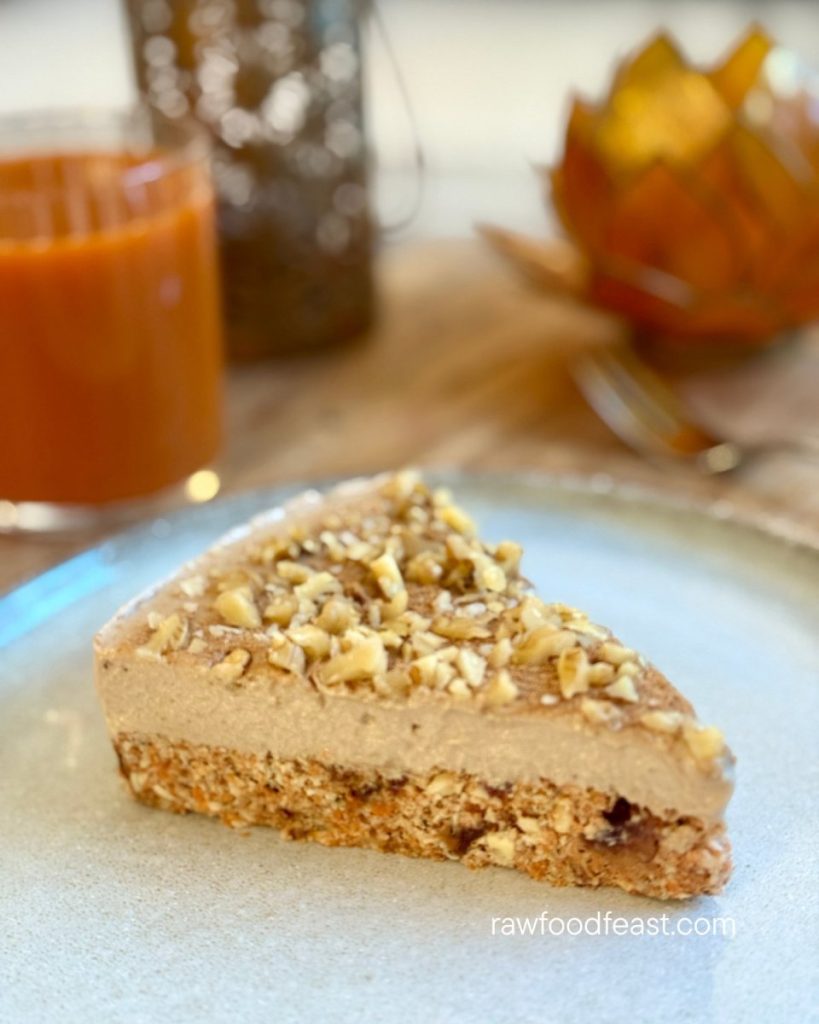
The base is dense and firmly textured — think somewhere between a brownie and a carrot cake. The cinnamon blends right in rather than taking center stage. The sweetness is deep and soft, with that natural caramel quality that just feels right. And then the frosting — silky, creamy, and genuinely tasting of caramel. That is the lucuma doing its work.
This is a carrot pulp cake you serve to people who usually do not eat raw vegan food and watch their faces change.

Why Carrot Pulp Makes the Base Work So Well
Traditional carrot cake leans on oil and flour to get its texture. Here, the carrot pulp does both jobs at once. It is drier than grated carrot and binds beautifully when combined with soaked walnuts and Medjool dates. The insoluble fiber — the plant cell wall material that stays behind after juicing — absorbs, compacts, and holds. The result is a base that is firm enough to layer and slice cleanly. No oil. No flour. No binder. Just the natural structure of the ingredients themselves.
The pulp gives the base its strength — and that structure only gets better once the cake sets in the fridge or freezer, where the cashews and coconut in the frosting firm up and bind everything together beautifully.
Lucuma — the Ingredient That Changes Everything
There is a moment when you first taste the frosting and genuinely wonder if someone added actual caramel. No one did. That is what lucuma does.
Lucuma is a Peruvian fruit, dried and milled into a fine golden powder. It tastes like caramel and butterscotch — naturally, with a low glycemic load that keeps the sweetness gentle on your body. Rich in antioxidants, beta-carotene, and B vitamins. And in a cashew frosting, it does something remarkable: it turns a simple cashew cream into something complex and lingering, a flavor that settles in and stays with you.
What lucuma brings to this frosting is something genuinely hard to explain until you taste it — a deep, caramel-like sweetness that makes people stop and ask what is in this. That is the moment you know it is working.
If you do not have it in your pantry yet, this carrot pulp cake recipe is a very good reason to get it. You will find yourself reaching for it well beyond this cake.
How Much Carrot Pulp Do You Need?
One kilo of carrots — about 35 ounces — yields about two cups of pulp. That is exactly what this carrot pulp cake recipe calls for, and it is roughly what you get from a standard batch of carrot juice. The math of this session is satisfying: one kilo in, one large glass and one cake out.
A good habit: place a small reusable plastic bag inside the pulp container before you start juicing. When you are done, the pulp is already collected and ready to use. It keeps well in the fridge for up to two days if you are not making the cake immediately.
If you are making a mixed juice alongside this carrot pulp cake, juice the carrots first and set the pulp aside before adding anything else to your cold press juicer. Carrot apple ginger juice is one of the most beautifully balanced and energizing combinations you can make — steady, clean energy that comes from liver support and circulation, not stimulation. Everything worth knowing about why it works the way it does is in Carrot Apple Ginger Juice Benefits for Energy, Digestion & Liver Support.
Making the Coconut Milk and Using Every Last Drop
The creaminess of this frosting depends on the coconut milk being fresh. Store-bought versions work in a pinch, but fresh coconut milk has a richness and clarity that processed versions cannot replicate. The frosting sets differently. The flavor is cleaner. You can taste the difference in the first bite.
The M1 plant-based nut milk maker makes fresh coconut milk in under two minutes — cold-press, no heat, no blending. And because you are making it yourself, the coconut pulp is right there, ready to go straight into the cake base alongside the carrot pulp. What this nut milk maker does and how to get the best results from it is covered in The Nama M1 Plant-Based Milk Maker: Cold-Press Milk Without Heat or Blending.
Can You Make This Carrot Pulp Cake Without a Juicer?
Yes, and it works well. Finely grated carrot is a direct substitute — with one adjustment: omit the quarter cup of coconut milk from the base, since grated carrot holds significantly more moisture than juicer pulp. Without that adjustment, the mixture can become too wet to hold its shape.
The texture with grated carrot is slightly softer. The flavor is all there. It is a genuinely good way to make this on a day when you are not juicing.
That said, once you make it with pulp from a live juicing session, the difference becomes clear. The pulp binds with more precision, the texture is firmer and cleaner, and the whole morning takes on a different quality — productive in a way that feels complete rather than efficient.
If you are considering a cold press juicer that handles carrots beautifully, both the Nama J2 and the Hurom H320N are outstanding — hands-free, quiet, and built for exactly this kind of fresh-pressed juices. Which one suits you best depends on how you work. The full comparison is in Nama J2 vs Hurom H320N: The Real Differences Between These Hands-Free Slow Juicers. Use discount code RAWFOODFEAST to save on either brand.
Almond Milk and Almond Pulp Work Just as Beautifully
The same machine and the same two minutes give you something equally wonderful with almonds. Fresh almond milk goes where the coconut milk goes — into the base and into the frosting — and the almond pulp that comes out of the M1 plant-based nut milk maker is dry, press-ready, and goes straight into the base exactly the way the coconut pulp does.
The flavor shifts slightly — less tropical, a little more neutral — but the lucuma caramel frosting carries the whole carrot pulp cake beautifully either way. The structure holds just as well. The texture is equally good.
Two milks. Two types of pulp. One recipe that works with both.
The juice goes into your glass. The pulp goes into the cake. The milk — coconut or almond, your choice — becomes the frosting, and the pulp from making it goes into the base. One session and you have two things worth making. That, more than anything else, is what this carrot pulp cake recipe is about.

Carrot Pulp Cake with Creamy Coconut Caramel Frosting (Raw, Vegan, Oil-Free, Gluten-Free)
Ingredients
Equipment
Method
- Add 1 cup coconut flakes, 2 cups water, and 1 pitted Medjool date to the Nama M1. In under two minutes you have the creamiest homemade coconut milk ready for the frosting. The leftover coconut pulp goes straight into the base.
- Add all base ingredients to a food processor and process until well combined. Line a 9-inch (23 cm) springform tin with baking paper. Add the mixture and press down firmly and evenly using a spatula or your hands. You want a compact, even layer.
- Add the soaked cashews, your freshly made coconut milk, lucuma powder, coconut blossom sugar, and fleur de sel to a high-speed blender. Blend until completely smooth and creamy.
- Pour the frosting evenly over the base and smooth the top with a spatula. Sprinkle lightly with ground cinnamon and scatter over the chopped walnuts. Cinnamon, caramel, and a frosting you'll dream about — it's all coming together now.
- Place in the freezer overnight. Slice the cake straight from frozen — this gives you the cleanest, most gorgeous slices. Let each slice sit at room temperature for about an hour, or store in the fridge where it's ready to enjoy in one to two hours.
Nutrition
Notes
Tried this recipe?
Let us know how it was!