Mirjam Henzen
 A dry seed sitting in your palm looks like almost nothing. Small, hard, unremarkable. But inside that shell is a blueprint for an entire plant — every nutrient, every enzyme, every instruction it needs to grow. The seed is just waiting. The moment it gets water, everything switches on. What was dormant becomes alive. What was locked becomes available. And what lands on your plate a few days later is one of the most nutrient-dense living foods you can eat. The benefits of sprouting start right there — the moment a seed wakes up.
This is not a niche health practice. It is one of the simplest, most rewarding things you can do in your kitchen. A jar, some seeds, water, and five days. That is all it takes to grow food that is more nutritionally concentrated than most things you will find at any store.
What Happens Inside a Seed When It Sprouts?
A dry seed is essentially in deep sleep. Everything inside it — the starches, the proteins, the fats, the minerals — is locked in storage form. Packed tightly, designed to survive drought, cold, and time. The seed is not feeding anything. It is waiting.
The moment that seed meets water, the waiting ends. Enzymes activate — the same enzymes that were sitting dormant for months or even years. They start breaking stored starches into simpler sugars that the growing plant can actually use. Complex proteins begin splitting into individual amino acids. Fats convert into fatty acids. The seed is not just absorbing water — it is reorganizing everything it contains.
And then something remarkable happens. Vitamins that did not exist in the dry seed start forming. Vitamin C, in particular, appears during germination — a vitamin the dry seed contained virtually none of. B vitamins increase. Carotenoids multiply. The seed is not just unlocking what it already had. It is creating new nutrition from scratch.
At the same time, phytic acid — the compound that binds minerals like zinc, iron, and calcium and makes them harder for your body to absorb — drops significantly. The seed no longer needs that protective lock. It is growing now. And those minerals become available in a form your body can actually use.
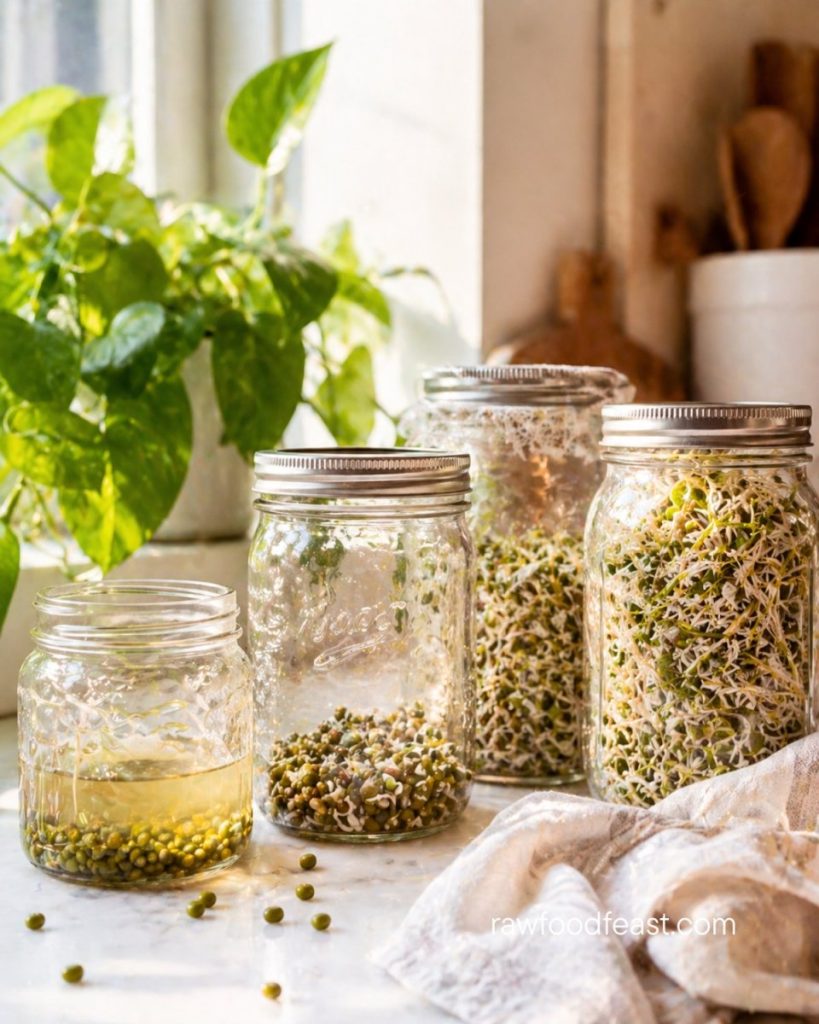
You can watch this happen on your countertop. Within 12 hours, the seed swells. By 24 hours, a tiny white tail pushes through the hull. By day two, the tail is longer. By day three, the first hint of green appears. The benefits of sprouting are not abstract — they are visible. You are watching a seed come alive.
Why Are Sprouts More Nutritious Than the Full-Grown Plant?
This is the part that surprises most people. A sprout is not a lesser version of the mature plant. In many cases, it is more nutritionally concentrated than the plant will ever be again.
Think of it as three stages. First, the dry seed — everything locked away, minerals bound by phytic acid, enzymes inactive, no vitamin C to speak of. The nutrition is there in potential, but your body cannot access most of it.
Second, the sprout. This is where everything comes alive. Enzymes activate and begin breaking down starches, proteins, and fats into forms your body absorbs easily. Vitamin C appears. Phytic acid drops, sometimes by 50% or more. Minerals that were locked become free. The seed has transformed into a concentrated package of living nutrition — all of it packed into a tiny, days-old plant.
Third, the mature plant. As it grows taller, develops stems, branches, leaves, and eventually flowers or fruit, that same nutrition gets spread across a much larger structure. The concentration dilutes. This is why broccoli sprouts contain 10 to 100 times more sulforaphane than a full head of mature broccoli — the protective compound that was concentrated in the seed gets distributed across the entire plant as it grows.
The sprout is the sweet spot. The moment of peak concentration, peak enzyme activity, peak aliveness. Before that, the seed is dormant and mostly inaccessible. After that, the plant dilutes what the seed concentrated. This is one of the most important benefits of sprouting — you are eating the food at the exact moment it contains the most of everything.
The full story of what happens with broccoli sprouts specifically — how sulforaphane forms, why the enzyme that creates it only works in raw sprouts, and what the research actually shows — is covered in detail in Broccoli Sprouts Benefits: What Sulforaphane Does in Your Body (And Why Raw Matters).
Why Eating Sprouts Raw Matters
Sprouting creates enzymes. Lots of them. These enzymes are alive in the raw sprout — ready to go to work the moment you chew, juice, or blend them. They begin breaking down the food before your digestive system even has to step in, which means less work for your body and more efficient absorption of everything the sprout contains.
Heat destroys these enzymes. Cook sprouts, and you lose the very thing that makes them so easy to digest and so nutritionally powerful. The vitamins that germination created — especially vitamin C, which is heat-sensitive — start breaking down too. The minerals survive cooking, but without the enzyme activity that helps your body absorb them efficiently, you are getting less from every bite.
This is where raw food and sprouting meet perfectly. Eating sprouts raw means you get the full benefit of everything the seed produced during germination — the enzymes, the vitamins, the minerals in a form your body actually uses, the amino acids. Cooking undoes much of what sprouting created. The whole point of sprouting is to unlock nutrition. Eating them raw means you keep it unlocked. Of all the benefits of sprouting, this one might matter most — the food arrives ready to nourish you, not just feed you.
Your body recognizes the difference. A raw sprout arrives with its own digestive support built in. It contributes to digestion rather than just asking for it. That is a fundamental shift in how food works in your body — and it is one of the reasons people who eat raw sprouts regularly notice a difference in how they feel after eating. How that enzyme relationship works across all raw foods — and why your body responds the way it does — is covered fully in Digestive Enzymes Explained.
What Are Microgreens?
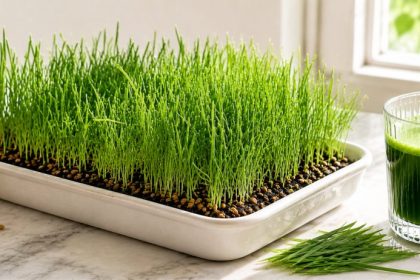
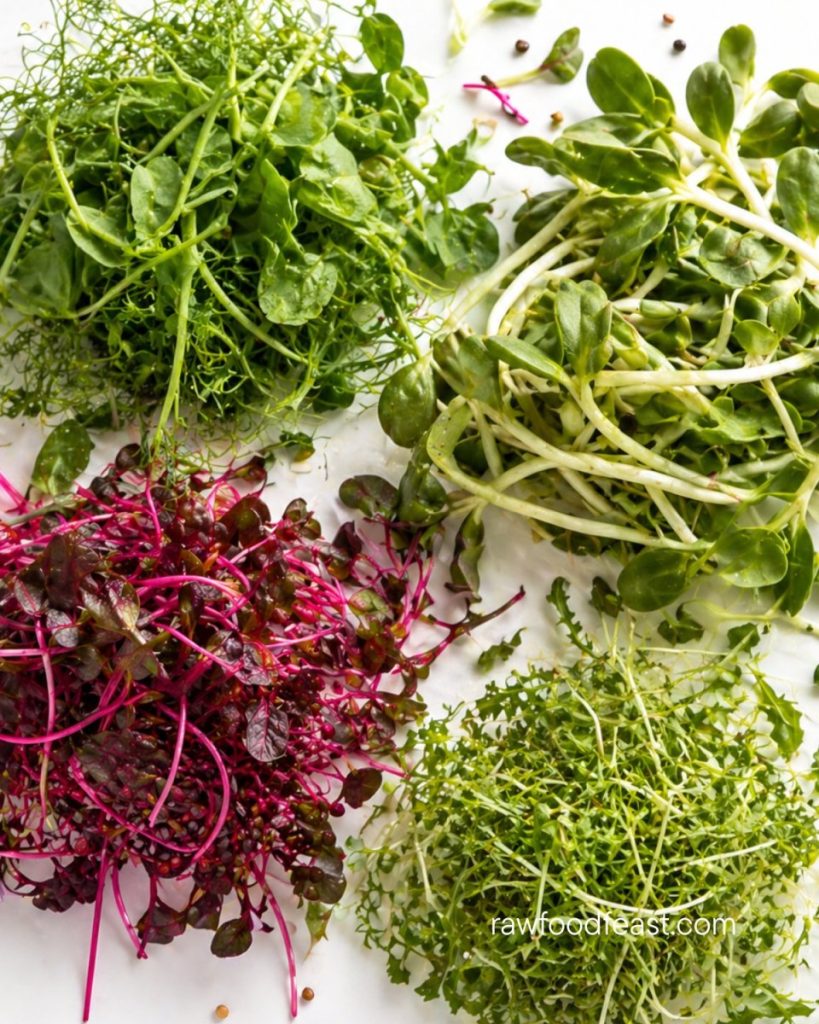
Microgreens are the next chapter after sprouts. Give a sprout a few more days, a growing medium or soil, and some light, and it develops true leaves — not just the initial seed leaves, but the first real leaves of the plant. That is a microgreen. Slightly older, slightly larger, grown differently, and visually stunning in ways that sprouts rarely are.
Pea shoots are one of the easiest to grow and one of the most satisfying to eat — tender, sweet, and beautiful on any plate. Sunflower microgreens are substantial and filling, with a nutty richness that makes them feel more like a food than a garnish. Beet microgreens bring color that nothing else in the kitchen can match — deep magenta stems that turn any bowl into something extraordinary. And some varieties — like anise hyssop or shiso — add a beautiful licorice flavor that elevates even the simplest raw canapé into something memorable.
Microgreens are nutritionally powerful in their own right. Many studies have found concentrations of vitamins and antioxidants that rival or exceed the mature plant. They are not the same as sprouts — the growing method is different, the stage is different, and the flavor profiles can be entirely different — but they share that same quality of being food at a very early, very concentrated stage of life.
The Day-by-Day Transformation of Sprouts
This is the part that gets people hooked.
Day one, you put dry seeds in a jar, cover them with water, and let them soak overnight. They look like what they are — small, dry seeds sitting in water. Nothing to see yet.
Day two, you drain the water and rinse the seeds. They have swelled — visibly larger, softer, and the water they soaked in has a faintly earthy smell. You tip the jar at an angle so air can circulate. Rinse again in the evening. Still not much to look at, but everything is already happening inside.
Day three, you see the first tails. Tiny white threads pushing out of the seed coat. This is germination — visible, undeniable, alive. The seeds are no longer seeds. They are becoming something new. The smell shifts from earthy to fresh, almost green. You rinse, drain, and watch.
Day four, the tails are longer. Some seeds have started to show the very beginning of tiny leaves. The jar looks full now — the sprouts are taking up more space than the seeds ever did. That growth happened from nothing but water and air.
Day five, you have sprouts. Real, actual, living sprouts. If they are something like broccoli or alfalfa, they may have small green leaves now. The jar is a tangle of white tails and green tips. You grew this. On your kitchen counter. From a quarter cup of seeds.
Once you see that transformation happen — really see it, morning and evening, rinse after rinse — something shifts. You want to do it again. You want to try different seeds. You want two jars going, then three. A healthy addiction is quickly born, and it starts the morning you lift the lid and realize you just grew your own food. Watching the benefits of sprouting unfold day by day is part of what makes this practice so satisfying.
What Makes Sprouts So Versatile?
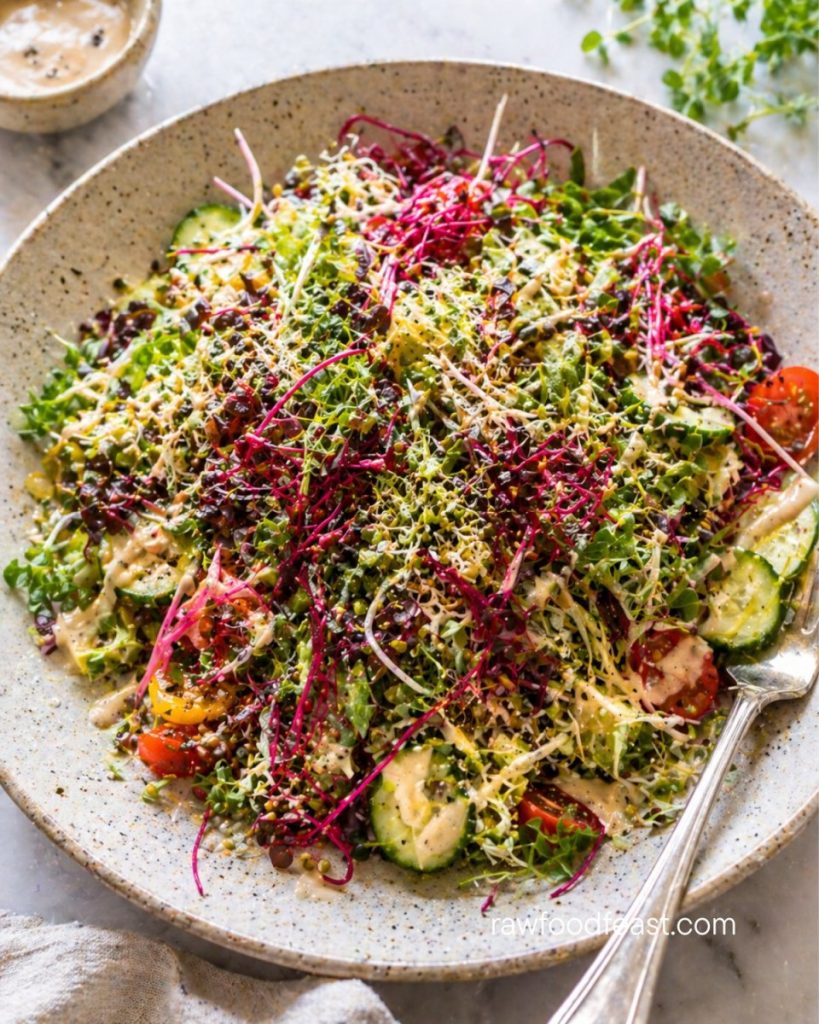
Sprouts are not just healthy — they make everything more beautiful. A simple bowl of greens becomes something you would photograph the moment you add a handful of sprouts on top. A nori roll becomes restaurant-worthy. A smoothie gets a living nutrition boost without changing the flavor. That is the thing about sprouts — they improve almost anything they touch, visually and nutritionally.
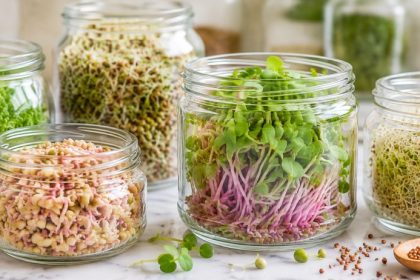
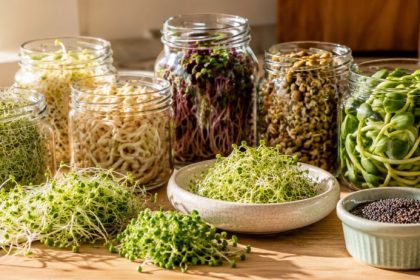
Beet sprouts and china rose radish sprouts are especially gorgeous — vivid pink stems that look almost too beautiful to eat. They add a mild peppery bite and a burst of color that no other garnish can match. Broccoli sprouts and alfalfa sprouts are quieter visually but bring extraordinary nutrient density. Pea shoots are perfect for plating — long, graceful, and fresh. Every single one adds living nutrition to whatever it lands on.
The ways to use them are genuinely endless. On salads — obviously. But also in fresh juices, blended into smoothies and dressings, rolled into nori wraps, layered in sushi, piled on raw flatbread, tucked into wraps, scattered over soup. They work as the main ingredient in a meal or as the finishing touch that brings everything together. If you are looking for a raw flatbread that pairs beautifully with a generous pile of broccoli sprouts on top, the recipe for Almond Carrot Pulp Flatbread is a great place to start — it uses leftover juicing pulp, and the sprouts on top make it something special.
The real beauty of sprouts as a kitchen staple is that they are always at their peak. When you grow them at home, you are eating something that was still growing five minutes before it hit your plate. That freshness — that aliveness — is something you can taste. One of the most under-appreciated benefits of sprouting is how it transforms the way your food looks and feels on the plate.
How Simple Is It to Start Sprouting?
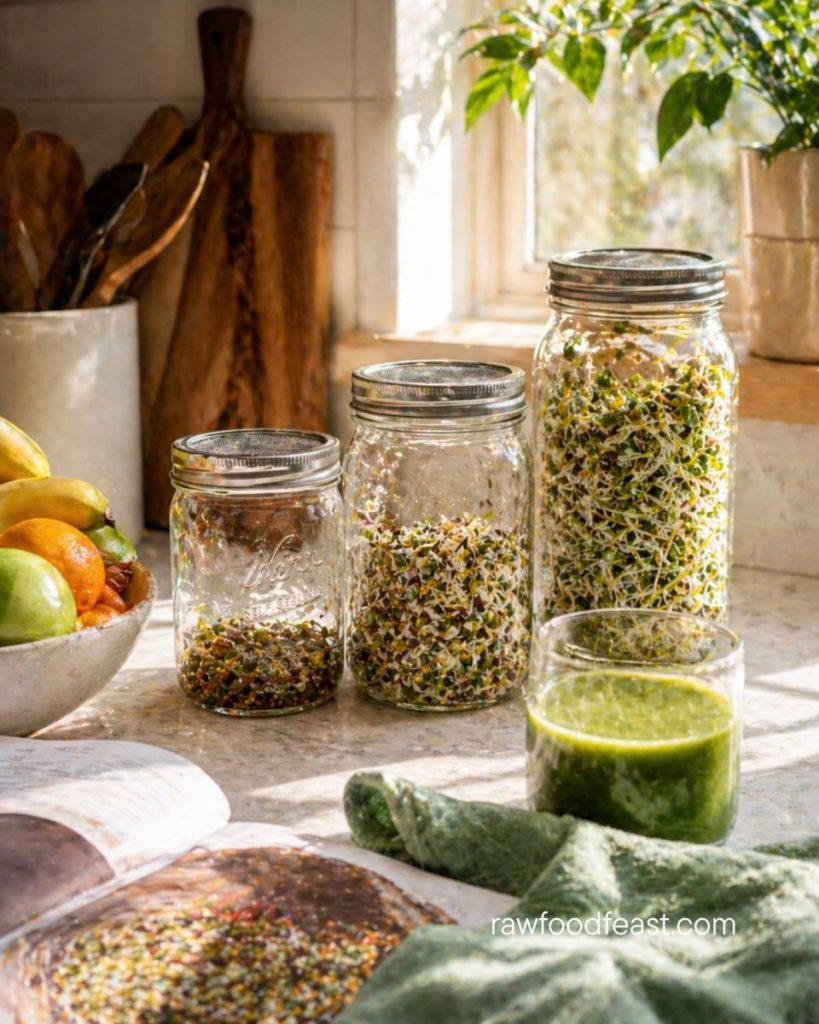
Seeds. A jar. Water. Five days. That is genuinely all you need to start sprouting at home.
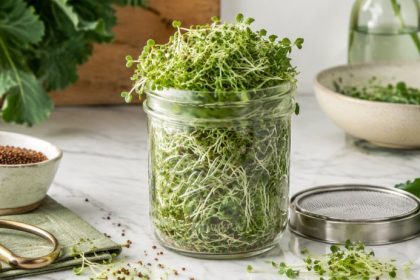
No garden. No soil — at least not for jar sprouts. No special equipment beyond a jar with a mesh lid or a piece of cheesecloth and a rubber band. No experience. No green thumb required. You soak the seeds overnight, drain them in the morning, rinse twice a day, and wait. The seeds do the rest.
The cost is remarkable. A quarter cup of seeds fills an entire jar with sprouts in less than a week. A small bag of sprouting seeds lasts for weeks, sometimes months. Compare that to buying sprouts at the store, where a tiny container costs several dollars and was harvested days ago. Or compare it to buying the mature produce those nutrients would otherwise come from — the volume of fresh greens, the heads of broccoli, the bunches of herbs. A jar of sprouts grown at home costs pennies and delivers more concentrated nutrition than most of them.
The simplicity is what hooks people. You are growing your own food — living, nutrient-dense food — on your kitchen counter with nothing but water and a jar. Most people have never done that before. And once they do, they realize how easy it is and wonder why they waited so long. The benefits of sprouting seeds at home are immediate — you see them, you eat them, and you feel the difference.
Why the Sprouting Seeds You Choose Matter
Not all sprouting seeds are the same, and the difference matters more than most people realize.
The first thing is germination rate — what percentage of the seeds actually sprout. With high-quality seeds, you get close to full germination. Every seed in the jar wakes up and grows. With lower-quality seeds, some sit there and do nothing. They did not have the vitality to germinate, and now they are sitting in a warm, moist jar alongside the seeds that did sprout — which is not ideal.
The second thing is what the seeds contain. Broccoli sprouts are a good example. The sulforaphane content in broccoli sprouts depends on how much glucoraphanin the seed started with — and that depends on the variety of broccoli the seed came from. Some varieties naturally contain significantly more glucoraphanin than typical broccoli seed. Seeds grown from those high-glucoraphanin varieties produce sprouts with meaningfully more of the compound that makes broccoli sprouts worth eating in the first place.
The third thing is safety. Seeds destined for sprouting need to be tested for pathogens — because the warm, moist conditions that help seeds germinate are the same conditions that help bacteria grow. Seeds sold for sprouting by reputable companies are batch-tested for things like salmonella and E. coli before they reach you. Seeds sold for gardening or cooking are not held to that standard.
Organic matters here too. You are eating the entire sprout — root, stem, and leaves — within days of germination. Whatever was on or in that seed is in your food. Organic, batch-tested, high-germination seeds are worth choosing, every time.
Sprouts also contribute fiber — both soluble and insoluble — that your gut bacteria thrive on. If you are curious about what happens when fiber intake drops too low and how to recognize the signs, that connection is explored fully in Signs of Fiber Deficiency. And if you have ever wondered whether sprouts and other plant foods really provide enough protein — they do, and the reason why is more straightforward than most people think — that is unpacked in The Plant Protein Myth.
The Sprouting Company carries organic, batch-tested seeds with high germination rates, including high-glucoraphanin broccoli seed varieties — and a purpose-built sprouter designed for perfect airflow and drainage. Use discount code RAWFOODFEAST to save at The Sprouting Company on all products.
Growing Your Own Food Changes Everything
Growing your own food is one of those things most people have never tried — not because they do not want to, but because it feels like it requires a garden, time, and experience. Sprouting changes that completely.
No land, no weather, no waiting months for a harvest. No garden, no balcony, no outdoor space needed at all. You put seeds in a jar, and less than a week later, you are eating something you grew yourself. Something that is still alive when you eat it.
That shift changes your relationship with food in a way that is hard to explain until you experience it. The countertop with three jars at different stages — one just soaked, one with tails emerging, one ready to eat. The morning routine of rinsing and draining that takes less than two minutes. The satisfaction of knowing that the sprouts on your salad tonight were on your countertop this morning, growing.
You start eating differently when you grow food yourself. Not because someone told you to, but because something shifts in how you see what is on your plate. The food feels more real. You pay more attention to it. You notice how it tastes, how your body responds, how your energy changes. That awareness builds quietly, and before you know it, the way you eat has changed — not through willpower, but through connection.
If you want to build this kind of eating into a daily rhythm — with recipes, practical guidance, and people doing it alongside you — Healthy & Free is the online community built around delicious whole food and juicing. Come join us and enjoy food that gives you energy, happy digestion, and glow.
The sprouting benefits extend far beyond the jar. People who start sprouting tend to eat more raw food overall. They start juicing. They try new recipes. They notice changes in their energy, their digestion, their skin. What happens when you move toward more raw, living food in your daily eating — week by week, in your body — is something many people experience. The full picture of what that looks like over 30 days is laid out in What Happens When You Eat Raw Food for 30 Days.
A Seed, a Jar, and Five Days
There is a morning coming — maybe soon, maybe a few weeks from now — when you will lift the lid off a jar and see green for the first time. Tiny leaves, barely there, reaching toward the light you set the jar near. You grew those. From a handful of dry seeds and nothing but water.
The first salad you top with your own sprouts feels different. It is not just food. It is something you participated in — something you watched come alive over the course of a few days. And that feeling does not wear off. It gets deeper. The jars multiply. The seeds change. The kitchen counter becomes a place where food is always growing.
This is not a health trend. It is a practice. One of the oldest, simplest, most rewarding things a human being can do — take a seed, give it water, and eat what grows. Once you start, you will understand why people never stop.