Mirjam Henzen
 By day three, something shifts. The headache from day one is gone. That hunger feeling that kept interrupting your morning is quieter. Your mind feels unusually clear — not from caffeine, not from anything you’ve taken, but from a kind of settling that happens when the body isn’t spending its energy on digestion for the first time in years.
That’s one of the juice fast benefits most people are actually chasing. Not just weight loss. Not just a detox number they can point to. The feeling of their own body running well.
The problem is that most people never reach day three with enough in the tank to feel it — because they’re running the protocol wrong from the start. Too little volume. No preparation. Calorie restriction dressed up as a cleanse. And then the experience confirms what the skeptics say: juice fasts don’t work.
They work. What doesn’t work is a poorly run one. This guide covers what juice fasting actually does in your body, what to expect each day, and how to set one up so you actually experience the juice fast benefits people talk about.
What Are the Main Juice Fast Benefits?
The main juice fast benefits include steadier energy, digestive rest, clearer skin, reduced bloating, improved mental clarity, and better hydration. These changes occur because fresh juice delivers nutrients in a highly absorbable form while removing much of the digestive workload of solid food.
When people talk about juice fast benefits, they’re usually describing the shift that happens once the body settles into the rhythm of the fast. Energy stabilizes, digestion becomes quieter, and the body begins responding to the high mineral intake and hydration that fresh juice provides.
Exactly how and when those changes unfold is something most people only understand once they see the process day by day — which we’ll walk through in the sections ahead.
What Is a Juice Fast — and Why Most People Get It Wrong
A juice fast means replacing solid food with fresh, cold-pressed fruit, leafy green, and vegetable juices for a defined period of time. The idea is simple: remove the digestive demand of solid food, flood the body with nutrients in their most bioavailable form, and give your organs — particularly your liver, gut, and lymphatic system — a window to work more efficiently.
The catch is that “replacing solid food with juice” is interpreted very differently by different people. A commercial juice cleanse might give you five 350ml bottles across the day — under 1,000 calories total. A well-run juice fast involves at least 4 liters (roughly 128 ounces) of fresh juice daily, adjusted upward as needed so that caloric intake is adequate, not depleted.
That gap — the difference between 800 calories and 2,000 calories — is where most juice fast outcomes diverge. A calorie-restricted protocol sends the body into stress. Cortisol rises. Muscle tissue gets drawn on for energy. The metabolism responds to scarcity. The experience is hunger, fatigue, and the crash that most people describe when they say juice fasting didn’t work for them. The research that produces headlines like “juice cleanses aren’t effective” is almost always testing this version — low-calorie, short duration, no preparation, no guidance.
A properly run juice fast does the opposite. Volume is adequate. Preparation is real. The body doesn’t receive a scarcity signal — it receives a different kind of nourishment than usual, and it responds accordingly.
What I call a juice feast is this properly-run version: an abundance protocol, not a restriction one. You are feasting on the most mineral-dense, easily absorbed nutrition available, while removing the one thing that takes the most energy to process. The word “feast” matters. It describes the intent.
I’ve done juice feasts from 3 days to 93 consecutive days. I’ve guided people from all walks of life through them. The variation in outcomes almost always traces back to volume and preparation — not to whether juice fasting works.
What Happens in Your Body During a Juice Fast
The mechanism behind juice fast benefits is worth understanding, because it changes how you interpret what you’re feeling during the process — and why the results come when they do.
Digestion is one of the body’s most energy-intensive operations. After a meal, especially a complex meal, a significant portion of available energy is directed toward breaking food down, absorbing nutrients, and processing waste. On a juice fast, that demand drops dramatically. Fresh juice requires almost no digestion — the nutrients absorb directly through the gut wall and reach the bloodstream within 15 to 20 minutes. The digestive organs get a genuine rest while the body stays fully nourished. That redirected energy is what drives most of what you feel.
Four things happen simultaneously once digestion steps back.
The first is gut lining renewal. The intestinal epithelium — the single-cell-thick lining of your gut — replaces itself every 3 to 5 days under normal conditions. Usually that renewal happens while the gut is simultaneously managing digestion, responding to irritants, and processing complex fibers. During a juice fast, no solid material moves through. The lining can focus entirely on rebuilding. The minerals and phytonutrients in fresh juice provide exactly what it needs to do that well. People who have lived with chronic bloating, loose stools, or persistent gut sensitivity often find this pattern changes during a juice fast and doesn’t fully return — provided re-entry into solid food is handled carefully.
The second is lymphatic clearing. The lymphatic system is your body’s waste removal network — responsible for moving cellular debris, fat-soluble compounds, and immune byproducts out of the tissues. It has no pump. It relies on movement, breathing, and the interstitial pressure that comes from adequate hydration. High-volume fresh juice — especially mineral-rich green juice — provides the potassium and magnesium that support lymphatic flow directly. When digestive burden drops and fluid intake rises, the lymph moves more freely. The reduction in facial puffiness and the sense of physical lightness that most people notice around day 3 to 5 is this system clearing.
The third is liver support. Your liver is constantly managing two simultaneous jobs: filtering blood and producing bile to support fat digestion. During a juice fast, the bile production demand drops significantly. That freed-up capacity redirects toward deeper filtering work — particularly the clearance of fat-soluble compounds that accumulate over time in tissues. Compounds in celery — apigenin, specifically — actively protect liver cells during this process. Beet, chlorophyll from leafy greens, and the organic acids in citrus support the liver’s methylation pathways, which are central to how it processes hormones and environmental compounds. More on how the body’s natural detox pathways work is covered in How to Detox Naturally: Juicing and Raw Foods to Support Liver, Lymph, and Gut.
The fourth is the gut-brain shift. The vagus nerve creates a direct communication channel between the gut and the brain. When gut inflammation drops and the gut lining calms, cognitive function improves in a corresponding way. Most juice fasters describe this as mental clarity — thinking more sharply, feeling less reactive, having more access to themselves. It’s one of the most reliable markers that the fast is working, and it typically becomes noticeable between days 3 and 5.
Days 1 to 2: The Adjustment
The first 24 to 48 hours are the adjustment window, and they can be uncomfortable. Headaches, mild fatigue, and strong cravings — particularly for coffee, refined sugar, or whatever your usual anchors are — are common. This isn’t the fast telling you it’s wrong. It’s your body recalibrating in the absence of stimulants and the processed compounds it’s been managing as a background task.
If you’ve prepared well — transitioning off coffee, alcohol, and refined sugar in the 3 to 5 days before you start — this phase is shorter and milder. Headaches typically peak around hour 18 and ease off by the end of day 2. Drinking more juice and more water moves this window faster. Pushing through it is what most people can’t quite bring themselves to do — and it’s where most juice fasts end prematurely.
Days 3 to 5: The Shift
This is the window most people describe as the turning point. Hunger settles — not vanishes, but changes quality. It becomes lighter, intermittent, easy to manage. Mental clarity comes online. Energy lifts, and importantly, it lifts without the spike-and-crash pattern of caffeine or refined sugar. The belly is noticeably calmer. Sleep often deepens around day 4.
This is where the juice fast starts to feel like something other than effort. If you’ve made it here, you’re past the hardest part.
Days 7 and Beyond
By the end of the first week, most people are in a rhythm. Skin begins to change — sometimes visibly by day 8 or 9. When the gut’s toxic load drops, the skin doesn’t need to compensate as a secondary elimination pathway. That’s where the change comes from — not from juice being a skincare treatment, but from the gut getting what it needs. Energy is steadier and often higher than pre-fast baseline. Emotional clarity — a sense of calm, of things landing more lightly — is frequently reported here.
For feasts of 14 days and beyond, the arc deepens again. Things that weren’t accessible in the first week begin to surface, both physically and mentally. The body works in layers. The longer the fast — provided it’s adequately nourished — the deeper the access.
The Real Juice Fast Benefits
Every benefit worth naming here has a mechanism behind it. Not a study that “suggests” something might “possibly” support a “potential” outcome. A direct physical process.
The first benefit is clean, steady energy. Not the wired kind. Not a spike-and-crash feeling. The energy that comes from a properly run juice fast is grounded and sustained, and it doesn’t require maintenance through the day. It comes from three things happening simultaneously: reduced digestive load, rapid nutrient absorption, and the removal of the blood sugar volatility that most people live with as background noise. Most juice fasters notice it clearly between days 3 and 5, and many describe it as having forgotten what this kind of energy felt like. What it’s doing in the body each day is explored in What Happens in Your Body When You Drink Fresh Juice Daily.
The second benefit is gut rest and recovery. The gut lining — that single-cell-thick barrier between the inside of your intestine and your bloodstream — is constantly renewing. Every few days, it’s essentially new. A juice fast gives it something it rarely gets: the ability to rebuild without simultaneously managing digestion, responding to irritants, and processing complex material. For people who have lived with sluggish digestion, persistent bloating, or irregular bowel patterns, this rest period produces results that feel significant. The gut genuinely heals during a juice fast in a way that’s hard to replicate through diet alone.
The third benefit is skin clarity. This one surprises people, and it shouldn’t. The skin is one of the body’s secondary elimination pathways. When the primary routes — liver, kidneys, gut — are overloaded, the skin picks up the slack. Congestion, dullness, breakouts. During a juice fast, the primary pathways get a real clearing window. Skin changes typically become visible between days 7 and 10. The deeper connection between hydration, minerals, and skin is covered in Juicing for Clear Skin: How Hydration and Minerals Change Your Glow.
The fourth benefit is mental clarity and focus. The gut-brain axis is real and well established. When gut inflammation drops and the gut lining calms, the cognitive signals traveling through the vagus nerve change character. Thinking sharpens. Reactivity softens. Most people experience this as more access to themselves — more spacious, somehow. The brain also runs on glucose, and fruit-forward juices provide clean, fast-absorbing glucose without the processing burden of complex carbohydrates. The result is clear, stable cognition that doesn’t wobble through the day.
The fifth benefit is lymphatic movement. This is the one that produces the physical lightness — the reduction in puffiness, the sense of less heaviness in the body — that most people notice around day 3. High-volume green juice, rich in potassium, magnesium, and natural plant compounds, supports lymphatic flow directly. When the digestive system is quiet and hydration is high, the lymph has room to move.
How Long Should a Juice Fast Last?
A 3-day juice fast is enough to experience the shift. It’s long enough to move through the adjustment window and arrive at day 3 clarity. Three days won’t produce deep physical transformation, but it resets digestion, reduces bloating, sharpens mental clarity, and gives you a direct experience of what this protocol feels like in your body. For most people starting out, 3 days is the right entry point.
A 7-day juice fast opens a meaningfully deeper window. A full week is enough for the gut lining to complete a renewal cycle, for the liver to begin redirecting capacity toward deeper clearance work, and for the skin to start reflecting what’s happening internally. Energy patterns shift at this length — not just temporarily, but in a way that informs how you eat afterward. Seven days requires more preparation, more planning, and more support. The results are proportionally deeper.
Feasts of 14 days and beyond are for people who are guided, experienced, and clear on their intention. These aren’t entry-level protocols. At longer durations, results compound. The body has time to move through layers it couldn’t access in a week. My own juice fasts have run as long as 93 consecutive days — the outer limit of what this kind of protocol can do when approached with real preparation and sustained attention to volume and mineral balance.
The starting question isn’t “how long should I go?” It’s “what am I actually trying to achieve, and how much preparation am I willing to do?” A well-prepared 3-day fast outperforms a poorly prepared 10-day one every time.
How to Do a Juice Fast That Actually Works
The preparation window is where most people either set themselves up for success or guarantee they’ll struggle. In the 3 to 5 days before starting, transition off coffee, alcohol, refined sugar, and processed food. These aren’t just dietary choices — they’re physiological anchors. Removing them gradually before the fast means the adjustment symptoms in days 1 and 2 are significantly milder. If you go straight from your regular diet into a juice fast with no transition, the first two days will be harder than they need to be.
During that prep window, increase your raw food intake: more fruit, more salads, more smoothies. Let the digestive system begin adjusting toward lighter, more easily processed foods. By the time the fast starts, the transition is already partially complete.
Volume is the single most important variable during the fast itself. Minimum 4 liters (128 oz) per day — ideally 5 to 7 liters (160-224 oz). This is not optional. Below this threshold, you’re restricting calories, and the physiological response shifts accordingly. Build your daily rhythm around it: one quart in the morning, one mid-morning, one in the afternoon, one in the evening. Adjust to your schedule, but hold the volume.
Begin each morning — before any juice — with 500ml of water and fresh lemon or lime. This activates the liver, clears the overnight fast, and primes the gut for what’s coming. Then your first liter (32 oz) of juice. From there, drink consistently through the day rather than waiting until you’re hungry. Hunger during a juice fast is often a signal of low volume, not actual food need. Supplement the juice with coconut water for electrolytes and natural potassium.
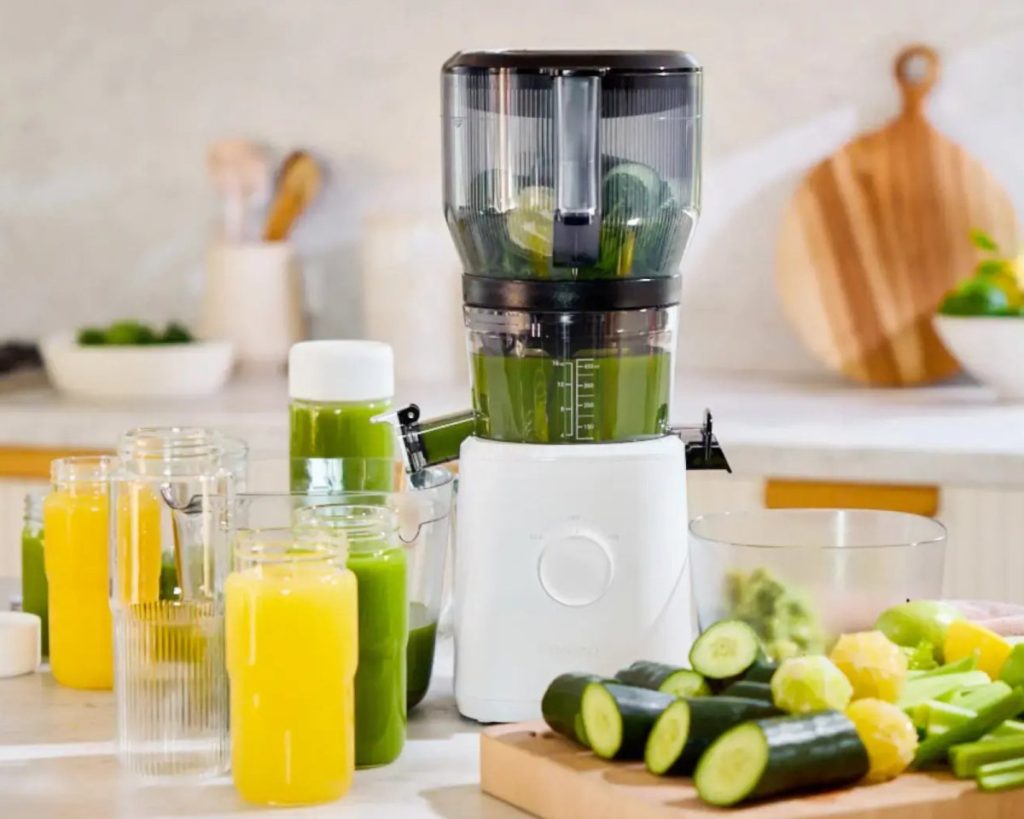
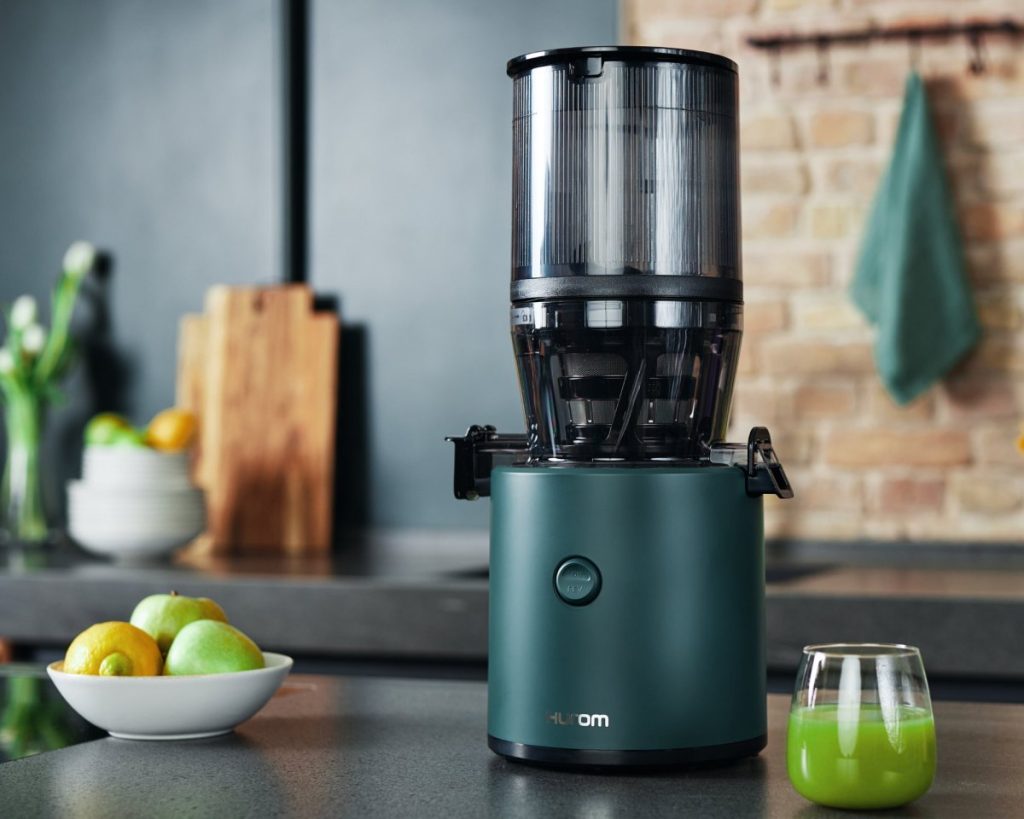
The equipment question matters more than most people realize. A cold-press juicer is essential for a juice fast — not a centrifugal model. You’re making 4 to 7 liters of juice per day for days or weeks at a time. Centrifugal juicers oxidize the juice quickly through heat from high-speed spinning, produce significantly less yield from leafy greens and celery, and generate foam that accelerates spoilage. Cold-press juice is denser, calmer, and stays fresh for up to 72 hours when sealed and refrigerated — which matters enormously when you’re batch juicing for the day ahead, although daily pressed is better and recommended.
If you’re deciding between the two most popular hands-free cold-press juicers, this comparison covers the day-to-day differences: Nama J2 vs Hurom H320N: The Real Differences Between These Hands-Free Slow Juicers.
Use discount code RAWFOODFEAST to save on all Hurom & Nama juicers, the M1 plant-based nut milk maker, and accessories.
What to Drink on a Juice Fast
The most important variable in what you drink isn’t necessarily the ratio of vegetables or leafy greens to fruit — it’s whether you’re actually getting enough calories across the day. Four liters of juice at inadequate calories is calorie restriction with a different label. What you drink matters far less than whether the volume and caloric density add up to genuine nourishment.
I spent close to 93 consecutive days drinking primarily fresh orange juice — with 500ml of celery juice every morning — because that’s what my body was asking for. And I felt amazing. For someone new to juice fasting, the guidance is simpler: keep volume high, keep caloric density real, and don’t confuse a low-calorie protocol with a well-run fast.
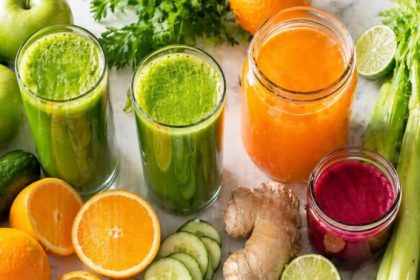
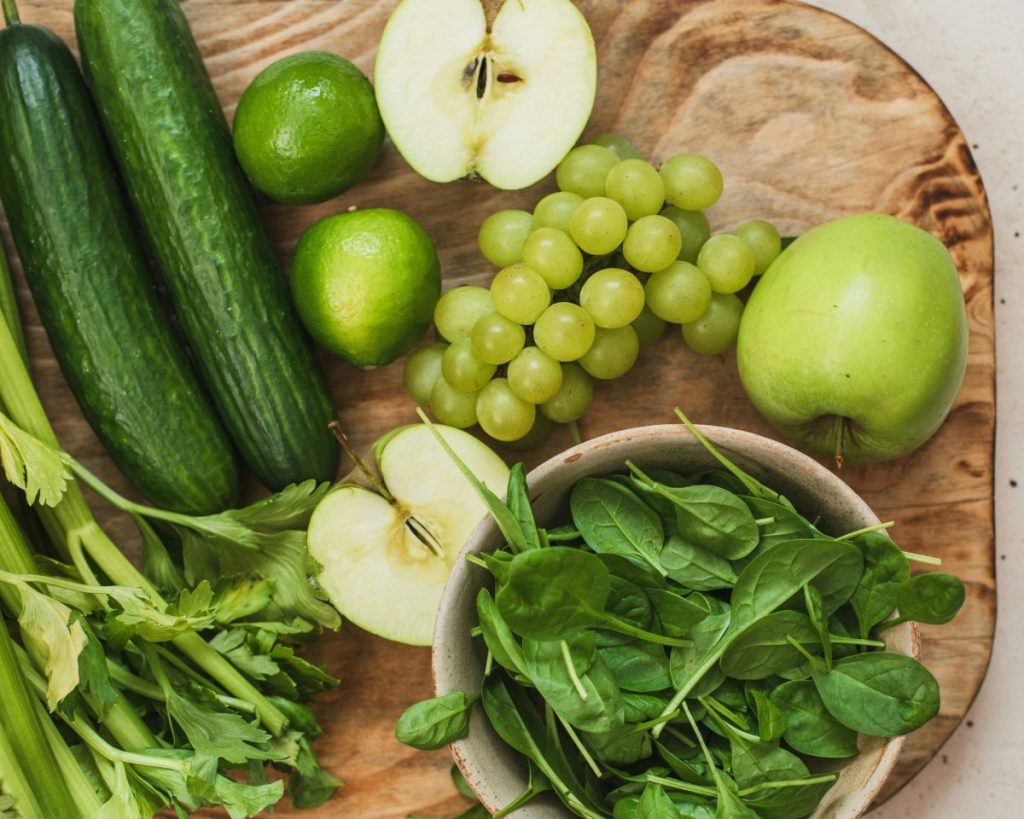
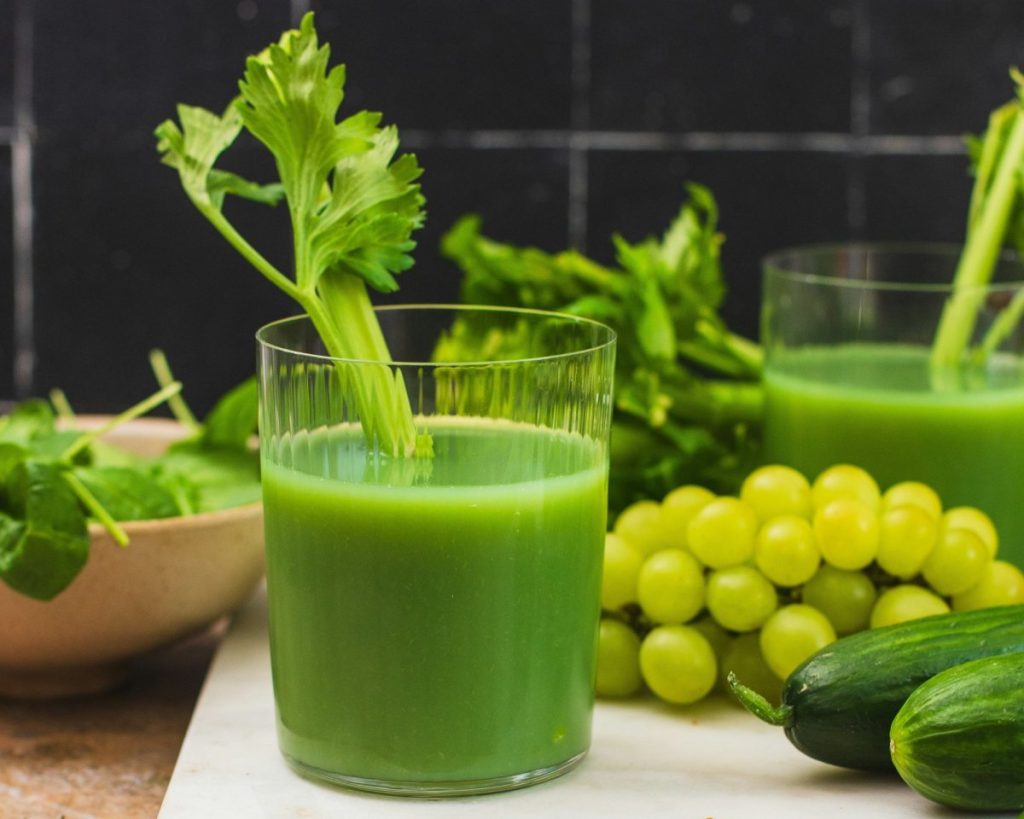
That said, green juices are a great backbone of a juice cleanse. Cucumber and celery together make an ideal base — high water content, mineral-dense, and easy on the gut. Cucumber provides silica, potassium, and magnesium — the mineral combination the gut lining and skin rely on. Celery brings natural sodium, compounds that support stomach acid production, and the unique polysaccharides that soothe the gut wall directly. However, cucumber and celery are low in calories. As a base they’re excellent — but to reach the caloric volume a properly run fast requires, you need to build on top of them. Apple, pear, carrot, orange, or beet adds both the sweetness that makes a green juice something you actually look forward to and the caloric density that makes it nourishing rather than depleting. Without that addition, you’re drinking a mineral-rich but low-calorie juice. With it, you’re building something your body can genuinely run on.
Obviously, there is nothing wrong with drinking a cucumber-celery juice as part of your juice fast. As a matter of fact, it can be one of the most useful hydration juices you include during the day — especially when your body needs minerals and fluid. Cucumber and celery together act less like a meal and more like a hydration tool, helping water and electrolytes actually reach tissues rather than simply passing through the system. If you want to understand when this juice works best and why timing changes its effect inside the body, check Best Time to Drink Cucumber–Celery Juice for Hydration, Adrenals, and Clear Skin.
Ginger is worth adding daily. It stimulates digestive enzyme production and supports gastric motility — the muscular rhythm that moves material through the gut — keeping that system active even in the absence of solid food. A thumb-sized piece added fresh to a larger juice, rather than as a concentrated shot, is enough.
Lemon and lime are essential when leafy greens are in the rotation — not just for flavor, but for a specific reason. Leafy greens are rich in non-heme iron — the plant form of iron — but the body needs vitamin C present at the same time to absorb it properly. Fresh lemon or lime juice provides exactly that. Without it, a significant portion of the iron in your green juice moves through without being absorbed. A squeeze of either in every green juice isn’t optional — it’s the difference between getting the iron and not getting it. Lemon also activates bile flow from the liver and supports kidney filtration, which makes it doubly useful during a fast.
Beet earns a daily place during a juice fast. Betaine — the compound responsible for beet’s deep colour — directly supports the liver’s methylation process, one of its primary detoxification pathways. One to two cups of beet juice per day, blended into a larger green juice to dilute its intensity, is a consistent inclusion worth building into your rotation. Beet juice alone, in large quantities, is strong. Beet juice as part of a 1-liter blend is well-tolerated and genuinely useful.
For more on which juices produce the best results for gut health and daily digestion, this guide covers that: Best Juices for Gut Health: What to Drink Daily for Better Digestion, Immunity, and Skin.
Is a Juice Fast the Same as a Juice Cleanse?
People use them interchangeably, and in most practical contexts they refer to the same thing: a period of consuming only fresh juice, no solid food. The distinction — when one exists — is usually duration and intent. A juice cleanse tends to mean 1 to 5 days, often with a specific commercial product or protocol. A juice fast can refer to the same short window or to something longer and more deliberately structured.
As mentioned before, the term I prefer is juice feast — because the word signals the intent most clearly. You’re not just fasting, you’re feasting on the most nutrient-dense, bioavailable nourishment you can give your body, in a form that bypasses digestion entirely. The abundance framing matters practically: it keeps you drinking enough. People who frame a juice fast as deprivation tend to underfill. People who frame it as feasting tend to maintain the volume that makes it work.
Whether you call it a juice fast, juice cleanse, or juice feast, the outcomes are determined by the same variables: volume, preparation, duration, and the quality of the juices you’re making. The name is the least important part.
Common Questions About Juice Fasting
Will I be hungry? The first two days, probably yes. After that, if you’re maintaining a minimum of 4 liters of calorie-dense juice daily, that hunger feeling typically settles into something lighter and more manageable. What most people experience from day 3 onward isn’t a hunger feeling — it’s a background sensation that’s easy to satisfy with another glass of juice. If you’re genuinely hungry during a juice fast, the answer is always to drink more, not to endure less.
Will I lose weight? Most likely, depending on your starting point and how long you go. Some of it is the clearing of digestive content and water weight from glycogen depletion. Some of it — on fasts of 7 days or more — is genuine fat loss, as the body shifts toward fat metabolism in the absence of solid food. The weight most likely to stay off is not the water. It’s the shift in eating patterns and relationship with food that a well-run fast tends to produce.
What about the research saying juice fasts don’t work? Most studies critics cite — including the frequently referenced Northwestern Medicine study — tested protocols running at 800 to 900 calories per day, with no guidance, no preparation, and very small participant groups (only 14 people in the Northwestern study). That’s calorie restriction with a juice label. The results of that protocol aren’t the results of a properly-run juice fast. A real juice feast, with adequate volume and proper preparation, bears no resemblance to what those studies tested.
When should you not do a juice fast? Pregnancy, breastfeeding, active eating disorder recovery, diabetes requiring medication management, and any condition requiring consistent caloric intake all require proper guidance before attempting an extended juice protocol. This isn’t about juice fasting being inherently unsafe — it’s about extended protocols requiring that your specific health context is properly accounted for.
How do you break a juice fast? Carefully, and in proportion to how long you fasted. The gut has been in a quiet, low-activity state. Returning immediately to dense, complex meals forces a jarring reactivation that can undo much of what the fast accomplished. You always want to break a fast of any length with water-rich fruit and chew carefully. How the following days look like depends on the length of the fast but usually you’ll build back to full eating over 3 to 5 days. The re-entry is not a formality — it’s where the gains either consolidate or evaporate.
Why Juice Fast Benefits Are So Often Misunderstood
The juice fast benefits people talk about — steady energy, gut rest, clearer skin, mental clarity, and reduced bloating — don’t come from a miracle. They come from very specific physiological shifts: digestion stepping back, nutrients absorbing quickly, hydration and minerals increasing, and the body redirecting energy toward repair instead of constant processing.
When the fast is done properly — with enough juice, enough calories, and proper preparation — the body responds exactly the way it was designed to. That’s why so many people describe the same turning point around day three. Hunger settles. Energy stabilizes. The mind clears. The body feels lighter and calmer in a way that’s hard to explain until you experience it yourself.
The real lesson behind juice fast benefits isn’t just about fasting. It’s about what happens when the body finally receives abundant nutrients without the constant workload of heavy digestion. For many people, that short window is enough to reset digestion, restore energy patterns, and change how they think about food entirely.
Three days is often enough to feel the shift.
Seven days usually shows you how deep those juice fast benefits can go.
And once you’ve experienced that difference firsthand, it becomes much easier to understand why a properly run juice fast continues to be one of the most powerful tools for resetting the body’s natural balance.
Three days is enough to feel what this is. Seven days is enough to understand it. The rest is your body, doing what it does when you finally give it the conditions it’s been asking for.