Mirjam Henzen
 Five days. That’s all it takes to turn a small handful of dry seeds into a glass jar full of fresh, living food. No soil, no sun-mandatory location, no garden patch — just water, light, and patience. Sprouting is the simplest form of growing your own food, and the hardest part is usually deciding which seeds to start with.
The seven best seeds to sprout at home all earn their spot for the same underlying reason: they convert from dry storage into living, enzyme-active, nutrient-dense food in a few days — and each one brings a specific gut-health benefit your microbiome actually uses. Some bring sulforaphane. Some bring prebiotic fiber. Some bring soothing mucilage. Together they cover most of the gut-health territory raw plants can offer.
Whether you’re picking your first seed or expanding an existing rotation, this guide walks through which seven to consider, what each one does for your gut, and how to get started.
What Makes a Seed Good for Home Sprouting?
Not every seed sprouts well at home. The ones that do share a few characteristics worth knowing before you choose: they germinate reliably within three to seven days, they don’t need unusual temperatures or specialized equipment, they taste good before they grow into full microgreens, and they’re sold specifically for sprouting — not for planting in soil, which often means they’ve been treated with chemicals you don’t want to eat.
The seeds that sprout best at home also have low risk of mold or bacterial contamination when properly rinsed twice a day. Some sprouts (alfalfa, broccoli) need a final exposure to indirect sunlight to develop chlorophyll; others (mung bean, lentil) are eaten while still pale.
If you’re new to the practice and wondering whether to start with sprouts or microgreens, the full breakdown of what distinguishes them is in Sprouts vs Microgreens: What’s the Difference and Which Should You Grow?.
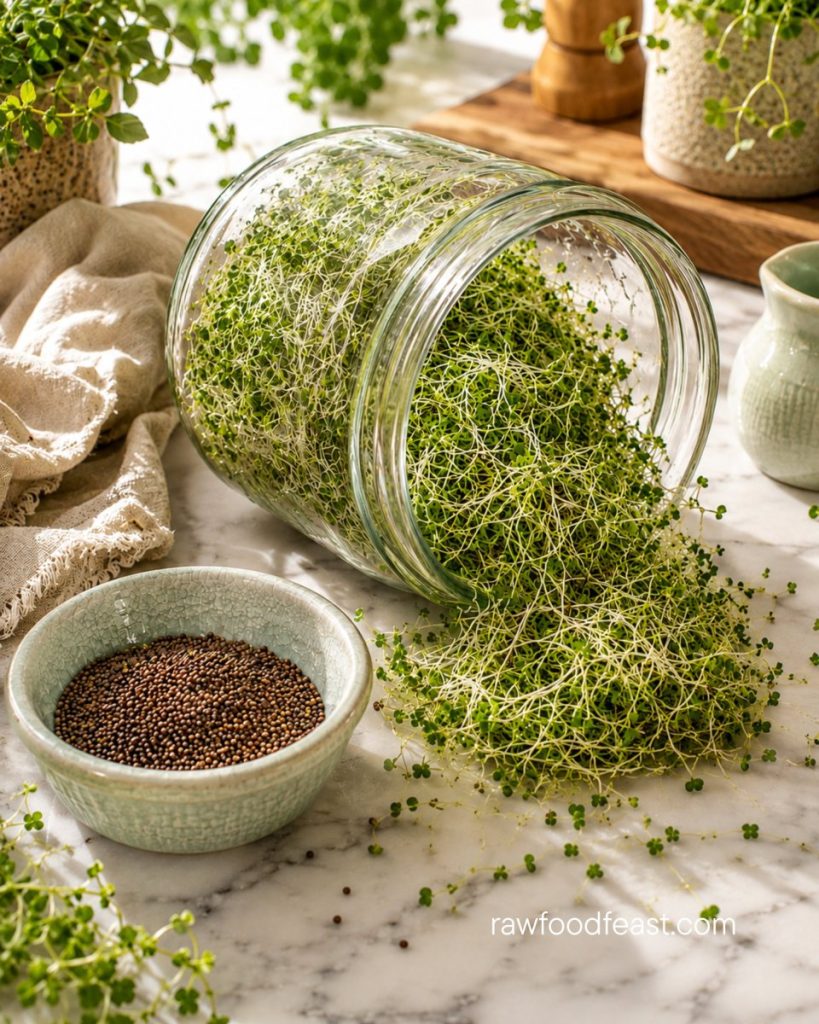
The 7 Best Seeds to Sprout at Home
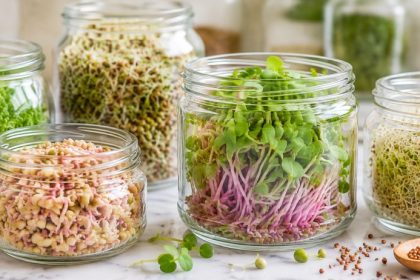
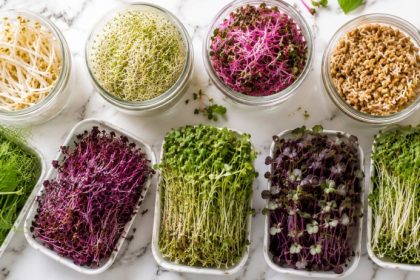
Here are the seven seeds worth keeping in your home sprouting rotation — and what each one does for your gut.
1. Mung Bean
The most familiar sprout — the crunchy white shoots in stir fries and spring rolls. Mung bean sprouts are high in soluble fiber that feeds the beneficial gut bacteria your microbiome depends on, specifically Bifidobacteria and Lactobacilli. They also bring easily digestible plant protein and folate. Mung beans are the easiest sprout to grow at home for beginners — large seeds, fast germination, forgiving rinse schedule.
2. Alfalfa
The classic. Mild, tender, slightly nutty. Alfalfa sprouts deliver chlorophyll, vitamin K (which supports the cells lining your gut wall), and active enzymes that help digestion. Their thread-like shape adds gentle bulk to salads and wraps without dominating flavor.
3. Broccoli
The sulforaphane powerhouse. When you chew a raw broccoli sprout, an enzyme in the seed converts a precursor compound (glucoraphanin) into sulforaphane — one of the most-studied anti-inflammatory compounds available from food. Sulforaphane supports the cells lining your gut, calms low-grade gut inflammation, and helps activate your body’s own detoxification pathways. Three-day-old broccoli sprouts can contain 20 to 100 times more sulforaphane than mature broccoli.
The full deep-dive on what sulforaphane actually does in your body is in Broccoli Sprouts Benefits: What Sulforaphane Does in Your Body (And Why Raw Matters).
4. Radish
Spicy, peppery, fast. Radish sprouts deliver isothiocyanates — sulfur compounds similar to those in broccoli sprouts, calming inflammation through the same gut-protective pathway. They also bring fiber and polyphenols that feed the microbiome. Daikon radish sprouts are milder; standard radish sprouts pack more heat.
5. Lentil
Green or beluga lentils sprout into tender shoots packed with soluble fiber and resistant starch — both of which feed beneficial gut bacteria as their preferred fuel. Sprouted lentils are easier to digest than dry lentils because the sprouting process reduces phytic acid, releasing minerals (especially zinc and iron) that were locked up before.
6. Sunflower
Larger seeds, larger sprouts — these are the chunky, leafy sprouts you can put on a salad as a meal centerpiece, not just a garnish. Sunflower sprouts deliver fiber, vitamin E (which supports the gut lining), magnesium (which helps gut motility), and healthy plant fats.
7. Fenugreek
The medicinal one. Fenugreek seeds are exceptionally high in galactomannans and mucilage — special kinds of fiber that act as prebiotics and form a gel-like layer that soothes inflamed gut lining. They have a distinctive savory-bitter flavor that’s an acquired taste but a powerhouse for digestive support.
Together, these seven cover most of the gut-health territory raw plants can offer: prebiotic fiber, sulforaphane and isothiocyanates, resistant starch, soothing mucilage, chlorophyll, active enzymes, and trace minerals.
The bigger picture on what sprouting actually does to seeds nutritionally — phytic acid reduction, enzyme activation, vitamin synthesis — is in Benefits of Sprouting: Why Sprouts Are One of the Most Nutrient-Dense Foods You Can Eat.
Each of these seven seeds has its own soak time, rinse schedule, and harvest day. The free sprouting calculator at howlongtosprout.com gives you the exact numbers for every seed in this list — look up the one you’re starting with and follow the timing.
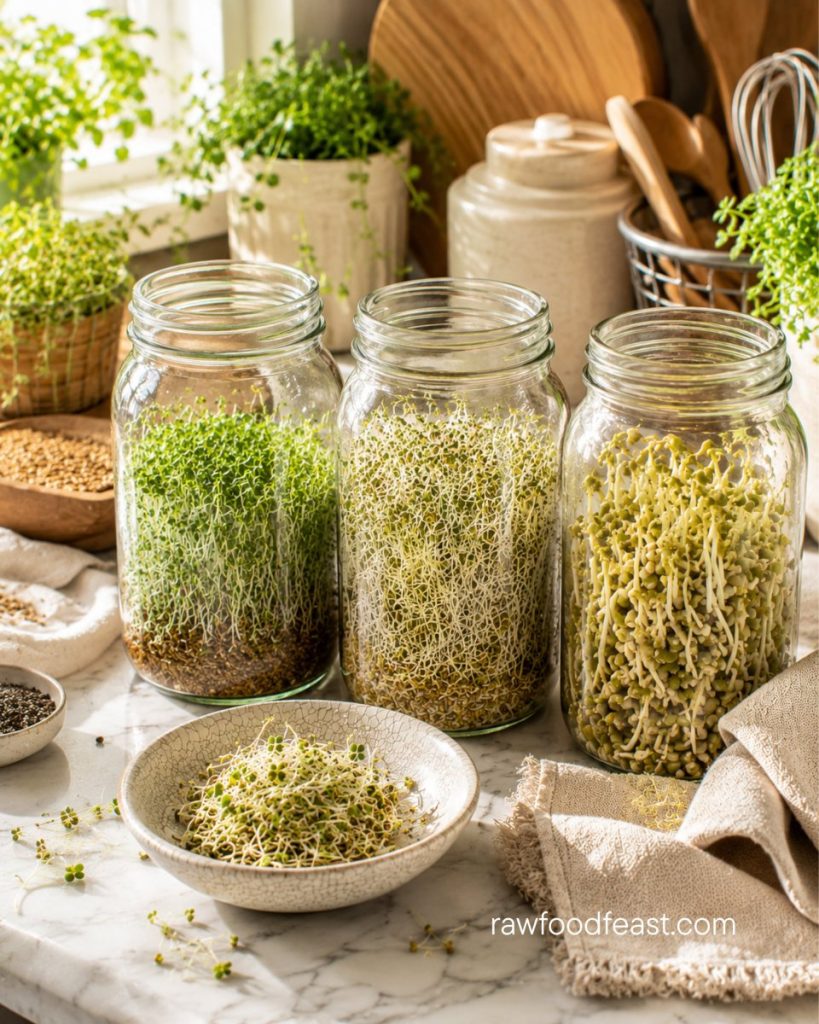
How Do You Sprout Seeds at Home?
The basic method is the same across all seven seeds, with timing variations seed by seed.
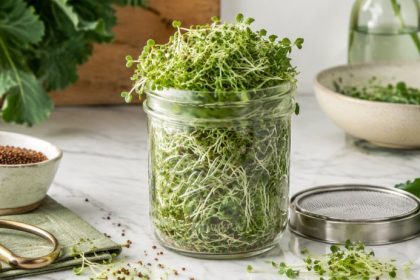
You need a wide-mouth glass jar (1 quart works for most household amounts), a sprouting lid with a mesh screen that fits the jar mouth, and clean filtered water. You also need a way to keep the jar tilted upside-down at an angle so excess water drains freely and air can circulate — a sprouting jar rack or a simple bowl propped at the right angle both work. Good airflow is what keeps your sprouts safe from mold.
Before you start, the seeds you buy matter. Sprouting amplifies whatever’s on the seed surface, so you want seeds grown specifically for human sprouting — organic, batch-tested for pathogens, no chemical treatments. The Sprouting Company specializes in exactly this. Use code RAWFOODFEAST at The Sprouting Company to save.
The process: soak the seeds in clean water for 8 to 12 hours, then drain and rinse. From there, rinse and drain twice a day — morning and evening — for the next 2 to 6 days, depending on the seed. Once the sprouts have small tails or first leaves, give them a final rinse and store them in the fridge.
That’s it. The whole practice runs on rinse-and-drain rhythm.
If you’re worried about mold (the top concern for first-time sprouters), the full safety guide and how to tell mold apart from harmless root hairs is in How to Prevent Mold on Sprouts (And Tell the Difference from Root Hairs).
What to Do With Your Sprouts Every Day
Sprouts hide in plain sight. They’re the most-frequently-eaten plants in most raw food kitchens — daily, in everything, across multiple seed types — and yet they’re the ones most people forget to count. They live as ‘topping’ in the brain, not as ‘plant.’
But your gut counts every single one. Each sprouted seed type lands as its own contribution to the 30+ different plants a week your microbiome thrives on — and Fiber First is what makes sure you can see what your gut is already receiving. The fiber tracker for gut health counts every plant you eat in a week, plus your daily fiber and hydration. A week of mixed home-grown sprouts — alfalfa one day, mung bean another, broccoli sprouts on a salad, sunflower sprouts on a wrap — lands as five or six different plants toward your weekly variety, from a single jar rotation on your counter. Plant variety is the strongest signal for a thriving gut microbiome — and every sprout in your jar rotation counts. The daily gut-health work becomes work you can actually see.
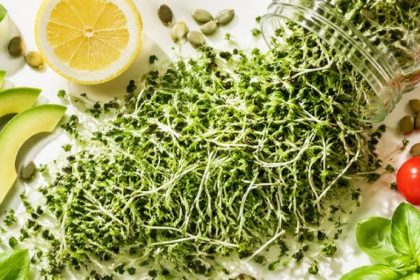
Practical ways to use sprouts every day: stir them into salads as a centerpiece rather than a garnish, layer them on top of any grain or rainbow bowl, use them in wraps and nori rolls (alfalfa, mung bean, and broccoli sprouts are especially good for this), add a handful to fresh juices, blend them into raw soups, or top creamy avocado dips with them for crunch and color.
The texture range across the seven sprouts means they don’t get monotonous — broccoli sprouts are tender and mild, sunflower sprouts are chunky and substantial, radish sprouts add a peppery edge, fenugreek brings the savory-medicinal layer that nothing else does.
Heat destroys the enzymes and many of the vitamins, so sprouts are at their best raw — straight from the jar, added fresh to whatever you’re already eating.
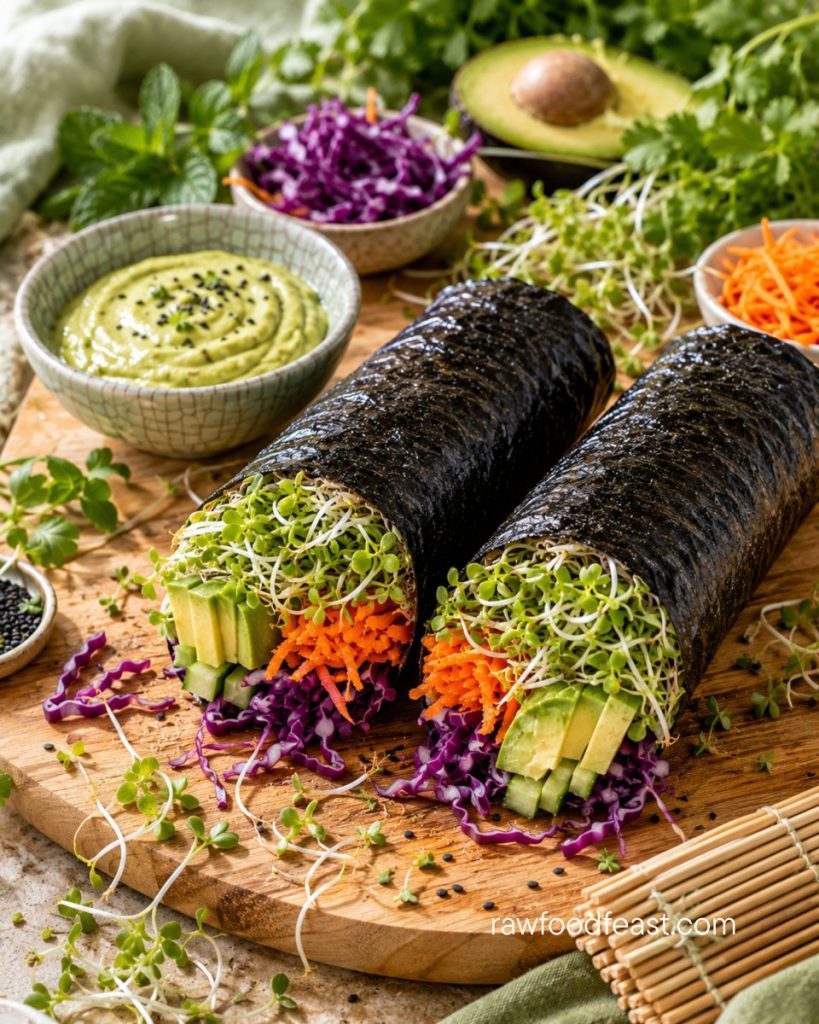
What Daily Home-Grown Sprouts Actually Add to Your Plate
A week of home-grown sprouts changes the texture of your daily eating without asking for much effort. Five minutes in the morning to rinse the jars. A handful added to whatever bowl or wrap you’re already making. Fresh, living food on your plate that you grew yourself, from dry seed to glass jar in less than a week.
Intentional daily choices, steady fiber, steady enzymes, steady gut-feeding compounds. Your microbiome shifts. Your digestion eases. Your meals get more interesting. The benefits arrive not from any one big moment — but because you finally gave your gut the daily supply of living plants it had been wanting more of.