Mirjam Henzen
 Fresh pineapple juice has a brightness to it that’s hard to describe until you taste it — a clean sweetness with an edge that wakes your mouth up immediately. It’s one of the most satisfying things to press. And the pineapple juice benefits don’t stop at how it tastes.
The one that matters most isn’t vitamin C, though pineapple has plenty of it. It’s bromelain — a proteolytic enzyme found in the fruit that helps your body break down protein, calm gut inflammation, and ease the kind of bloating that arrives hours after a heavy meal.
You won’t find it in store-bought juice. Bromelain is a live enzyme — destroyed by the heat used to pasteurize commercial juice. A cold-pressed glass from a ripe pineapple delivers what no bottle off the shelf can.
What Does Pineapple Juice Actually Do for Your Body?
The standout benefit is enzymatic — and it’s specific. Bromelain is a group of proteolytic enzymes found in the pineapple fruit and stem. These enzymes break down proteins — specifically, they cut the peptide bonds that hold protein chains together — making protein smaller, easier to absorb, and less likely to ferment in the lower gut.
Beyond bromelain, fresh pineapple juice delivers a meaningful amount of vitamin C: around 47mg per 100ml of cold-pressed juice from a ripe fruit. That’s significant daily support for your immune system, your skin, and — importantly — iron absorption from the iron-rich foods you eat in the same meal. Manganese is present in quantities that make pineapple one of the most reliable food sources for it: manganese supports bone health and plays a direct role in enzyme production throughout the body.
Bromelain supplements are sold widely — expensive capsules and tablets marketed for joint health and digestion for decades. Fresh raw pineapple juice delivers the same enzyme directly from the fruit, in the form it was always meant to be in, alongside everything else the pineapple contains. The glass does what the capsule is trying to do — and then some, because food brings everything working together in ways an isolated supplement simply can’t replicate. That bigger picture is laid out clearly in Do I Need Supplements? The Truth About B12, Isolates, and Why Food Wins.
What Is Bromelain and Why Does Raw Juice Deliver It?
Bromelain is not a single compound — it’s a mixture of protein-digesting enzymes (proteolytic means exactly that: they break protein down), most of them concentrated in one specific part of the fruit: the core. The fibrous, often discarded center of the pineapple is where enzyme activity is highest. When you juice pineapple, the core goes in. That’s where most of the benefit is.
These enzymes are heat-sensitive. Pasteurization — the heat process used in all commercial pineapple juice — destroys bromelain almost entirely. What remains in a bottle is sugar, some minerals, and a pale shadow of what the raw fruit contained. The enzyme is gone. This is why store-bought pineapple juice tastes something like pineapple but doesn’t do what raw juice does.
Cold-press preserves it. A masticating juicer presses slowly, generating minimal friction and no heat — the bromelain arrives in your glass alive and intact. High-speed blending generates enough friction to degrade it. Cold-press is the right approach for enzyme-rich produce, and pineapple responds beautifully to it.
Papaya contains a sister enzyme — papain — that does the same thing in the same way. Both break down protein in the digestive tract; both are live in raw food and destroyed by heat. What papain specifically does for digestion, and how to use papaya daily, is covered in Papaya Benefits for Digestion: The Raw Enzyme Your Gut Needs.
Raw foods deliver enzymes your digestive system uses as tools — reducing its own workload and improving what actually gets absorbed. That broader picture is in Digestive Enzymes Explained: How Raw Foods and Juice Help You Absorb More.
Does Pineapple Juice Help with Bloating?
It does — and here’s exactly how. Most digestive bloating after a protein-heavy meal comes from undigested protein reaching the lower gut, where bacteria ferment it and produce gas. Bromelain breaks down that protein earlier in the process — in the stomach and small intestine — so less of it arrives in the colon undigested.
The most effective use is timed: a glass of fresh pineapple juice right after — or during — a meal with significant protein. The bromelain arrives with the food and works while the stomach is still processing it. Drinking it on an empty stomach means the enzyme passes through quickly with little protein to work on; it still has value there, but the bloating benefit is strongest when taken with food.
Bromelain also has a direct anti-inflammatory effect on the gut lining — calming the low-grade inflammation that makes digestion uncomfortable and absorption inefficient. This is different from reducing bloating acutely; it’s a longer-term effect that builds with regular use.
For the broader raw food approach to stopping bloating — including the juicing and salad timing strategy that makes a real difference — How to Boost Your Metabolism and Stop Bloating on Raw Food covers the full picture.
Sinus Relief, Joint Health, and Recovery: The Anti-Inflammatory Picture
Bromelain has one of the strongest research records of any food enzyme for reducing inflammation — not just in the gut, but throughout the body. The mechanism is the same: it breaks down proteins involved in the inflammatory response, reducing swelling, pain, and congestion wherever that response is active.
Sinus congestion is one of the most consistent applications. Bromelain reduces the swelling of nasal tissues and helps thin mucus — making fresh pineapple juice genuinely useful during sinus infections, seasonal congestion, or recovery after illness. You feel it fairly quickly.
Joint health is a benefit that builds over time. Regular bromelain from raw pineapple juice helps reduce the chronic low-grade inflammation that contributes to joint stiffness and discomfort. As part of a daily diet rich in raw foods, this builds quietly over time.
Post-exercise recovery is the third area where it shows up: bromelain reduces muscle soreness and the inflammation that follows a hard workout. Athletes have been taking bromelain supplements for this for years. Fresh pineapple juice delivers more than the supplement ever could — the whole fruit, with everything working together, not an isolated compound in a capsule.
Turmeric juice works differently — fresh curcumin tells your body to quiet the whole inflammatory response right at the source, before it has a chance to build — making the two a natural combination in a daily juicing rotation. What fresh turmeric does specifically is in Turmeric Juice Benefits: What Fresh Turmeric Does That Powder Simply Can’t. The juices that calm gut inflammation specifically are covered in Best Juice for Gut Inflammation: What Helps Calm the Gut Naturally.
How to Choose a Pineapple That’s Actually Ripe
This matters more with pineapple than with almost any other fruit. Pineapple is a non-climacteric fruit — it does not ripen after it is picked. Unlike bananas, avocados, or mangoes, which continue developing sugars and flavor off the tree, a pineapple’s ripeness is locked in at the moment of harvest. What you buy is what you get.
An unripe pineapple — picked green for easier transport — stays unripe. The flesh is dense and pale, the flavor is sharp and sour, and citric acid dominates, making it acidic-forming in the body. Bromelain activity is lower. The juice from an unripe pineapple can irritate the mouth and gut lining. It is genuinely a different product.
A ripe pineapple is sweeter, its sugars fully developed, and it is alkaline-forming despite tasting acidic — once your body digests it, the minerals do the work and the net effect on your system is alkaline, not acid. Vitamin C content is higher. Bromelain activity is higher. The juice is vivid, fragrant, and rich.
How to choose one at the store: smell the base — a ripe pineapple smells sweet and tropical at the bottom where the stem was, and if there is no smell it is not ready. Look at the color — the skin should be golden yellow toward the base, not entirely green. Press gently — it should give slightly under pressure, not feel like a rock or like it’s giving way. Pull a leaf from the crown — it should come out with a gentle, clean tug. Feel the weight — a ripe, juicy pineapple is heavy for its size.
How to Make Pineapple Juice at Home
The prep is straightforward. Slice off the top and bottom of the pineapple so it stands flat. Stand it upright and cut the skin off in strips from top to bottom, following the curve of the fruit. Cut the flesh into chunks — and keep the core. That fibrous center is where bromelain is most concentrated; it goes through the juicer.
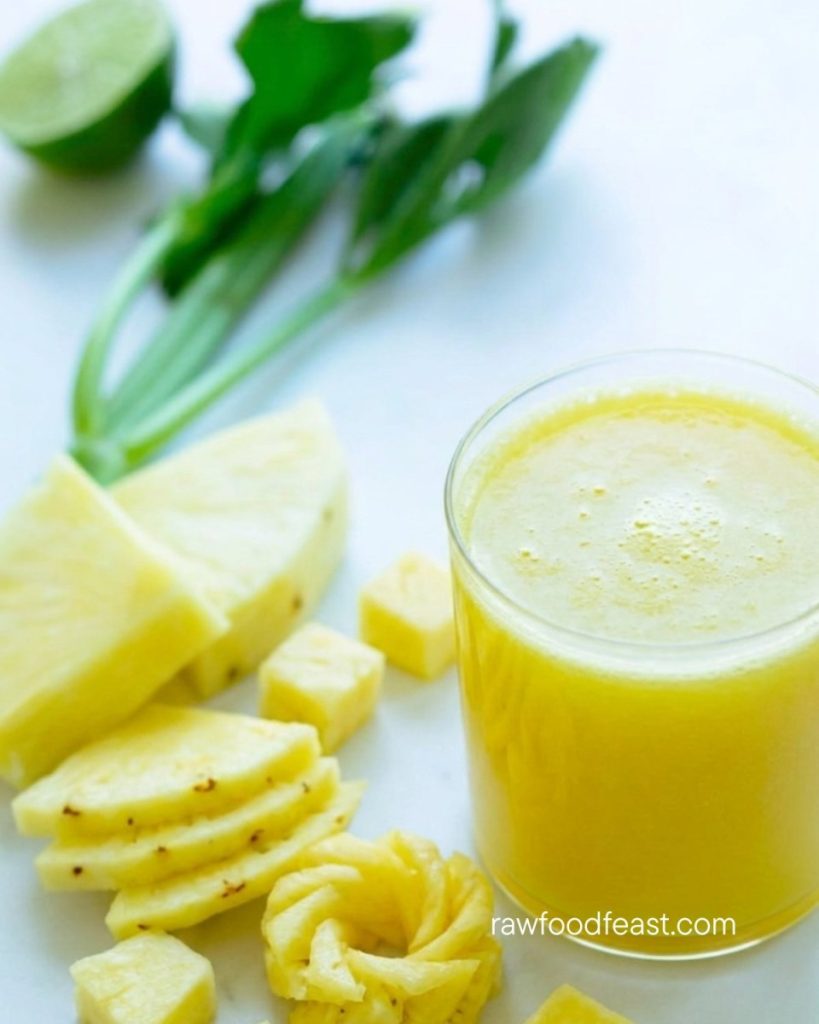
Feed the pineapple chunks through — with a hands-free cold-press juicer, you simply fill the hopper and press start. The juice that comes out is vivid golden-yellow, fragrant, and nothing like what comes in a bottle.
Both the Nama J2 and the Hurom H320N cold press juicers handle pineapple beautifully — slow press, clean juice, minimal foam. Both are also excellent with wheatgrass, which matters if you’re making the combination covered below. Use discount code RAWFOODFEAST to save on the Nama J2 and the Hurom H320N.
If you’re still deciding between the two, the full side-by-side is here: Nama J2 vs Hurom H320N: The Real Differences Between These Hands-Free Slow Juicers.
Either juicer makes pineapple juice a two-minute job — and once you’ve tasted fresh-pressed, you won’t go back to a bottle.
The Wheatgrass and Pineapple Juice Combination
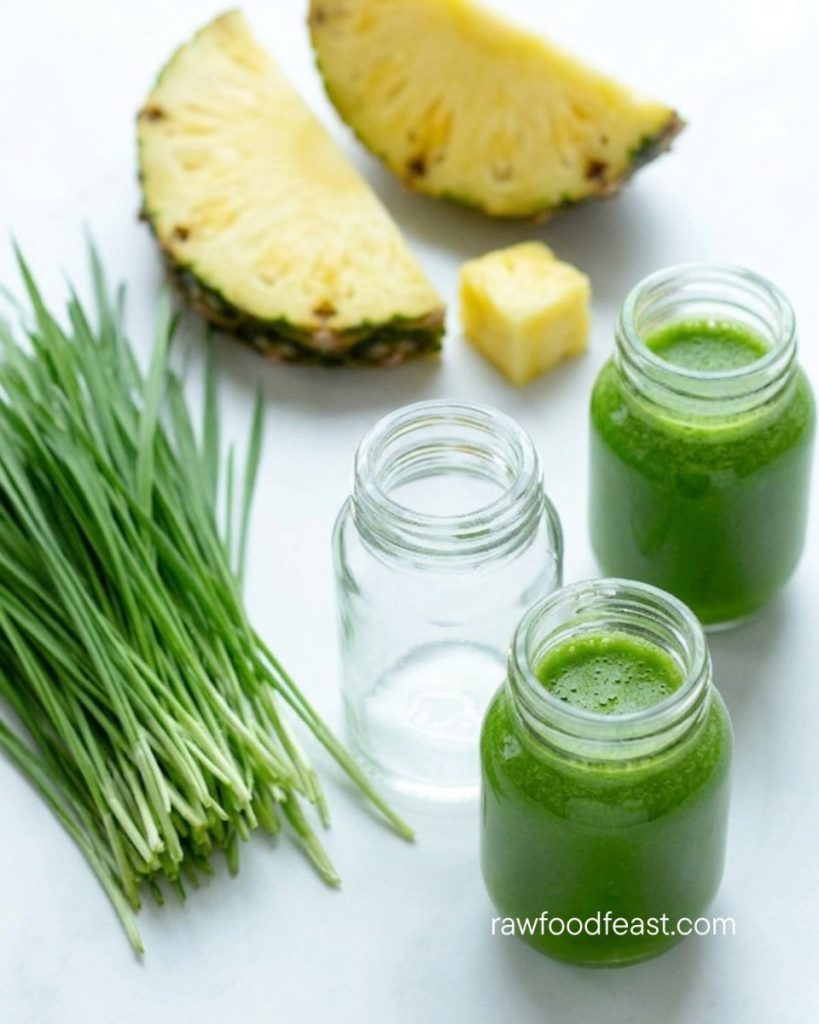
This is one of the most vivid, alive-tasting juices you can make — and one of the simplest. It’s one of my all-time favorites. Wheatgrass brings chlorophyll and minerals; pineapple brings bromelain and vitamin C. The combination is an intensely green juice with a sweet, bright finish from the pineapple that makes the wheatgrass easy to drink even for anyone who finds it sharp on its own.
Growing wheatgrass at home is easier than most people expect. Soak hard wheat berries in water for 8-12 hours. Drain them, then spread in a thin, even layer on a shallow tray with a little coconut fibre. Keep moist and in indirect light. In 7-10 days the grass will be 15-20cm tall and ready to cut.
Cut at the base with scissors — and leave the roots in the tray. The grass regrows. You get a second full harvest from the same tray before it’s done. Two batches, one tray, minimal effort. After the second cut, start a fresh one.
To make the juice: run the wheatgrass through the juicer first, then follow with pineapple spears — core included. The result is somewhere between vivid green and golden-green depending on the ratio, and it tastes genuinely good every time.
Drink it on an empty stomach in the morning for the fastest absorption of chlorophyll and enzymes. Or drink it right after a cooked meal if digestion is what you’re working on. The timing can be adapted to what you need from it.
If you want a community of people juicing and eating this way every day — with practical guidance, recipes, and real support — Healthy & Free is the online community built around practical, delicious whole food (un)cooking and juicing. Come join us and enjoy food that gives you energy, happy digestion, and glow.
What Pineapple Juice Benefits to Expect When You Start Drinking It Regularly
The pineapple juice benefits that come from drinking it regularly are felt before they’re measured. Digestion that moves more cleanly — less heaviness after meals, more energy through the afternoon. Skin that starts to reflect what’s happening inside. The effect of live enzymes, vitamin C, and consistent hydration through fresh juice builds quietly — and then one day it’s just unmistakably there.
That’s what fresh pineapple juice does when it becomes part of your daily rhythm. Not a treatment, not a fix — just a glass of something alive, doing what real food does.
One ripe pineapple. Two minutes to press. Your gut will know the difference.