 Mirjam Henzen
 Most people notice a difference immediately when they start adding more raw plants to their day. They feel lighter. More alive. More like themselves. But often, beneath that initial boost, there are lingering signals that the body is still out of sync.
Signs of fiber deficiency usually show up exactly where you’d expect—in a stomach that feels heavy, a belly that stays bloated, and a bathroom routine that feels stuck. But the signals go much deeper than just digestion. It shows up as an afternoon energy crash that sends you reaching for a snack, or a feeling of hunger that never quite goes away.
These aren’t just signs that you’re busy or getting older. They are the physical evidence of the Fiber Gap. While the wellness world is currently obsessed with protein (I still need to meet the first person with a protein deficiency, but that’s another topic), the real crisis is happening in the lower gut. Most people today eat only 10 to 15 grams of fiber a day. While 30 grams is often cited as the goal, that is just the bare minimum in my opinion. To bridge the gap and reach a state where you truly thrive, you need 40 grams or more of living plant fiber every single day.
The “Fiber Gap” and Your Starving Microbiome
This “Fiber Gap” does more than just slow down your digestion; it actually changes the landscape of your microbiome. Inside your large intestine lives a “rainforest” of trillions of bacteria. These microbes don’t eat the simple sugars or processed proteins that get absorbed early on. They wait for the complex, raw fibers that your own enzymes can’t break down.
This is why the distinction between juice and whole food is so important. While juicing separates the bulky “roughage,” it keeps the soluble fiber—the exact type of fuel your good bacteria crave. At the same time, whole raw foods also provide the insoluble fiber, acting as the physical “broom” that keeps your system clean. By bringing both juicing and raw food meals into your lifestyle, you ensure your gut is both fed and swept in the best way possible. I’ve broken down the difference between these two roles—and why your body needs both to feel light and energized—in Does Juicing Remove Fiber? Soluble vs Insoluble, Explained Simply.
When you don’t eat enough diverse raw fiber, this internal rainforest begins to wither. Certain good bacteria can actually go extinct in your gut. When those populations drop, the protective lining of your gut thins, and the “messages” between your gut and your immune system—where 70% of your defenses live—get all mixed up. This is the root of that “sluggish” feeling. Without fiber to sweep things out, waste sits in your system longer than it should, leading to systemic heaviness. This is also why Juicing for Clear Skin is only half the battle; the fiber must be there to clear the path so your skin doesn’t have to pick up the slack.
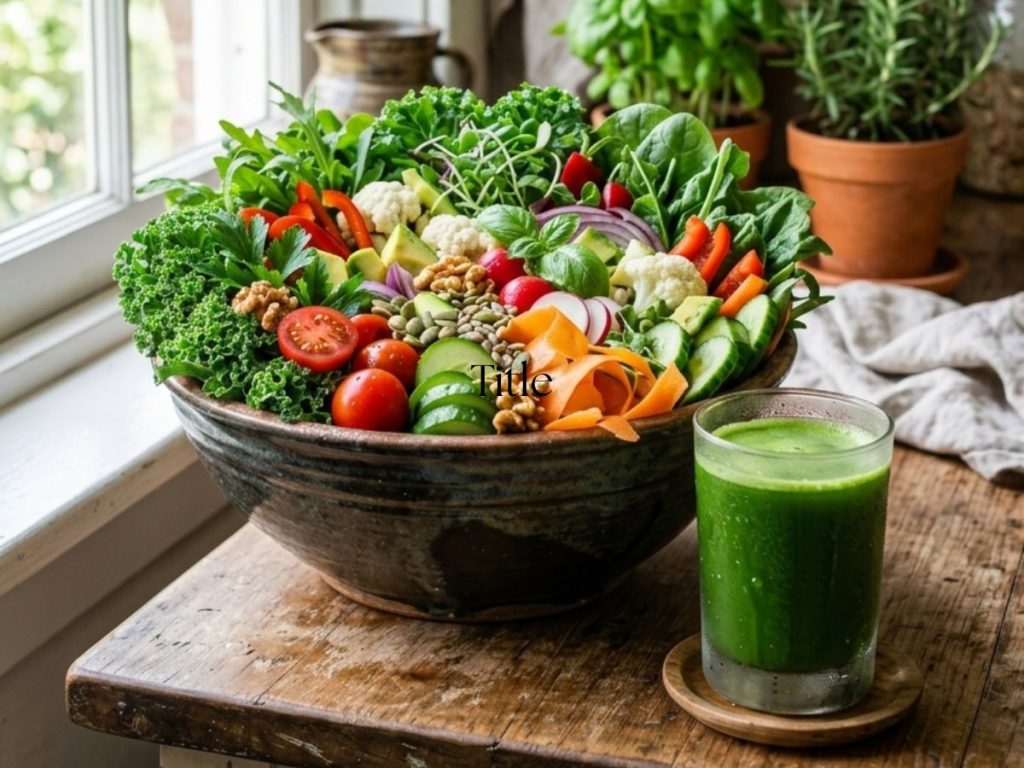
Nature’s Ozempic: How Fiber Triggers Your Fullness Hormone
One of the most powerful things fiber does is trigger a hormone called GLP-1 (Glucagon-like peptide-1). You have likely seen this hormone in the news lately because of weight-loss drugs that mimic it, but your body is built to produce its own GLP-1 naturally—provided you give your gut the right signal.
Inside the walls of your lower stomach and intestines are specialized cells called L-cells. When they detect fiber, they release GLP-1, which sends two vital signals: it tells your brain “we are full” and it tells your stomach to slow down so you stay satisfied for hours. However, for this to work, the fiber has to stay intact. This is the Raw Food Advantage. When you eat raw plants, the fiber arrives in its Plant Cell Matrix—a natural, sturdy structure that doesn’t break down too early. When this matrix is missing, those signs of fiber deficiency, like constant hunger, start to take over.
The Fruit Factor: Nature’s Hydrating Fiber
While vegetables provide the “broom,” raw fruits provide the “softening.” Many people avoid fruit because they fear the sugar (which is crazy, since the brain thrives on those beautiful, unrefined sugars (glucose) in fruit), but fruit is a powerhouse of health in every form. When you juice it, you get an instant infusion of structured water and brain-fueling glucose. When you eat it whole, the fiber acts as a protective barrier. This Plant Cell Matrix slows down the absorption of those sugars, ensuring your blood sugar stays stable while your gut bacteria get a feast.
Apples, pears, and berries are some of the highest-fiber foods on the planet. But it’s the type of fiber that matters here. Apples and pears are incredibly rich in pectin, a prebiotic fiber that turns into a soothing gel in your gut. This gel feeds the specific bacteria that strengthen your gut lining, helping to calm the very inflammation that causes those signs of fiber deficiency. By including a variety of colorful fruits in your plant rotation—whether they are squeezed into your morning juice or sliced into your lunch—you aren’t just adding sweetness; you’re adding a hydrating layer of protection to your entire digestive tract.
The Power of Big Juicy Salads, Hydrating Fruits, and High-Fiber Smoothies
To bridge the Fiber Gap and hit that 40g+ threshold, we need the best of both worlds. While juices are a perfect compliment to a raw food lifestyle—delivering minerals and enzymes instantly—whole fruits, leafy greens, and vegetables are the incredible sources of structural fiber your body needs to reverse common signs of fiber deficiency.
A big, juicy salad filled with different greens, fresh herbs, and crunchy veggies is one of the most effective ways to maximize your fiber intake. When you add a handful of berries or sliced pear to those greens and drizzle them with a creamy home-made dressing, you aren’t just eating a meal; you are providing your body with a massive volume of nutrition for very few calories. This is the secret to natural weight management. You feel physically full because of the volume and the combination of plant fibers, so the weight comes off naturally without you ever feeling deprived.
Smoothies are another incredible tool in your kit. Unlike juice, a smoothie keeps the entire plant intact. A well-made smoothie can easily deliver 5 to 7 grams of fiber in a single large glass, helping you reach your daily goal much faster.
Celery is a perfect example of this hidden power; whether you are drinking the juice to flood your system with minerals or blending it whole for its tough, stringy fibers, it acts as a natural sweeping mechanism that stimulates the gut lining and keeps your rhythm on track. If you’re wondering which one to choose for your morning ritual, I compare the two in detail here: Celery Juice vs. Celery Smoothie: What’s the Difference and Which Is Better for You?
Join a Community That Glows
If you love the idea of using vibrant, raw-inspired food to reclaim your energy, you don’t have to do it alone (and starting over every Monday—let’s face it, we’ve all been there). In my private online community Healthy & Free, we make the high-fiber lifestyle easy and doable for everyday life. You’ll find recipes that actually taste amazing and connect with like-minded people who are all on their own journey to that natural raw glow.
The 30-Plant Rule: Why Variety Is the Real Medicine
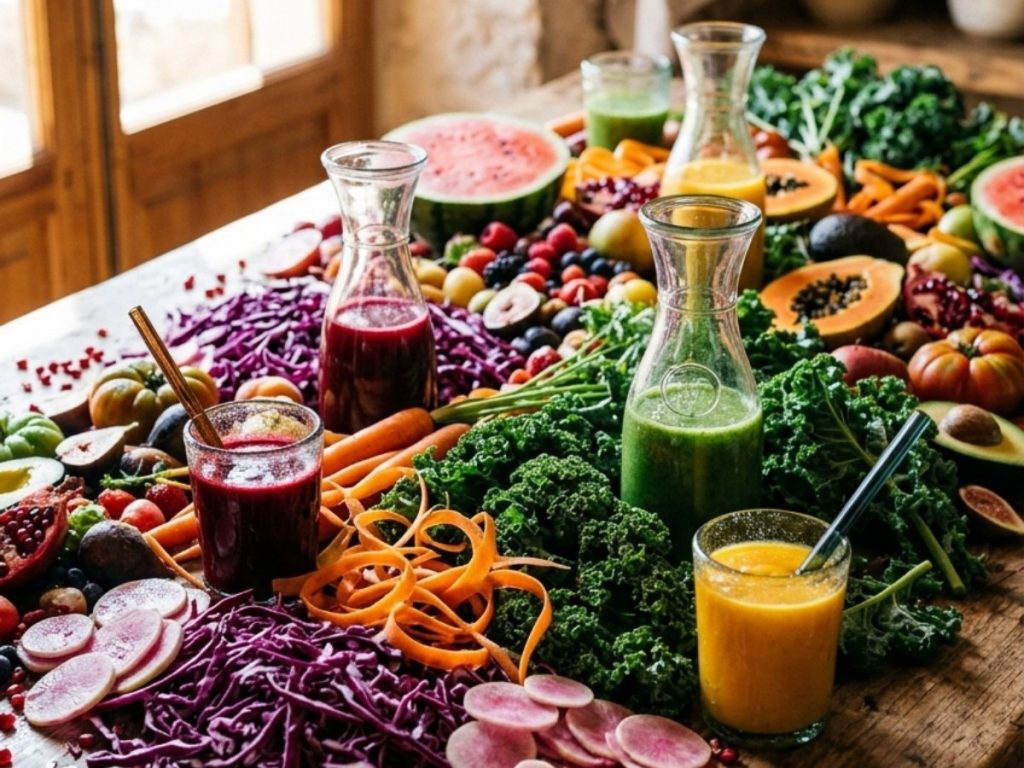
The latest research shows that the amount of fiber is only half the story. The variety is what makes your gut resilient. Every plant—from the skin of a cucumber to the deep ruby flesh of a blood orange—has a different “fiber signature” that feeds a different type of bacteria.
If you are seeing signs of fiber deficiency like chronic bloating, it might not just be a lack of fiber, but a lack of diversity. The goal is to hit 30 different types of raw plants a week. This sounds like a lot, but it’s remarkably easy when you combine juices, smoothies, fresh fruit, and big salads. By rotating your fruits, greens, herbs, and roots, you “re-wild” your gut. This variety is what finally stops the bloat, because no single type of bacteria gets to take over. If you feel completely backed up right now, you can reset this rhythm with the Best Juice for Constipation.
Restoring Your Natural Rhythm Through Living Fiber
Signs of fiber deficiency—the sluggishness, the constant hunger, the brain fog—are simply your body’s way of saying its communication lines are down. You aren’t just eating “roughage”; you are providing the structural signals your cells need to regulate your weight, your energy, and your mood.
By focusing on raw, intact fiber and aiming for that 30-plant variety, you allow your microbiome to flourish and your satiety hormones to function the way nature intended. Whether you are starting your morning with a fresh green juice, blending a high-fiber smoothie, or sitting down to a massive, herb-filled salad, every bit of intact plant fiber acts as a shield and a signal. This is how you turn a sluggish system back into a vibrant, high-energy one that works with you, rather than against you.



I want to try the raw eating however, I to be a silent member with no picture of me. If I can’t do that then, I’ll need to cancel. I am not very savvy with using the IPhone or electronic. Please let me know if this is a requirement. I’m doing this on a trial basis to see I will like it. Thank you❣️