Mirjam Henzen
 Search “raw food glow” and you’ll find two kinds of content. One tells you raw food will give you completely clear, luminous skin in practically no time. The other says any improvement is just better hydration and you could get the same result by drinking more water. Neither one tells you what’s actually happening.
The raw food glow is real. If you’ve been wondering whether raw food genuinely improves your skin — it does, and the reason is more mechanical than most people expect. Your skin replaces itself approximately every 28 days. What you eat between now and then is exactly what it’s built from.
Raw food gives your body what it needs to build better skin: vitamin C to produce collagen, live enzymes to speed cell renewal, water-rich foods that hydrate from the inside, and minerals that strengthen the barrier keeping everything together. This isn’t marketing. It is what your skin is doing right now — whether you’re feeding it well or not.
Why Does Raw Food Make Your Skin Glow?
There are a few things happening at once when raw food starts changing your skin, and they all compound.
The first is vitamin C. Your body uses vitamin C to produce collagen — the protein that keeps skin firm and plump. Raw food is rich in it. Cooking significantly reduces the vitamin C in food, which means raw bell peppers, leafy greens, and citrus deliver it in full. Your skin uses it immediately to build the structure that shows up as firmness, evenness, and that quality of looking genuinely alive rather than just moisturized on the surface.
The second is live enzymes. Raw food contains natural enzymes that support both digestion and cell renewal. Your skin replaces itself approximately every 28 days — new cells pushing old ones to the surface and out. When digestion is running efficiently and your body is absorbing nutrients well, that renewal happens cleanly. Old, dull cells release on schedule. Fresh ones arrive better-built. The result is brightness and a clarity that doesn’t come from anything you put on your face.
The third is hydration — but not the kind you get from drinking more water. Cucumber, celery, citrus, and leafy greens are water-rich foods: their water arrives pre-loaded with potassium, magnesium, and silica, which helps your cells actually hold it. Skin hydrated at a cellular level looks plumped from the inside. It is a different quality of hydration — deeper and more lasting than anything topical.
The fourth is minerals. Silica builds the connective tissue beneath the skin that keeps it elastic and firm. Zinc regulates oil production and supports healing. Sulfur — found in raw garlic, onions, and leafy greens — supports collagen structure and is sometimes called the beauty mineral because of how directly it shows up in skin, hair, and nails. These are the things expensive skincare tries to deliver from the outside. Raw food builds them from within.
And then there’s inflammation. Persistent acne, redness, and eczema almost always have inflammation at their root. Raw food is rich in polyphenols, omega-3 fatty acids, and other compounds that calm inflammation at a cellular level. Less internal inflammation means calmer, clearer skin — not as a side effect, but as a direct result of what the food is doing every day.
Raw Food Skin Benefits: The Foods That Transform Your Complexion Fastest
Raw food for glowing skin works differently from any supplement or topical treatment, because the benefits arrive through the body’s own building process — not something applied on top. That said, some foods move the needle faster than others, and it’s worth knowing exactly which ones to lean on.
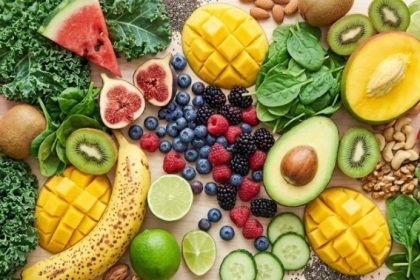
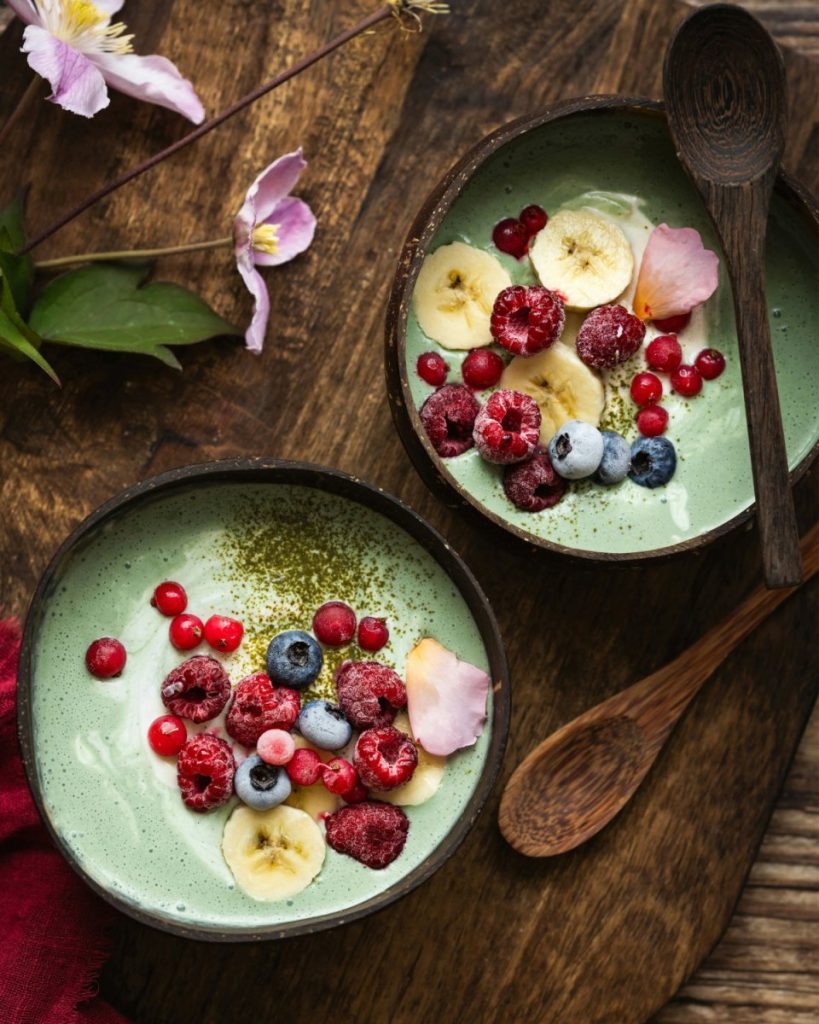
Berries are among the most powerful. Their anthocyanins — the deep pigments that make blueberries blue and raspberries red — actively protect collagen from breaking down. Think of them as collagen defenders. A handful of raw berries daily is genuinely doing something structural for your skin, not just contributing antioxidants in a general sense.
Cucumber and celery bring silica — a mineral that builds the connective tissue beneath the skin and keeps it elastic and firm. Cucumber also delivers potassium and B vitamins. Both are extraordinary hydrators: not just water, but mineral-rich water your cells can actually hold onto.
Dark leafy greens — spinach, kale, dandelion, arugula — bring chlorophyll, iron, and vitamin K. Iron supports healthy circulation, which means nutrients are actively reaching your skin. Vitamin K helps with under-eye darkness and uneven redness. Chlorophyll is one of the most cell-nourishing compounds in the plant kingdom, and it shows on the skin over time.
Citrus delivers vitamin C in its most complete form — not just ascorbic acid, but bioflavonoids alongside it that help your body actually use the vitamin C for collagen production. An isolated vitamin C supplement doesn’t come with those supporting compounds. Raw citrus does.
Carrots, mangoes, and sweet potatoes bring carotenoids — the pigments responsible for their deep orange and yellow color. Your body converts them into vitamin A, which supports skin cell renewal and builds a warm, subtle radiance from within. It’s not a surface effect. It accumulates gradually, and the more consistently these foods appear in your diet, the more visible it becomes.
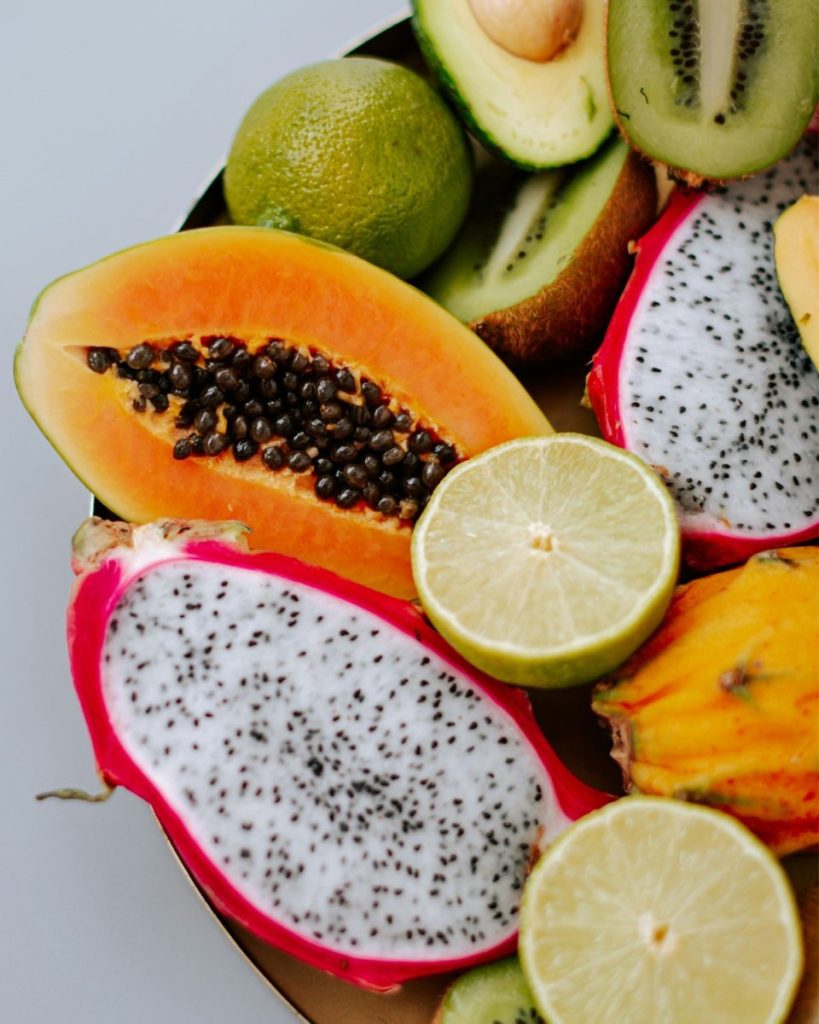
Papaya brings papain, a natural enzyme that speeds cell turnover and gently resurfaces from within, plus vitamin C in abundance. Raw papaya eaten regularly works from the inside the way a gentle exfoliant works from the outside — clearing dull cells and encouraging fresh ones.
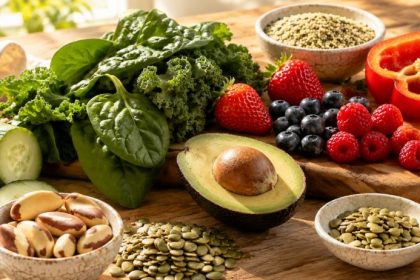
Healthy fats — avocado, walnuts, flaxseeds, chia seeds — nourish the skin barrier: the layer responsible for holding moisture in and keeping irritants out. These work best as part of a varied week of eating rather than as daily staples in large quantities. But when the skin barrier is getting what it needs, it holds hydration better, reacts less, and recovers faster from anything that disrupts it.
What Happens to Your Skin in the First Few Weeks on Raw Food?
Some people, in the first week to ten days of eating more raw food, experience a breakout. A few spots, some congestion, occasionally more than that. This is not a reaction to raw food. It is the opposite. For a long time, your skin has been managing a heavier internal load — processed food, low fiber, sluggish elimination. When that load suddenly lightens, your body shifts into a more active clearing mode. The skin is one of the body’s natural exit routes. What you’re seeing is it doing exactly what it’s designed to do.
Your gut and skin are more closely connected than most people expect. When the gut isn’t clearing efficiently, the skin often picks up the slack — it becomes a secondary exit for what the body needs to move out. This is exactly what the clearing phase is: the gut getting the fiber and live food it needs to start moving again, and the skin temporarily handling the overflow. The two work as a team. When one is overburdened, the other compensates. If the clearing phase runs longer than two weeks, fiber and elimination are usually the first place to look. Signs of Fiber Deficiency explains exactly what your body is telling you and how to address it.
This phase is temporary. It typically settles within one to two weeks. The way through it is to stay consistent, stay hydrated, and let it complete. Cutting out what caused the congestion while giving the body what it needs to clear is the entire strategy. Don’t stop because of this phase — it is a sign that things are moving, not a sign that something is wrong.
By weeks two to three, the clearing phase is usually behind you. Skin settles. Redness eases. Texture starts to smooth out. What you’ll notice first is not a sudden glow — it’s quieter than that. Less congestion. More evenness. A kind of clarity that simply wasn’t there before.
By weeks four to six, with consistent eating, the glow becomes visible and real. Skin looks more alive. Color evens out. People often comment before you’ve consciously noticed it yourself. Does raw food improve skin? If your diet has been processed-food heavy, the difference at six weeks is often significant enough that people ask what you’ve changed.
The timeline varies. Skin that has been dealing with chronic stress, hormonal load, or long-term dietary congestion will take longer than skin that was already relatively clear. But the direction is consistent: raw food supports better skin in almost everyone who stays with it long enough to get through the clearing phase.
Does Juicing Amplify the Raw Food Glow?
Yes — and the reason is simple. Juicing takes everything raw food does for your skin and concentrates it. The vitamins, the live enzymes, the minerals — extracted without heat, arriving in your system quickly, with almost nothing your body needs to process first. When you juice the same vegetables and fruits you eat, the skin-relevant nutrients reach your cells faster and in higher concentration than eating alone delivers.
Cold-press juicing matters here. Centrifugal juicers generate heat and friction that degrade some of the enzymes and heat-sensitive vitamins before the juice reaches you. Cold-press juicers work slowly and gently, keeping everything intact. The difference shows up in the juice itself — brighter, richer, more stable — and it shows up in how consistently your skin responds.
Which juices to build a skin-focused routine around — and why the combination of minerals and hydration matters more than any single ingredient — is laid out in detail in Juicing for Clear Skin.
Use discount code RAWFOODFEAST to save on the Nama J2 & Hurom H320N cold press juicers, the M1 plant-based nut milk maker, and accessories.
What Does Beet Juice Do for Your Skin?
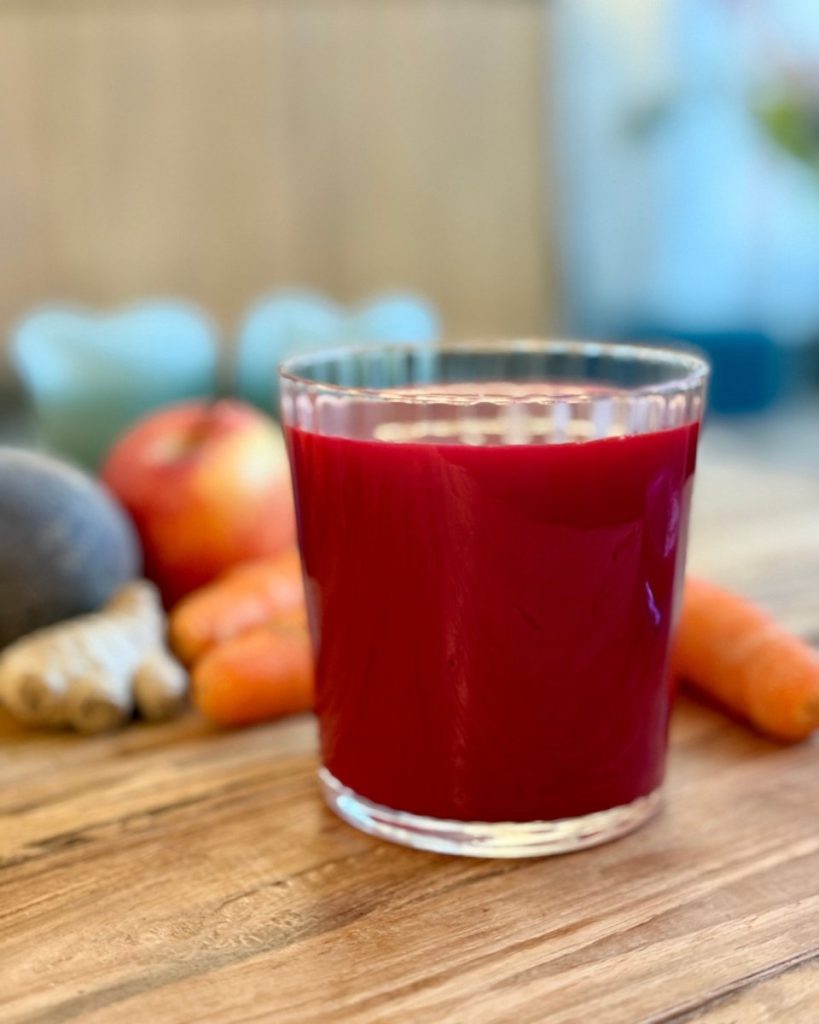
For the glow you can actually see — the warmth, the color, the quality of looking genuinely alive — beet juice stands apart. It contains natural nitrates that your body converts into nitric oxide, a compound that widens blood vessels and improves circulation throughout the body. More circulation means more oxygen reaching the skin. Better oxygen delivery means more color, more warmth, and more of that lit-from-within quality that no topical product can create.
The effect builds. Most people notice a visible difference in their skin tone within two to three weeks of drinking beet juice a few times a week — a warmth and aliveness that holds. It works alongside everything else raw food is doing: while vitamin C and enzymes are rebuilding the structure beneath the surface, beet juice is improving how well nutrients and oxygen actually arrive there.
Everything about what beet juice does in your body — how to use it, how much, and what to pair it with — is covered in Beet Juice Benefits.
Does Raw Food Work Better for Your Skin Than Supplements?
Yes — and it’s worth understanding why, because it changes how you think about both.
A vitamin C supplement is an isolated compound. A raw bell pepper delivers vitamin C alongside bioflavonoids that help your body actually use it, plus water, live enzymes, and fiber. These compounds work together in the whole food in a way a supplement can’t replicate. The bioflavonoids aren’t a bonus — they’re part of how the vitamin C becomes useful for collagen production. Strip them away and you have a weaker, less targeted delivery system.
The same logic applies across almost every skin nutrient. Zinc in a supplement is zinc. Zinc in raw pumpkin seeds comes with magnesium, iron, and fiber — everything that supports how well the zinc is actually absorbed and used. Everything that comes with a nutrient in whole food isn’t incidental. It’s the difference between a nutrient landing effectively and passing through.
Many people take supplements without ever testing whether they have a deficiency in that area. They take a multivitamin because it feels like insurance. They add a collagen supplement because it’s trending. They take zinc because someone recommended it for skin. Without testing, you genuinely don’t know whether your body needs more — or whether it’s already getting enough and the supplement is simply moving through unused. For fat-soluble nutrients like vitamins A, D, E, and K, consistently taking more than your body needs doesn’t just waste money — it accumulates in a way that can create its own problems over time.
When you eat a wide variety of raw food every day, your body takes what it needs and leaves the rest. You’re not trying to fill invisible gaps with isolated nutrients — you’re giving your body the full picture, everything together, in the form it was designed to work with. It works differently. Better.
Digestive Enzymes Explained covers why raw food reduces the digestive strain that prevents nutrients from absorbing properly in the first place. And if you’ve been eating well for a while without seeing the skin results you expected, Why Your Body Isn’t Absorbing Nutrients Properly explains exactly why eating well and absorbing well are two different things.
How to Keep the Raw Food Glow Going Every Day
The raw food glow is not a cleanse result. It’s not something that happens once and then fades. It’s what your skin looks like when raw food is a consistent daily baseline — not a temporary experiment.
Mornings matter most. Starting the day with hydrating, mineral-rich raw fruit — citrus, berries, papaya, melon — gives your skin what it needs before your body is dealing with anything else. Nothing is competing for digestive resources. The vitamin C, live enzymes, and minerals from raw fruit land at their most effective on an empty stomach. This single habit, done consistently, shows up on your skin within weeks.
Dark leafy greens every day — not occasionally, but as a daily anchor. The chlorophyll, iron, and vitamin K in fresh greens contribute directly to skin color, clarity, and strength. A large salad or a green juice built on real greens is one of the most reliable daily skin decisions you can make.
A daily green juice amplifies everything. Concentrated minerals and live vitamins from multiple vegetables, in a form that absorbs quickly and places minimal demand on digestion. The skin benefits from consistent juicing accumulate in a way that eating alone doesn’t quite replicate — and it’s one of the simplest daily habits to build once it’s part of your routine.
The glow fades when the raw food does. Processed food, chronic dehydration, and low fiber bring back the congestion, the flatness, and the skin that seems to be working harder than it needs to. The maintenance and the cure are the same thing: water-rich foods, fiber, live enzymes, and the minerals that keep everything functioning beneath the surface.
Your skin is rebuilt every 28 days. What you put in today is already in the queue for next month’s skin.