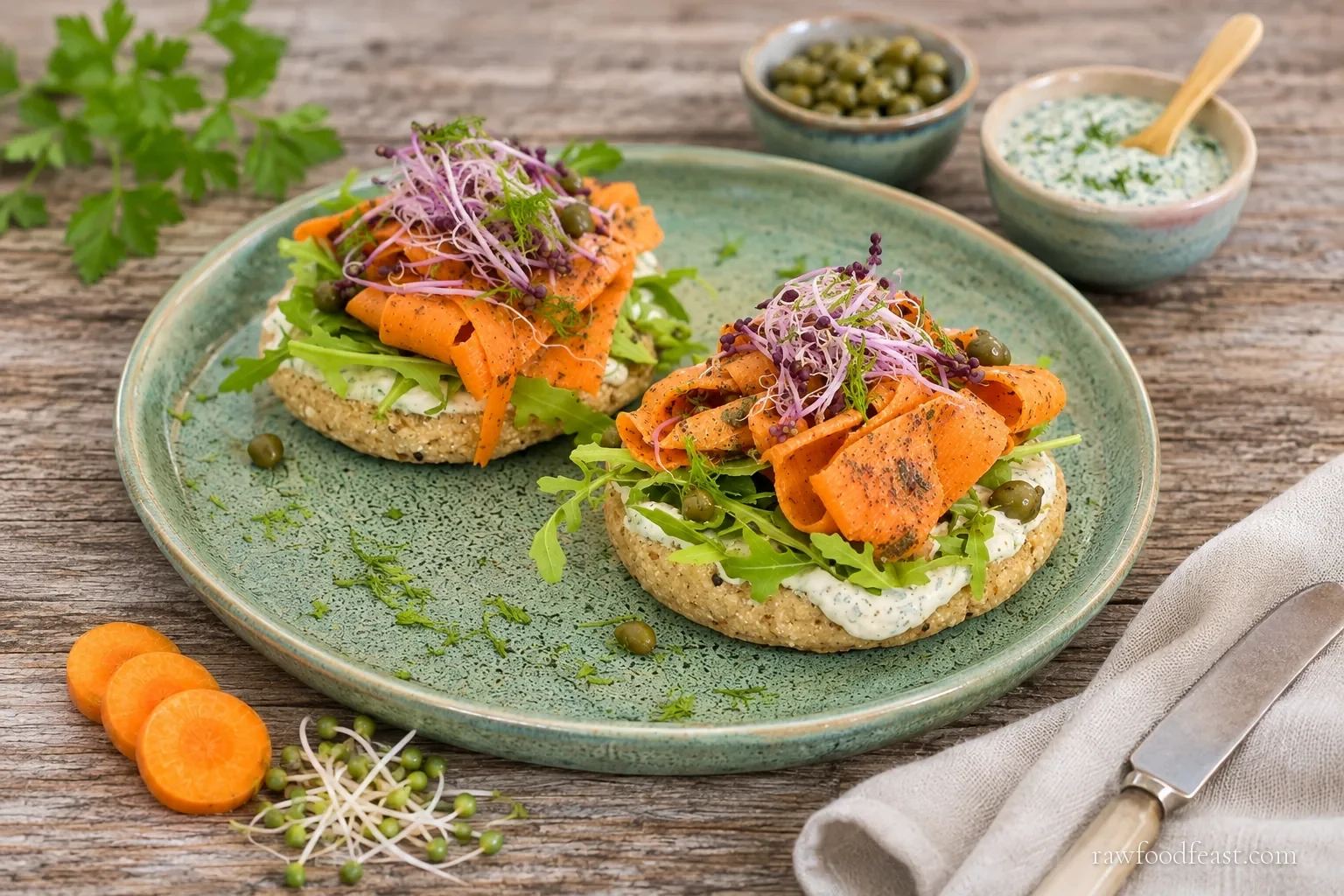
Who doesn't love a good bagel from time to time? This raw food bagel recipe is one of the recipes from my bestselling book Raw Food Feast, and one I get asked about most. Sprouted buckwheat, almond flour and zucchini come out of the dehydrator exactly the way a bagel should be: dry on the outside, soft and tender inside, but never wet.
No oven, no yeast, no waiting for dough to rise. You blend, shape and let the dehydrator do the rest.
Why this raw food bagel recipe works
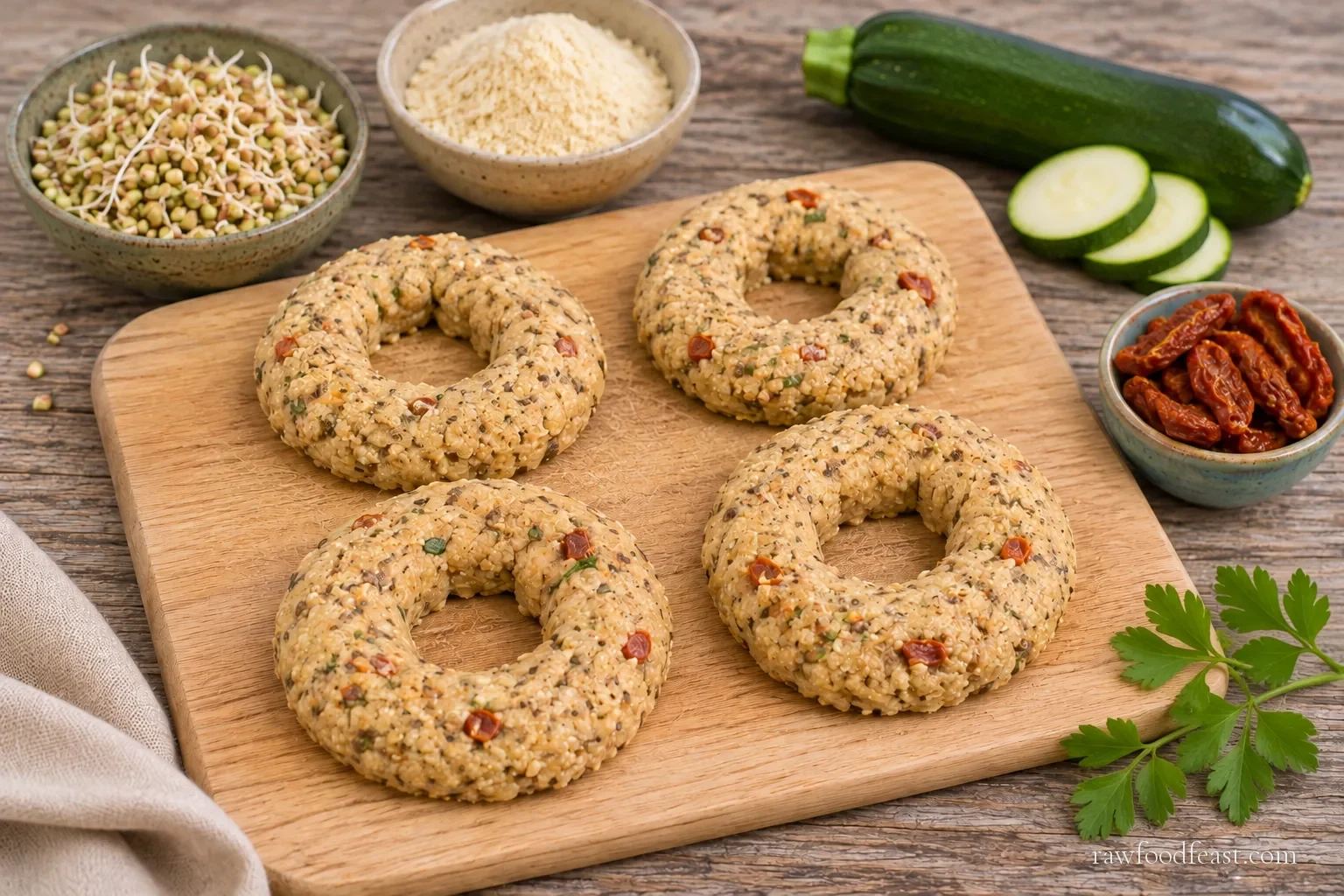
The base is sprouted buckwheat. Once the kernels have soaked and started to sprout, they turn soft and slightly sweet, and they blend into a dough that holds its shape. Almond flour gives the bagels their tender crumb, and zucchini keeps them moist enough to stay soft inside, while the long, gentle drying takes away any wetness.
Chia seeds and psyllium husk do the work that gluten does in a regular bagel. They bind the dough, so you can shape it with your hands and it keeps that round, chewy bagel feel. Both are also rich in soluble fiber, the kind that turns into a soft gel and feeds the good bacteria in your gut, which makes these gluten-free bagels as good for your gut as they are to eat.
Onion powder and dried oregano bring the savory flavor. It's the kind of bagel you want to pile high.
Why sprout the buckwheat first?
Soaking and sprouting wakes the buckwheat up. The kernels soften, so they blend into a smooth dough, and many people find sprouted grains and seeds easier to digest than dry ones. What sprouting does to a seed's nutrients is explained in Benefits of Sprouting: Why Sprouts Are One of the Most Nutrient-Dense Foods You Can Eat.
Buckwheat is not actually wheat. It's the seed of a plant related to rhubarb and sorrel, and it's naturally gluten-free. Sprouting usually takes about one to two days, and the bagels themselves are made and dried in a single day. Your hands-on time is only about 30 minutes.
Once you've sprouted buckwheat, other seeds are just as easy, and each one brings something different for your gut: 7 Best Seeds to Sprout at Home, and How Each One Benefits Your Gut Health.
What is sunny soak water?
Sunny soak water is my name for the water left over after soaking sun-dried tomatoes. Don't pour it away. It's full of that deep, savory tomato flavor, and it's what gives these raw vegan bagels their taste.
So the next time you soak sun-dried tomatoes for a sauce or for my sun-dried tomato crackers, save the water in a jar in the fridge. One cup (235 ml) is all you need for this recipe.
What to expect when you make raw food bagels
The dough is soft and a little sticky. Wet hands are the trick: they keep it from sticking to your fingers and give the bagels a smooth surface.
The bagels start at a higher temperature in the dehydrator, then dry slowly at a lower temperature. The start firms up the outside quickly, and the slow finish dries them through gently, so the bagels stay raw. They're ready when they're dry on the outside and soft inside, without any wet or doughy spots.
How to serve your raw food bagels
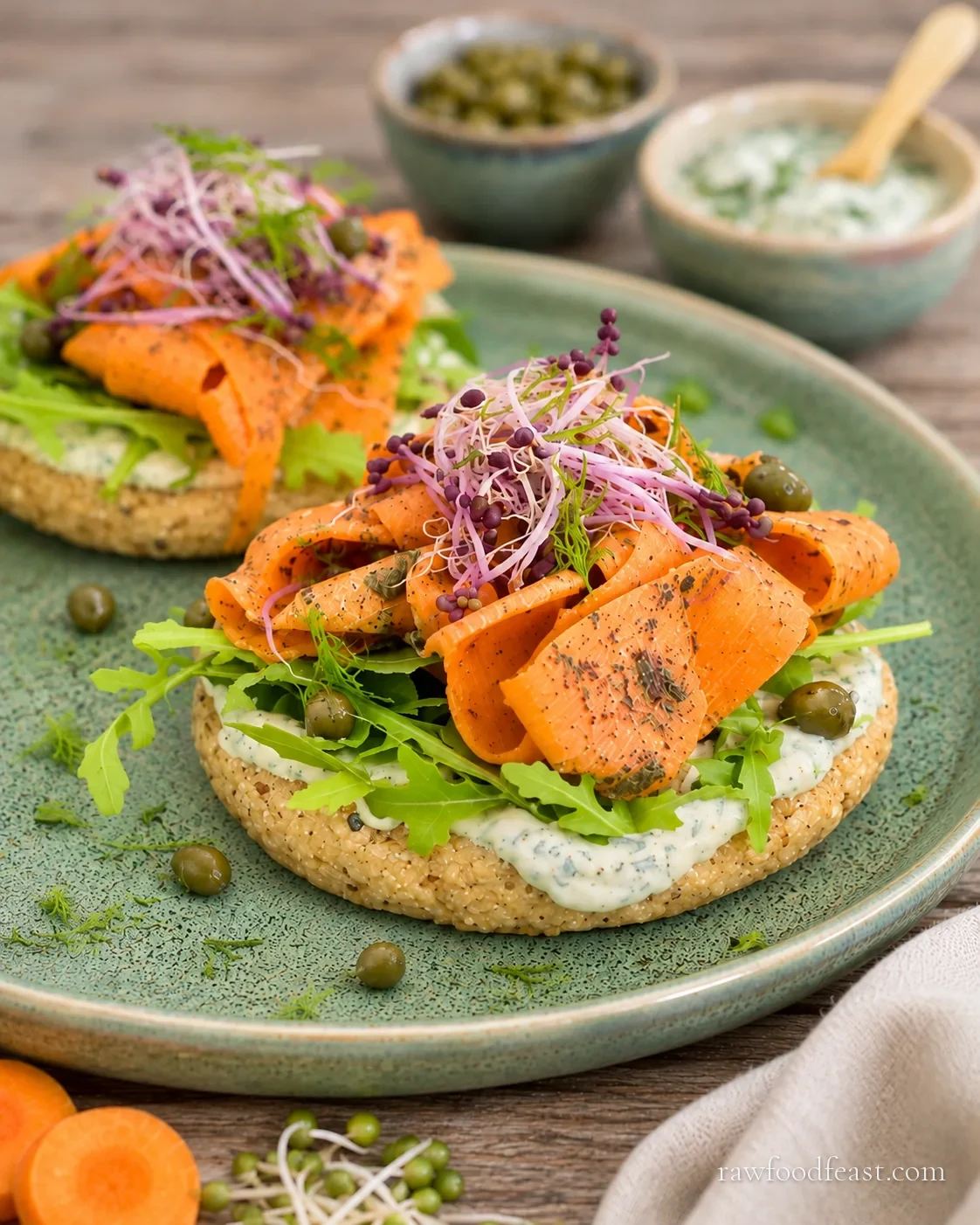
This is my favorite way: spread a thick layer of dill caper cashew cream on a bagel, add arugula, marinated carrots, a few capers and sprouts, and top it with fresh dill. The marinated carrots taste a lot like lox, and together with the creamy, tangy cashew cream it's a proper bagel lunch. Both recipes are in my bestselling book Raw Food Feast, together with more bread, wraps and crackers.
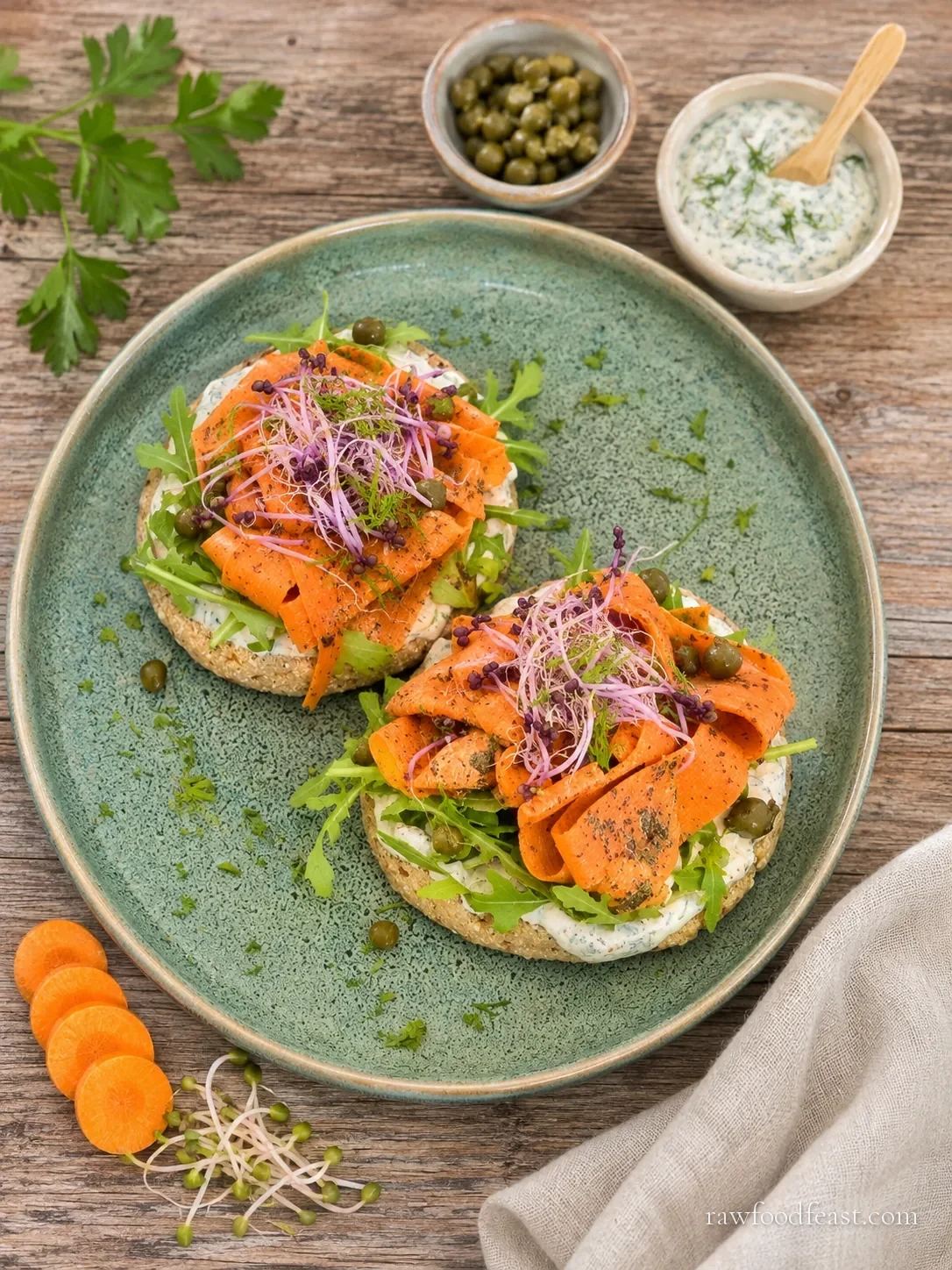
These bagels put eight different plants into one recipe: buckwheat, almonds, zucchini, chia, psyllium, onion, oregano and sun-dried tomato. Add the toppings and you're past a dozen. That's a real step toward the 30 different plants a week your gut microbiome needs to thrive.
Want an easy way to see how close you are? Fiber First is the fiber tracker for gut health that counts every plant you eat in a week, plus your daily fiber and hydration, so you know exactly how well you're feeding your gut every day.
How should you store raw food bagels?
Keep your raw vegan bagels in an airtight container in the fridge and enjoy them within a few days. Because they're soft inside, they're at their best fresh, so it's worth making them when you know you'll have a bagel lunch or two ahead.
A lazy weekend brunch, a friend at the table, a bagel piled high with color. That's the kind of moment these are made for.