 Mirjam Henzen
 That heavy, thick feeling behind your eyes where reading a single email feels like wading through mud is what most people call brain fog. And if you have been dealing with it, you have probably already tried sleeping more, drinking more coffee (which helps for about forty-five minutes and then makes it worse), cutting out refined sugar to clear brain fog naturally. The thing that often gets missed is that brain fog is rarely a head problem. It starts about four feet lower.
Your gut and brain are in constant two-way conversation through something called the gut-brain axis — a network of nerves, hormones, and chemical signals that runs in both directions. When the gut is sluggish, inflamed, or under-fed, the brain hears about it. And that conversation has a profound effect on how clearly you think, how emotionally steady you feel, and how much mental energy you have available at any given moment.
Raw food changes this conversation — quickly and consistently, once you know which foods to lean on and when.
Why Brain Fog Starts in the Gut, Not Your Head
Here is something worth sitting with: your gut produces roughly 90% of the body’s serotonin — the neurotransmitter most associated with mood, calm, and a sense of mental steadiness. Serotonin is also what your body converts into melatonin — the hormone that tells you it’s time to sleep. When the gut lining is irritated or the microbiome is out of balance, serotonin production drops. The brain receives less of the signals it depends on to function clearly, and that is when the fog rolls in.
There is also the vagus nerve — the long, wandering nerve that connects your brainstem to your gut and carries information in both directions. About 80% of the signals travelling through the vagus nerve go from the gut up to the brain, not the other way around. So in a very real sense, your gut is running your mental state. A gut that is full of undigested food, backed-up waste, or low-grade fermentation sends a very different signal to the brain than one that is moving cleanly.
Then there is inflammation. Low-grade gut inflammation — the kind that does not announce itself dramatically — triggers the release of cytokines (inflammatory signaling proteins) that cross into the brain and directly affect how clearly you think. Researchers call this inflammation affecting the brain. It feels like thinking through cotton wool.
Raw food addresses this at the source. The living enzymes, plant compounds that calm inflammation, and fiber in raw plant foods reduce the gut irritation that starts the whole thing. The brain starts to receive cleaner, clearer signals — and thinking sharpens accordingly. The role digestive enzymes play in all of this — and why raw food makes their job significantly easier — is covered in depth in Digestive Enzymes Explained.
Which Raw Foods Clear Brain Fog Most Effectively?
Not all raw foods affect the gut-brain axis equally. These are the ones worth prioritizing, and why each one earns its place.
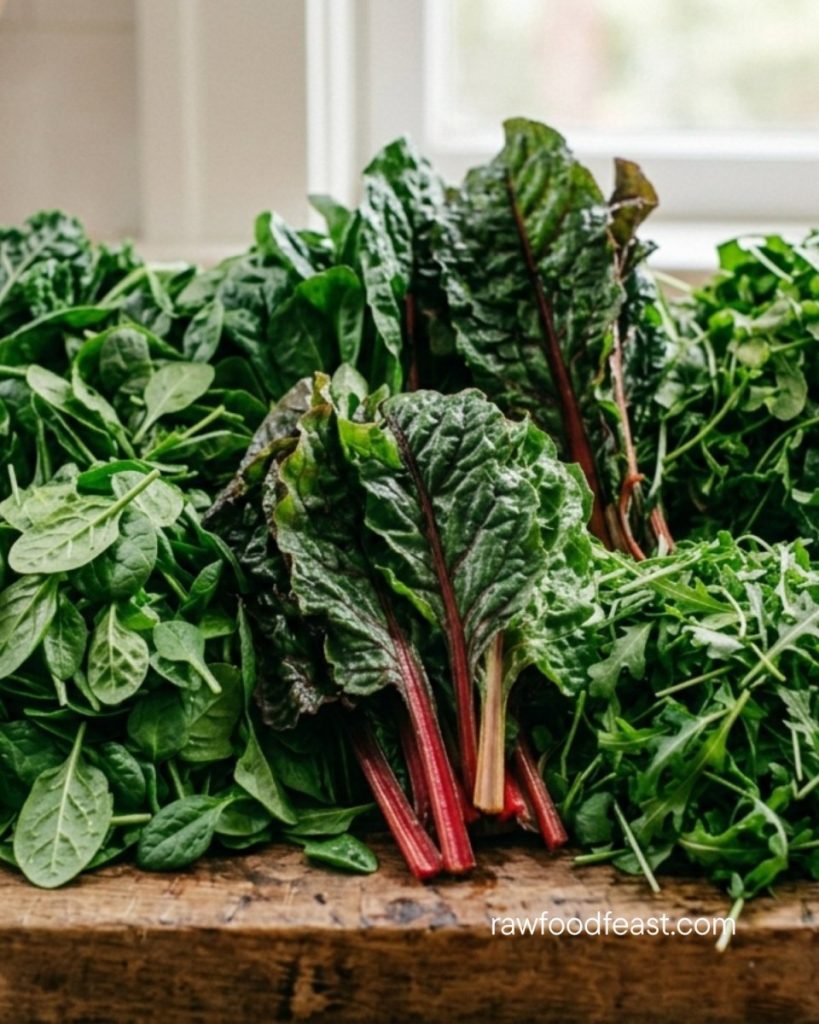
Dark leafy greens — spinach, kale, chard, and arugula — are high in folate, which the brain uses to produce dopamine and serotonin. They also contain magnesium, which calms the nervous system and is involved in over 300 processes your body runs, many of them directly relevant to brain function. Most people eating a modern diet are chronically low in magnesium. Raw greens are one of the most direct ways to address that without supplementing.
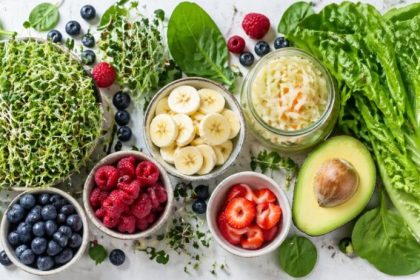
Berries — especially blueberries and blackberries — contain anthocyanins, the pigments that give them their deep color, which have been shown to protect neurons and improve blood flow to the prefrontal cortex — the part of your brain responsible for focus, decision-making, and working memory. A small handful in the morning is not just a nice addition to your routine. It is genuinely doing something.
Celery contains apigenin — a compound that supports the production of new brain cells (neurogenesis) and calms inflammation in neural tissue. Raw celery juice, particularly on an empty stomach, reaches the gut lining quickly and begins clearing the low-level inflammation that drives foggy thinking. Why timing matters for what celery juice actually does in your gut is covered in Best Time to Drink Celery Juice.
Walnuts are one of the most consistently researched raw foods for cognitive support. They are rich in ALA omega-3 fats — the plant-based form the brain uses to maintain healthy cell membranes — and in polyphenols that cross the blood-brain barrier and help calm neural inflammation. They also contain vitamin E, which protects brain cells from the oxidative stress that accumulates when mental load is high. A small handful added to a morning bowl or eaten as a snack is enough to make a difference over time.
Hemp seeds provide a complete amino acid profile, including tryptophan — what your body uses to make serotonin. They also supply omega-3 fatty acids in the form of ALA, which the brain uses for cell membrane function. Two tablespoons of hemp seeds added to a morning smoothie or fruit bowl delivers real cognitive support without any preparation required.
For more support building this into a daily rhythm, Healthy & Free is where we go deeper into raw food, gut health, and making it all feel easy.
Does a Sluggish Gut Actually Affect How You Think?
The short answer is yes — and the research is consistent on this. Studies on the gut-brain axis have repeatedly shown that when gut transit is slow (meaning food is sitting longer than it should), inflammatory compounds accumulate and the microbiome shifts toward bacteria that produce fewer beneficial short-chain fatty acids. Those fatty acids — particularly butyrate — are what feed the gut lining and support the blood-brain barrier, the protective layer that keeps inflammatory molecules from entering the brain.
When transit slows and butyrate production drops, the blood-brain barrier becomes more permeable. That is when the brain becomes more vulnerable to inflammatory signals from the gut. The result is exactly what brain fog feels like: slowed thinking, difficulty finding words, reduced emotional resilience, poor short-term memory.
Raw fiber — especially from fruit and leafy greens — feeds the bacteria that produce butyrate. This is one of the most direct food-to-cognition pathways in the body, and it works within days when you shift the diet. If you want to understand how fiber interacts with gut function specifically, When Fiber Helps Digestion covers when it helps and when it does not.
How to Clear Brain Fog Naturally: A Simple Raw Food Morning Routine
You do not need to overhaul everything at once. The gut-brain axis responds well to consistent small inputs — particularly in the morning, when the body is coming out of its overnight repair cycle and the gut is most receptive.
Start with 16 ounces (500 ml) of celery juice or a green juice with cucumber, spinach, and apple on an empty stomach. This delivers minerals, apigenin, and chlorophyll directly to the gut lining before anything else enters the digestive system. Then follow with a fruit bowl — berries, banana, and mango work well together — topped with a teaspoon of hemp seeds and a few walnuts. This combination gives your body tryptophan — what it uses to make serotonin — omega-3s for healthy brain cells, and the deep pigments in berries that protect your focus and memory. All in one bowl. Less than five minutes to put together.

If you juice at home or you want to start juicing, a hands-free cold-press juicer makes the daily celery juice (and every other fresh-pressed juice) genuinely effortless — the kind of effortless that means you actually do it every day. If you are not sure which model fits how you live, Nama J2 vs Hurom H320N walks through the real differences based on lifestyle, not just specs. Use discount code RAWFOODFEAST to save on the Nama J2 & Hurom H320N cold press juicers, the M1 plant-based nut milk maker, and accessories.
How Long Before You Notice a Difference?
Faster than most people expect. The gut responds to dietary changes within 24 to 48 hours — food starts moving through more easily, the bacterial balance begins to shift, and the microbiome starts adjusting almost immediately. That is not the same as waking up transformed on day two, but it is the beginning of the process.
Mental clarity tends to follow about a week in. Not because something suddenly clicked — but because the gut has had enough time to begin producing serotonin more consistently, reducing the low-level inflammation that was clouding your thinking, and sending cleaner signals up through the vagus nerve. Most people describe it as feeling lighter in the head. Less effort required to focus. Words coming more easily.
The sustained shift — where clarity becomes your baseline rather than a good day — takes two to four weeks of consistency. That is how long it takes the microbiome to genuinely rebalance and the gut lining to benefit from the steady minerals, fiber, and everything raw food naturally brings with it. The morning routine above is the simplest way to build that consistency without overhauling everything at once.
The shift in mental clarity is often noticeable within the first week. Not because raw food is performing some kind of overnight fix — but because the gut finally has what it needs to produce the neurotransmitters the brain depends on.
Your gut has been sending signals to your brain your entire life. Once you start feeding it well, the signal changes. And that shift — from foggy to clear — is one of the most noticeable things that happens when raw food becomes a daily rhythm.




another great article Mirjam … the old quote ‘food for thought’ makes perfect sense …
Thank you for your sweet review, Jan. It means a lot. I’m so glad you enjoyed it.